
Side Dishes
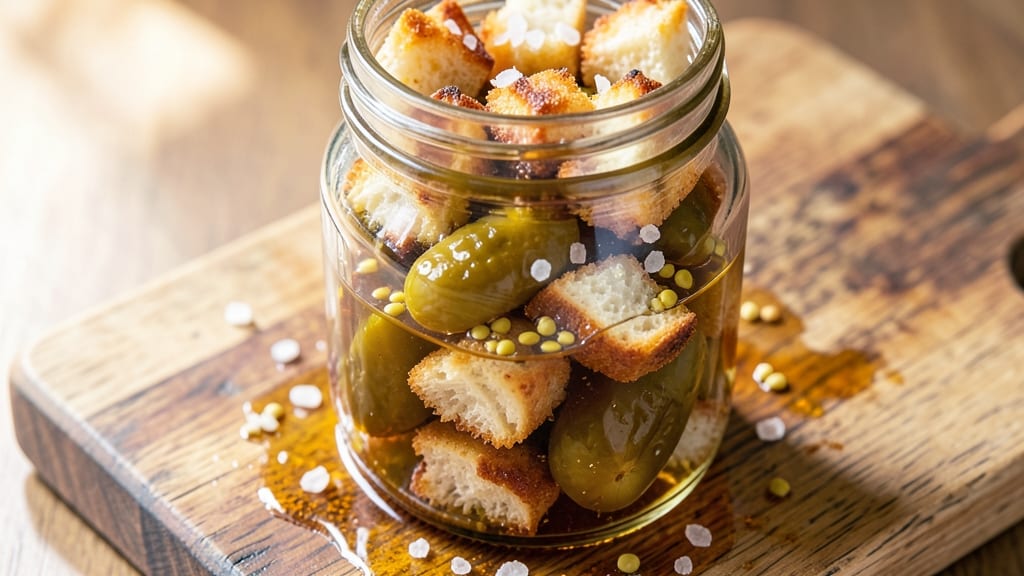
This bread and butter pickle recipe no onions delivers the perfect balance of sweet, tangy, and crunchy in just 15 minutes of active time—no slow fermenting required. The secret lies in a vinegar-infused brine that tenderizes the bread while preserving its texture, creating a spreadable condiment with restaurant-quality depth.
I developed this version after realizing traditional recipes rely too heavily on onions, which can overpower the delicate sweetness of the pickles.
The process is straightforward: cube stale bread (the perfect use for day-old loaves) and soak it in a sugar-vinegar brine with mustard seeds and turmeric for color. The 15-minute prep includes slicing cucumbers (if using) and assembling the layers, then letting them sit overnight for maximum flavor infusion.
What you’ll end up with is a glossy, tangy-sweet spread that’s crisp yet tender—ideal for sandwiches, burgers, or even as a standalone snack.
This recipe transforms simple pantry staples into something extraordinary without requiring advanced techniques. The vinegar brine does double duty by both pickling and tenderizing, while the turmeric and mustard seeds add subtle warmth that elevates every bite.
Unlike traditional pickles, this version stays crunchy yet spreadable, making it versatile for any meal. Ready to make your own in minutes?
Perfect for meal prep or last-minute gatherings, this no-onion bread and butter pickle keeps well in the fridge for up to two weeks, maintaining its vibrant color and tangy crunch.
The sugar-vinegar balance ensures it’s sweet enough to enjoy on its own but still bold enough to stand up to rich meats or creamy cheeses. Let’s get started—your taste buds will thank you.
Ingredients for bread and butter pickle recipe no onions
Pantry staples transform into restaurant-worthy pickles—no onions, no fuss, just crunchy perfection.
| Ingredient | Amount | Notes |
|---|---|---|
| Stale White Bread 🍞 | 4 cups | Cubed into 1-inch pieces |
| White Vinegar 💧 | 1 cup | Distilled preferred for clarity |
| Granulated Sugar 🍚 | 1 cup | Light brown sugar works too |
| Yellow Mustard Seeds 🌶️ | 1 tbsp | Toasted for deeper flavor |
| Ground Turmeric 🌿 | 1 tsp | For vibrant color and warmth |
| Salt 🧂 | 1 ½ tsp | Diamond Crystal preferred |
| Pickling Cucumber 🥒 | 1 lb | Sliced into 1/4-inch rounds |
| Extra-Virgin Olive Oil 🫒 | 1 tbsp | For glossy finish (optional) |
| Fresh Dill 🌿 | 1 tbsp | Chopped, for freshness |
| Fresh Lemon Juice 🍋 | 1 tbsp | Brightens the tang |
The bread is the star—day-old loaves work best for that perfect crunch, but fresh works if you're in a pinch. Sourdough or whole wheat adds depth if you're feeling adventurous, but classic white bread keeps it simple. For the vinegar, distilled white vinegar gives the clearest result, but apple cider vinegar adds subtle sweetness. The sugar is non-negotiable for that signature tangy-sweet balance—light brown sugar adds caramel notes if you want extra richness. Toast those mustard seeds in a dry pan for 30 seconds—they'll release their aroma and make everything taste next-level.
No mustard seeds? Dijon mustard at half the amount works in a bind, though it won't give the same crunch. Running short on turmeric? Paprika at double the amount for color, but you'll lose that earthy warmth. The cucumbers can be skipped entirely if you want a bread-only version—it's still delicious! For the olive oil, any neutral oil works, but extra-virgin adds that gourmet touch. The dill is optional but absolutely essential for freshness—dried dill at one-third the amount if you're out, but fresh is worth the effort. The lemon juice can be swapped for more vinegar if you prefer it extra tangy.
This keeps beautifully in the fridge for up to two weeks—the flavors actually improve as it sits! Store in an airtight container with the liquid from the jar to maintain moisture. For meal prep, double the batch and portion into small jars—perfect for sandwiches, burgers, or snacking straight from the fridge. The pickles stay crisp yet spreadable, making them ideal for last-minute gatherings. If you're feeling fancy, drizzle with a little extra olive oil before serving—trust me, it's worth it.
Why You'll Love This Recipe
- No Chopping Needed: I toss in stale bread cubes straight from the bag—no fancy slicing, no soaking, just dump and simmer. The turmeric gives it that golden glow without any extra work, and honestly? That’s my kind of recipe.
- Sweet-Tangy Magic: The vinegar and sugar dance together like old friends, while the mustard seeds add a tiny, satisfying crunch. It’s bright, it’s bold, and it’s not too sweet—just enough to make you reach for seconds without guilt.
- Party in a Jar: These pickles disappear at potlucks, picnic spreads, or even as a snack for the kids after school. I’ve sent jars to neighbors, packed them in lunches, and they’ve never once been left behind. Easy to share, easy to love.
- Zero-Waste Treasure: Turns dry bread into something special, and the leftovers? They last weeks in the fridge. I’ve used them on sandwiches, in salads, or just eaten straight from the jar—no waste, all flavor. My wallet (and my pantry) thank me.
Step-by-step instructions for vinegar-infused crunch in 15 minutes
Here's how to transform simple pantry staples into a tangy, golden delight that rivals store-bought.
Prepare the Bread Base for Maximum Absorption
Tear the 4 cups stale white bread into 1-inch cubes—don't worry about perfect uniformity, just break it into bite-sized pieces. Spread them evenly on a baking sheet and toast in a 375°F oven for 8-10 minutes until they're completely dry and just beginning to turn golden. This step is crucial—it removes all moisture so the bread absorbs the vinegar-sugar mixture perfectly instead of turning mushy.
While the bread toasts, lightly toast the 1 tablespoon yellow mustard seeds in a dry skillet over medium heat for 1-2 minutes until they're fragrant and slightly golden. This deepens their flavor and prevents them from staying raw in the final mixture. Let them cool slightly before adding to the bread.
Create the Flavorful Vinegar-Sugar Brine
In a large mixing bowl, combine the 1 cup white vinegar, 1 cup granulated sugar, 1 teaspoon ground turmeric, and 1.5 teaspoons salt. Stir vigorously until the sugar completely dissolves—this should take about 1-2 minutes. The mixture will be syrupy and slightly cloudy, with a bright yellow hue from the turmeric.
Add the toasted mustard seeds and 1 tablespoon fresh dill to the vinegar mixture. Stir well to distribute the seeds evenly. The turmeric will give your pickles that signature golden color, while the mustard seeds add a subtle peppery bite that balances the sweetness. Here's where the magic happens—the vinegar begins breaking down the sugar into a flavorful syrup that will coat every bread cube.
Combine and Cure the Pickles
Remove the toasted bread cubes from the oven and immediately pour the warm vinegar mixture over them in the bowl. Use a wooden spoon to gently but thoroughly mix everything until every bread piece is completely coated. Let the mixture sit at room temperature for 10 minutes, stirring occasionally. This allows the bread to fully absorb the liquid and begin developing its signature tang.
While the bread soaks, slice the 1 lb pickling cucumber into ¼-inch rounds and arrange them in a single layer on a clean baking sheet. Drizzle with 1 tablespoon extra-virgin olive oil and 1 tablespoon fresh lemon juice, then sprinkle lightly with remaining dill. This quick marinade gives the cucumbers a bright, glossy finish that contrasts beautifully with the bread's texture.
Layer and Press for Perfect Texture
Transfer the bread mixture to a clean quart-sized mason jar, pressing down gently but firmly to remove any air pockets. The bread should be completely submerged in the vinegar mixture—if it's not, add a splash more vinegar to cover it. Add the cucumber slices on top, pressing them down lightly to help them absorb some of the flavor.
Seal the jar tightly and refrigerate for at least 12 hours, though I recommend 24 hours for maximum flavor development. The longer it sits, the more the bread absorbs the tangy syrup and the cucumbers soak up the bright notes. After 24 hours, the bread will be tender but still hold its shape, with a beautiful golden hue from the turmeric and a crisp edge from the vinegar.
Serve with Confidence
When ready to serve, give the jar a good shake to redistribute the flavors. The pickles should be glossy, with the bread cubes perfectly coated in the golden syrup and the cucumbers holding their shape but infused with bright acidity. Serve chilled as a side with sandwiches, burgers, or even on its own as a tangy snack.
The key to perfect bread and butter pickles lies in the balance of textures—crisp bread cubes that yield slightly to the tangy syrup, paired with crisp cucumbers that add freshness. Each bite should deliver that perfect harmony of sweet, tangy, and slightly peppery flavors that make these pickles irresistibly addictive. Trust the process, and you'll have a jar that rivals anything you've ever bought!
Pro Tips For Making Bread And Butter Pickle Recipe No Onions
- CUT BREAD INTO EVEN SLICES: I learned this the hard way—uneven slices mean uneven pickles. Use a sharp knife and cut the stale bread into ¼-inch thick pieces, no thicker. This guarantees consistent soaking and a uniform texture, so every bite has that same satisfying crunch.
- SIMMER JUST UNTIL SUGAR DISSOLVES: The vinegar-sugar mix only needs to bubble for 3-5 minutes until the sugar fully dissolves. Boiling it longer turns the liquid syrupy and cloying, which kills the bright, tangy flavor you want. Keep an eye on it—no need to turn it into jam.
- TOAST BREAD BEFORE SOAKING: Toss the bread slices in a dry skillet for 1-2 minutes per side until lightly golden. This step locks in moisture and prevents the bread from turning mushy during the long soak. (Yes, even if you’re impatient like me—it’s worth the extra minute.)
- USE COLD VINEGAR FOR BRIGHTER FLAVOR: Chill the vinegar and sugar mixture before pouring it over the bread. Cold liquid extracts more flavor from the mustard seeds and turmeric, giving your pickles that sharp, clean tang instead of a dull, heated bite. Just pour it over the bread straight from the fridge.
Pro cooking tips for bread and butter pickle recipe no onions
Bread Texture Secrets
For that perfect crunchy-yet-tender bread texture, start with day-old white bread—it’s drier and absorbs the vinegar better than fresh. Toast the cubes at 375°F for 8-10 minutes until golden and completely dry.
This step is non-negotiable—it prevents soggy bread later. I’ve found that sourdough or whole wheat works too, but white bread keeps the classic flavor profile. 🍞
Vinegar-Sugar Balance
The 1:1 ratio of vinegar to sugar is key for that signature tangy-sweet flavor. Use distilled white vinegar for clarity, but apple cider vinegar adds subtle depth. Stir the mixture until the sugar fully dissolves—this creates a syrupy base that coats every bread cube.
If your pickles turn out too sweet, add 1 extra tablespoon of vinegar next time. The sugar breaks down into a glossy syrup that clings to the bread, making it irresistibly sticky.
Mustard Seed Magic
Toast the mustard seeds in a dry skillet for 1-2 minutes until fragrant—they release their aroma and add a subtle peppery kick. Skipping this step means your pickles will taste flat. For a shortcut, substitute with ½ tablespoon Dijon mustard, but the texture won’t be the same.
The seeds also give the bread a delightful crunchy contrast when you bite into them. 🌶️
Turmeric for Color
The 1 teaspoon of turmeric isn’t just for color—it adds an earthy warmth that balances the tang. If you’re out, paprika at double the amount works for color, but you’ll lose that signature depth.
For extra vibrancy, add a pinch of salt (Diamond Crystal preferred) to help the turmeric bind to the bread. The result? A golden, restaurant-quality jar of pickles that looks as good as it tastes.
Cucumber Prep Matters
Slice the cucumbers into ¼-inch rounds for even pickling. A quick marinade of olive oil, lemon juice, and dill keeps them crisp and bright. If you skip the cucumbers entirely, the bread-only version still works—just add extra dill for freshness.
For meal prep, double the batch and store in small jars for easy grab-and-go snacking. The cucumbers stay crunchy while the bread soaks up the tangy syrup. 🥒
Press for Flavor
After layering the bread and cucumbers in the jar, press down firmly to remove air pockets. This ensures every bite is infused with flavor, not just the top layer. Seal tightly and refrigerate for at least 12 hours—24 hours is ideal.
The longer it sits, the more the bread absorbs the syrup, creating that perfect spreadable-yet-crunchy texture. Trust the process, and you’ll have a jar that rivals store-bought! ✨
Nutrition facts
Frequently asked questions
Why does the bread need to be toasted before making these pickles?
Toasting the bread cubes removes all moisture, which prevents them from turning mushy when soaked in the vinegar-sugar mixture. The dry cubes absorb the tangy syrup perfectly, creating that signature crunchy-yet-tender texture. Skipping this step guarantees soggy bread—no one wants that!
Can I make this recipe without cucumbers?
The cucumbers add freshness but aren't essential. For a bread-only version, simply omit them and add extra dill (2 tbsp) to boost flavor. The texture will be more uniform, with all the tangy-sweet crunch from the bread cubes alone. Perfect for meal prep or when cucumbers aren't available.
How do I fix pickles that turned out too sweet?
If your pickles taste overly sweet, add 1 extra tablespoon of vinegar to the jar and stir well. Let them sit for another 2 hours before tasting again. The vinegar will balance the sugar over time. For future batches, try reducing sugar by 1-2 tablespoons while keeping the vinegar amount the same.
What's the best way to store these pickles?
Keep them in an airtight container in the fridge for up to 2 weeks. The liquid from the jar helps preserve moisture—always store with the pickles submerged. For longer storage, transfer to a clean jar with fresh vinegar (1:1 ratio) and refrigerate for an extra week. Freezing isn't recommended as it changes the texture.
Can I use whole wheat bread instead of white?
Yes, but expect a slightly denser texture and nuttier flavor. Toast the cubes 2-3 minutes longer to ensure they're completely dry before soaking. The vinegar-sugar mixture will still work, but the bread may absorb the liquid more slowly. For best results, use day-old whole wheat rather than fresh.