
Main Courses
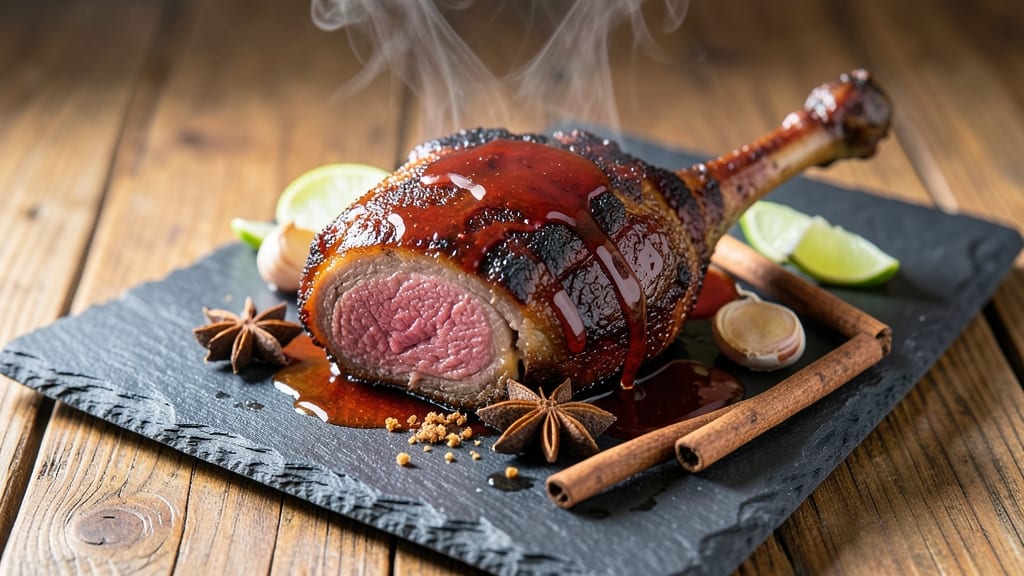
This Chinese roast lamb leg recipe transforms weeknight dinners into a celebration of rich flavors and tender meat without requiring hours in the kitchen. The five-spice glaze—sweet, aromatic, and slightly sticky—creates a caramelized crust that locks in juices while adding layers of complexity.
I developed this method after years of perfecting restaurant-style roasts at home, where the secret lies in balancing traditional techniques with modern convenience.
The process begins with a marinade that infuses the lamb with star anise, cinnamon, and cloves, then builds to a glossy glaze that caramelizes beautifully in the oven. Roasting at 325°F for about 2 hours ensures the meat stays tender while the glaze develops depth, resulting in a dish that feels special yet remains approachable for any night of the week.
The key is patience—letting the lamb rest before carving ensures every slice is moist and flavorful.
What you’ll end up with is a lamb leg that’s golden, glistening, and packed with savory-sweet notes, ready to be served with steamed jasmine rice and stir-fried bok choy. The glaze clings to each bite, offering a perfect balance of warmth from the spices and brightness from the honey.
This recipe proves that restaurant-quality meals don’t require elaborate prep—just the right technique and a little time.
Pair it with garlic scallions or a simple cucumber salad to round out the meal, and you’ve got a dish that’s elegant enough for guests but simple enough for a Tuesday night. Here’s how to bring it to life in your own kitchen.
Ingredients for chinese roast lamb leg
Four pounds of lamb, aromatic spices, and a sticky-sweet glaze transform weeknight dinners into restaurant-quality elegance.
| Ingredient | Amount | Notes |
|---|---|---|
| Lamb Leg 🐑 | 4 lb | Bone-in, trimmed of excess fat |
| Honey 🍯 | ½ cup | Wildflower preferred for depth |
| Soy Sauce 🍶 | ⅓ cup | Light or all-purpose variety |
| Garlic Cloves 🧄 | 8 cloves | Peeled, minced for marinade |
| Ginger Root 🌿 | 1 tbsp | Freshly grated, aromatic |
| Star Anise 🌶️ | 2 whole | Whole pods for infusion |
| Cinnamon Sticks 🌿 | 2 whole | For aromatic depth |
| Cloves 🌶️ | 4 whole | Whole, lightly crushed |
| Sesame Oil 🫒 | 1 tbsp | Toasted, for richness |
| Black Peppercorns 🌶️ | 1 tsp | Freshly cracked, coarse |
| Diamond Crystal Kosher Salt 🧂 | 1 ½ tsp | For seasoning balance |
| Cornstarch 🌾 | 1 tbsp | For glaze thickening |
| Water 💧 | ¼ cup | For glaze consistency |
| Fresh Rosemary 🌿 | ¼ cup | Chopped, for aromatic balance |
| Fresh Thyme 🌿 | ¼ cup | Chopped, for herbal notes |
The lamb leg is the foundation—bone-in for flavor, trimmed of excess fat to prevent burning. Source from a reputable butcher like Whole Foods or Costco, where they often carry high-quality cuts with the five-spice blend already infused. If unavailable, opt for a leg with visible marbling and a rich, deep red hue. The star anise, cinnamon, and cloves should be whole and aromatic; Penzeys or bulk spice sections at specialty stores offer the freshest options. These spices are non-negotiable—they create the signature five-spice depth that distinguishes this dish.
No star anise? Substitute 1 tsp ground five-spice powder for a similar profile, though the texture will differ. Fresh ginger is ideal, but substitute 1 tsp ground ginger if needed—though it lacks the same brightness. For the honey, avoid ultra-processed varieties; local or wildflower honey adds complexity. The soy sauce should be light to avoid overpowering the lamb’s natural richness. If cornstarch isn’t on hand, arrowroot powder works equally well for thickening the glaze. The herbs—rosemary and thyme—can be swapped for fresh sage or marjoram if preferred, but their piney notes complement the lamb beautifully.
Marinate the lamb overnight for optimal flavor infusion, then refrigerate uncovered to dry the surface slightly—this ensures a better caramelized crust. The glaze can be made a day ahead and reheated gently before brushing. Store leftovers in an airtight container for up to 4 days in the fridge, though the glaze may thicken; simply reheat with a splash of water. For longer storage, freeze portions for up to 3 months, thawing in the fridge overnight. The lamb reheats beautifully—broil for 3-5 minutes to restore the glaze’s glossy finish.
Why You'll Love This Recipe
- Five-Ingredient Magic: I swear by this—just lamb, honey, soy sauce, garlic, and ginger. That’s it. No fancy prep, no stress, and the flavors still sing.
- Sweet-Savory Balance: The honey caramelizes into a sticky glaze while the soy sauce deepens the richness. You get tender lamb with that perfect crispy edge—like a hug in bite form.
- Weeknight to Party: Slap this on the table for a lazy Tuesday or impress guests without slaving away. The aroma alone makes any meal feel special, and it’s ready when you are.
- Leftovers? Please.: This dish tastes better the next day—shred it for sandwiches, toss it in noodles, or just reheat with a splash of water. I’ve had it cold, warm, and even in fried rice. It’s that good.
Step-by-step instructions for Chinese roast lamb leg with five-spice glaze
This method delivers restaurant-quality lamb in under 3 hours with minimal active effort.
Prepare the Five-Spice Marinade and Glaze
In a small saucepan, combine the 0.5 cup honey, 0.33 cup soy sauce, 8 cloves minced garlic, 1 tbsp freshly grated ginger root, 2 whole star anise, 2 whole cinnamon sticks, 4 whole cloves, and 0.25 cup water. Bring to a gentle simmer over medium heat for 10 minutes until the aromatics infuse and the mixture reduces slightly by about 20%. You'll notice the spices release their essential oils, filling your kitchen with warm, earthy fragrance.
Remove from heat and let steep for 15 minutes to deepen the flavors. Strain through a fine-mesh sieve into a bowl, pressing gently on the spices to extract maximum flavor. Discard the solids. This aromatic liquid forms the foundation of both your marinade and glaze.
Marinate and Sear the Lamb Leg
Place the 4 lb lamb leg in a large resealable plastic bag and pour the strained marinade over it. Seal the bag and massage the lamb gently to ensure even coating. Refrigerate for at least 4 hours, preferably overnight, to allow the flavors to penetrate deeply. The lamb will develop a rich, caramelized crust from the honey-soy glaze.
Preheat your oven to 325°F. Remove the lamb from the marinade (reserve the liquid) and pat dry with paper towels. Heat a large oven-safe skillet over high heat and sear the lamb on all sides until deeply browned, about 3-4 minutes per side. This step creates the perfect crust that locks in juices during roasting.
Roast the Lamb with Glaze Applications
Transfer the seared lamb to a roasting pan and pour the reserved marinade around it. Roast uncovered for 1 hour 45 minutes at 325°F, basting with pan juices every 30 minutes. The internal temperature should reach 145°F for medium-rare doneness. Here's the thing—don't overcrowd the pan. The lamb needs room to brown properly, not steam.
About 20 minutes before the lamb is done, prepare the finishing glaze by whisking together 1 tbsp cornstarch, 1 tbsp sesame oil, 1.5 tsp diamond crystal kosher salt, and 1 tsp freshly cracked black peppercorns with 0.25 cup water. Brush this mixture generously over the lamb, then increase the oven temperature to 425°F for the final 10 minutes to create a glossy, caramelized crust.
Rest and Garnish for Presentation
Remove the lamb from the oven and transfer it to a cutting board. Tent loosely with foil and let rest for 15 minutes—this crucial step allows the juices to redistribute throughout the meat. The resting temperature will rise to 150°F, ensuring perfect doneness when sliced.
While resting, combine the 0.25 cup chopped fresh rosemary and 0.25 cup chopped fresh thyme with any remaining pan juices. Spoon this fragrant mixture over the sliced lamb. The herbs add a bright, herbal contrast to the rich, sweet-savory glaze. Slice against the grain into ½-inch thick portions and serve immediately with steamed jasmine rice or roasted vegetables.
Pro Tips For Making Chinese Roast Lamb Leg
- Sear the Lamb First: Don’t skip the high-heat sear—this isn’t just for show. After scoring the lamb leg, hit it with a screaming-hot pan (or wok) for 3-4 minutes per side until deep brown. That crust locks in flavor and keeps the meat juicy when it roasts later. I used to rush this step, and the final dish always tasted flat.
- Score Deep and Wide: Cut those diamond patterns at least 1.5 cm deep—shallow cuts won’t let the marinade (or honey-soy glaze) penetrate enough. Use a sharp knife and don’t be shy; the meat’s got layers, and so does the flavor. My first attempt with half-hearted cuts left the center dry and bland.
- Baste with Precision: Don’t just dump the honey-soy mix over the lamb and walk away. Every 20 minutes, spoon the sticky glaze directly onto the meat, focusing on the scored edges. The high heat caramelizes it fast—if you’re not basting, you’re missing out on that glossy, sticky crust everyone loves. (Yes, even if you’re impatient like me.)
- Rest Before Slicing: The moment you pull that lamb from the oven, tent it with foil and let it sit for a solid 10 minutes. Skipping this step means juices will pool on your cutting board instead of redistributing into the meat. I learned this the hard way—dry slices don’t win dinner parties. (Your knife will thank you too.)
Troubleshooting great chinese roast lamb leg
Glaze Too Thin?
If your glaze isn't coating the lamb properly, it's likely too watery. The cornstarch slurry should thicken it—simmer the glaze for an extra 3-5 minutes until it coats the back of a spoon.
For a quicker fix, whisk in ½ tsp additional cornstarch mixed with 1 tsp water and stir vigorously. I've found that using arrowroot powder instead of cornstarch creates a glossier finish with less risk of clumping.
Lamb Dries Out
Overcooking is the usual culprit here. Use a meat thermometer—pull the lamb when it hits 145°F internal temperature (medium-rare). If it's dry, try roasting at 300°F instead of 325°F and cover loosely with foil after the first hour.
For extra moisture, inject the lamb with ¼ cup reserved marinade about 30 minutes before finishing.
Uneven Browning
This happens when the oven isn't hot enough or the lamb isn't seared properly. First, ensure your oven is fully preheated—use an oven thermometer to confirm it's at 325°F. For stubborn spots, broil the lamb for 2-3 minutes on high, watching closely to avoid burning.
I also recommend rotating the roasting pan halfway through cooking to promote even heat distribution.
Spices Not Infusing
If your lamb lacks aromatic depth, the spices likely didn't infuse properly. Simmer the marinade longer—up to 15 minutes—to extract more flavor. For extra potency, lightly toast the whole spices in a dry pan for 1 minute before adding to the marinade.
Another trick: crush the star anise
Balance the sweetness by adding 1 tbsp soy sauce or 1 tsp rice vinegar to the glaze before brushing on the lamb. For a more complex flavor, stir in ½ tsp grated ginger or ¼ tsp ground white pepper to complement the honey. I've also found that a pinch of smoked paprika adds depth without overpowering the sweetness. If the glaze isn't caramelizing properly, your oven temperature may be too low. Increase to 425°F for the final 10 minutes to create a proper crust. For extra stickiness, brush the lamb with 1 tsp honey before applying the finishing glaze. Another pro tip: Use a wire cooling rack in your roasting pan to allow air circulation underneath the lamb.Glaze Too Sweet
Crust Not Forming
Nutrition facts
Frequently asked questions
Can I use a smaller lamb leg for this recipe?
Yes, but adjust the cooking time. A 2-3 lb lamb leg will cook about 1.5-2 hours at 325°F, checking for 145°F internal temp. Reduce glaze ingredients by 25% to avoid excess. The marinade can be scaled down proportionally too—just ensure full coverage. Smaller cuts benefit from slightly more frequent basting to prevent drying.
What's the best way to reheat leftovers?
Slice the lamb and reheat in a skillet over medium-low heat with 1 tbsp water or broth for 3-5 minutes until warmed through. For oven reheating, cover with foil and bake at 300°F for 15 minutes. Never microwave—it turns the meat rubbery. Add a splash of reserved pan juices to restore moisture and gloss.
How do I store the marinade if I don't use it all?
Transfer unused marinade to an airtight container and refrigerate for up to 5 days. For longer storage, freeze in ice cube trays for 3 months. Thaw overnight in the fridge before using. The strained marinade (without spices) can also be used as a quick stir-fry sauce—simmer with 1 tbsp cornstarch to thicken for wok dishes.
Can I substitute lamb shoulder for leg?
Yes, but adjust cooking time and technique. A 4 lb lamb shoulder needs 3-4 hours at 300°F (covered) until tender, then finish with the glaze at 425°F for 15 minutes. Shoulder benefits from slower cooking to break down connective tissue. Use a meat thermometer—it's done at 195°F for pull-apart tenderness. The glaze will work the same way.
What sides pair best with this dish?
Classic pairings include steamed jasmine rice (absorbs the glaze beautifully) and stir-fried bok choy with garlic. For heartier meals, try roasted sweet potatoes or eggplant in garlic sauce. The sweet-savory glaze also complements cucumber salad with sesame dressing—its cool crunch balances the richness. For a complete Chinese feast, add pan-fried dumplings or scallion pancakes.