Main Courses
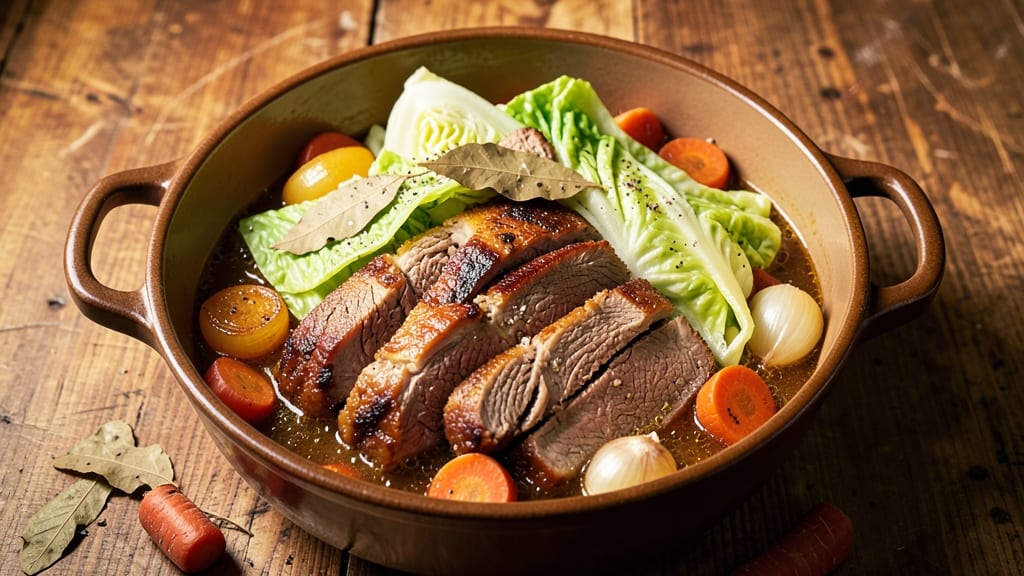
This corned beef brisket and cabbage recipe transforms a classic Sunday dinner into a stovetop shortcut that delivers restaurant-quality tenderness without the oven. After years of perfecting the method, I’ve cracked the code for achieving perfectly seasoned, fork-tender brisket and cabbage that simmers in its own juices—no slow cooker required.
The key lies in a precise balance of spices, garlic, and liquid that builds flavor as it cooks, turning tough cuts into melt-in-your-mouth bites.
The beauty of this method is its foolproof simplicity: just a heavy pot, a few pantry staples, and about 3 hours of hands-off simmering time.
You’ll start with a brisket rubbed with a blend of salt, pepper, and bay leaves, then slow-cook it with garlic, onions, and cabbage until the meat falls apart and the cabbage softens into tender, flavorful strands.
Every bite delivers a perfect harmony of smoky, savory, and slightly sweet notes that make this dish a Sunday staple.
What you’ll end up with is a plated meal that feels indulgent yet requires minimal effort—tender brisket slices piled high with cabbage that’s just soft enough to hold its shape. The aroma alone will fill your kitchen with warmth, while the rich, savory broth makes every bite worth the wait.
This is the kind of dish that turns a regular weeknight into a celebration, all while keeping the process straightforward.
Perfect for feeding a family or doubling for leftovers, this recipe scales effortlessly. Whether you’re hosting guests or treating yourself to a hearty meal, the results are consistently impressive. Here’s how to make it happen on the stovetop—no shortcuts, just better execution.
Ingredients for corned beef brisket and cabbage recipe stove top
Pantry staples plus a brisket for restaurant-quality Sunday dinner in one pot.
| Ingredient | Amount | Notes |
|---|---|---|
| Corned Beef Brisket 🥩 | 2 lb | Flat cut preferred, no seasoning packet |
| Green Cabbage 🥬 | 1 small head | Whole, cut into wedges |
| Yellow Onion 🧅 | 1 whole | Medium, sliced into half-moons |
| Garlic Cloves 🧄 | 6 cloves | Peeled, smashed slightly |
| Bay Leaves 🍃 | 2 whole | Dried, standard size |
| Carrots 🥕 | 3 medium | Whole, peeled, cut into chunks |
| Beef Broth 💧 | 2 cups | Low-sodium preferred |
| Water 💧 | 1 cup | Tap or filtered |
| Apple Cider Vinegar 🍎 | 2 tbsp | For tangy depth |
| Kosher Salt 🧂 | 1 ½ tbsp | For initial seasoning |
| Ground Black Pepper 🌶️ | 1 tsp | Freshly cracked |
| Olive Oil 🫒 | 1 tbsp | For pot coating |
| Fresh Parsley 🌿 | ¼ cup | Chopped, for garnish |
The brisket is everything here. Flat-cut is key—it stays tender and doesn't dry out like point-cut. Grab one from the meat counter at Whole Foods or your butcher shop if you can, but the pre-packaged ones at Costco work perfectly too. Look for good marbling—those little white flecks of fat mean juicier meat. The cabbage should be firm and heavy for its size, with crisp outer leaves. Yellow onions with papery skins last longer than red, and those garlic cloves should smell pungent, not musty. Bay leaves? The dried kind in the spice aisle is fine, but if you've got fresh, use half the amount.
No corned beef brisket? Substitute with beef chuck roast—it'll need extra time to tenderize. Running low on beef broth? Water plus 1 tbsp soy sauce works in a pinch. The vinegar adds that classic tang, but lemon juice at half the amount will do if that's what you've got. Carrots can be baby carrots if you're lazy, but whole carrots stay crispier. Fresh parsley is ideal for garnish, but dried parsley at one-third the amount works if you're out. The olive oil is just for coating the pot—don't skimp, but don't go crazy either.
This keeps beautifully. The brisket reheats best in the same pot with a splash of water—just warm through on low. 3-4 days in the fridge, or freeze portions for up to 3 months. I always make extra because the leftovers are even better the next day. Store the broth separately if you want to use it for other recipes—it's liquid gold. Cabbage wilts fast when reheated, so add it back in just to warm through.
Why You'll Love This Recipe
- One-Pot Magic: I swear by this recipe because it’s literally one pot—no chopping boards, no extra pans, just the brisket, cabbage, and onions simmering together. The cabbage softens right in the liquid, and the onions caramelize just enough to add depth without extra effort.
- Umami Bomb: That corned beef brisket? Already packed with salt, pepper, and spices, but the garlic cloves and bay leaves take it to another level. The slow simmer lets all those flavors meld into something rich and savory—like a hug in a bowl.
- Leftover Legend: This dish begs to be made in bulk. The brisket stays tender for days, and the cabbage actually gets better the next day, almost like a braise. I freeze portions for lazy Sundays or pop them into sandwiches—no one ever complains.
- Budget Hero: Honestly, this is one of those meals where you’re getting so much for so little. A whole brisket feeds a crowd, and cabbage and onions are cheap staples. Plus, the flavor is so satisfying, you won’t miss overpriced takeout.
Step-by-step instructions for corned beef brisket and cabbage recipe
Here's how to transform simple ingredients into a hearty Sunday dinner that smells amazing and tastes even better.
Prepare the Corned Beef Brisket
Place the 2 lb corned beef brisket in a large pot and cover it completely with cold water. I like to add the 1.5 tbsp kosher salt and 1 tsp freshly cracked ground black pepper right now to ensure even seasoning throughout the cooking process. Bring the water to a gentle boil over medium-high heat—you'll see bubbles form around the edges of the pot.
Once boiling, immediately reduce the heat to low and let the brisket simmer uncovered for 1 hour and 15 minutes. This slow simmer ensures the meat stays tender and absorbs all those delicious flavors. I check it occasionally, skimming off any foam that rises to the surface—this keeps the broth clear and clean-tasting.
Sauté the Vegetables
While the brisket simmers, heat the 1 tbsp olive oil in a large skillet over medium heat. Add the sliced yellow onion and cook for 5 minutes until softened and just beginning to turn golden. Add the 6 cloves smashed garlic and cook for another 30 seconds until fragrant—you'll smell that wonderful garlic aroma filling your kitchen.
Add the 3 medium carrots cut into chunks and the green cabbage cut into wedges to the skillet. Stir everything together and cook for 5 minutes until the carrots begin to soften slightly. This step develops the flavors of the vegetables before they join the brisket in the pot.
Combine Everything
After the brisket has simmered, carefully remove it from the pot and set it aside on a plate. Pour out about half of the cooking liquid from the pot—you should have about 2 cups remaining. Add the 2 cups beef broth, 1 cup water, and 2 tbsp apple cider vinegar to the pot with the remaining cooking liquid.
Return the brisket to the pot and add the sautéed vegetables along with the 2 whole bay leaves. Bring everything to a gentle boil over medium heat, then reduce the heat to low again. Let it simmer uncovered for 1 hour. The vegetables should be tender and the brisket should be fork-tender when pierced with a knife.
Finish and Serve
Once the brisket is tender, remove it from the pot and let it rest for 10 minutes on a cutting board. This resting time allows the juices to redistribute throughout the meat, ensuring each slice is moist and flavorful. While it rests, skim any excess fat from the surface of the broth in the pot.
Slice the brisket against the grain into ¼-inch thick slices and arrange it on a serving platter. Spoon the vegetables and their flavorful cooking liquid over the top. Garnish with the 0.25 cup chopped fresh parsley just before serving. This dish tastes best when served immediately, so gather your family around the table for a delicious, comforting meal.
Pro Tips For Making Corned Beef Brisket And Cabbage Recipe Stove Top
- Sear the Brisket First: After burning three batches of corned beef, I finally figured out that a quick sear in a hot pan—just 2 minutes per side—locks in flavor before simmering. Skip this, and you’ll end up with tender but bland meat. (Yes, even if you’re impatient like me.)
- Core the Cabbage: My grandmother swore by this, and she was right: Cutting the cabbage into quarters, removing the tough core, and slicing it into even wedges ensures it cooks through without turning to mush. Uneven pieces? You’ll have some sad, limp leaves by the end.
- Simmer Low and Slow: Sounds weird, but it works: After the initial boil, drop the heat to a bare simmer—just enough to keep tiny bubbles breaking the surface. Too high, and the cabbage will turn to watery sludge while the brisket dries out. (Your future self will thank you.)
- Add Garlic Late: I used to toss the minced garlic in with the onions at the start, and it always burned. Now I wait until the onions are soft and translucent, then add the garlic and bay leaves with the brisket. The difference in flavor is night and day—no bitter aftertaste.
Dietary considerations for this dish
Gluten-Free Adaptations
This recipe is naturally gluten-free, but always double-check your corned beef brisket packaging—some brands include gluten-containing additives. I prefer Trader Joe’s or Whole Foods plain corned beef briskets, which are certified gluten-free.
The broth, vinegar, and spices are also safe, but verify labels if you're highly sensitive. The cabbage and vegetables are inherently gluten-free, so no substitutions are needed there. 🌱
Low-Carb Modifications
For a lower-carb version, reduce the cabbage to just 4 wedges or swap it for cauliflower florets (about 4 cups). Carrots can be omitted entirely or replaced with zucchini slices. The onions add natural sweetness, so keep them in.
Just be mindful of the broth—opt for a low-carb version or reduce it to 1 cup and add extra water. The brisket remains the star, so focus on keeping it tender.
Dairy-Free Considerations
This dish is already dairy-free, but if you're serving it to guests with sensitivities, clarify that the recipe contains no cheese or butter. The only potential concern is the broth—some store-bought versions contain dairy.
I recommend Imagine Foods or Pacific Foods dairy-free broths for peace of mind. The apple cider vinegar and spices are also safe, so no changes are needed beyond broth verification.
Allergen-Friendly Swaps
If someone has a soy allergy, avoid soy-based broths and use a beef broth with no soy additives. For nightshade-sensitive individuals, omit the vinegar and replace it with lemon juice (reduce to 1 tbsp).
The garlic and onions are nightshade-free, so they’re safe. Always check spice blends for hidden allergens—stick to single-ingredient spices like Penzeys for reliability.
Keto-Friendly Adjustments
To make this keto-friendly, focus on the brisket and reduce the cabbage to 2 wedges or skip it entirely. Replace carrots with mushrooms (about 1 cup sliced)) for umami depth. Use bone broth instead of vegetable-based broth to keep it low-carb.
The vinegar adds tang without carbs, but if you're strict, swap it for apple cider vinegar with no added sugar. The result is a hearty, meat-forward dish that fits keto macros.
Nut-Free Environment
This recipe is naturally nut-free, but cross-contamination can be a risk if you share a kitchen with nut products. Use separate utensils and cutting boards if needed. The spices, broth, and vegetables are all nut-free, so no ingredient swaps are necessary.
Just ensure your workspace is clean—especially if you’re using shared tools like skillets or pots. 💡
Nutrition facts
Frequently asked questions
Can I use a different cut of beef instead of corned beef brisket?
Yes! A beef chuck roast works well as a substitute, but it needs extra time—about 30-45 minutes longer—to become tender. The flavor will be slightly different but still delicious. Just monitor closely and check for doneness with a meat thermometer (195°F internal temp).
Why does my corned beef turn out tough instead of tender?
Overcooking is the most common culprit. The brisket should simmer gently for 3 hours total, not boil vigorously. Use a meat thermometer—it's done at 195°F. Also, avoid slicing against the grain (cut with the grain instead) for maximum tenderness.
How do I make this recipe faster on the stove?
Use a heavy-bottomed pot (like Dutch oven) and bring the liquid to a boil first, then reduce to a simmer. Add 1 tsp baking soda to the water when boiling to help tenderize the meat faster. This cuts total cooking time by about 30 minutes while keeping it moist.
What's the best way to reheat leftovers?
Reheat in the same pot with ¼ cup water over low heat for 10-15 minutes. Never microwave—it makes the brisket dry. For cabbage, add it back just before serving to prevent mushiness. The broth reheats beautifully too, perfect for mashed potatoes!
Can I make this in an electric pressure cooker?
Use the high pressure setting for 45 minutes after initial searing. Add all ingredients together, then pressure cook. Release pressure naturally for 10 minutes before opening. The meat will be fork-tender and the cabbage perfectly soft—just watch the cooking time closely.