
Sauces & Condiments
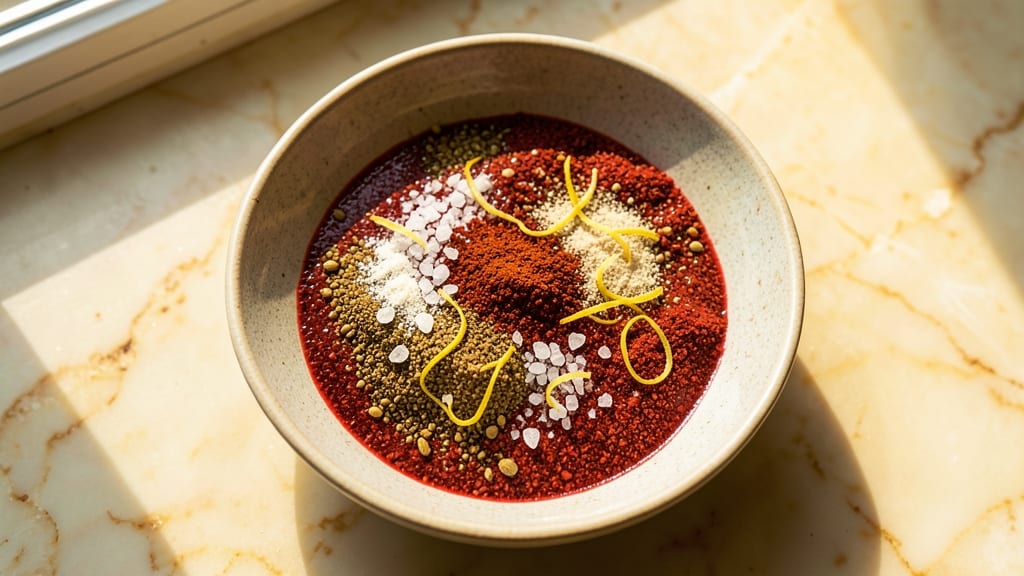
This sumac seasoning recipe transforms simple dishes into vibrant, tangy masterpieces with just a sprinkle—no cooking required. The bright, citrusy blend of sumac, salt, and optional spices elevates everything from grilled meats to salads with restaurant-quality depth.
I developed this mix after realizing how versatile sumac could be beyond its traditional Middle Eastern uses, and it’s now my go-to for adding complexity without overpowering flavors.
The base recipe combines 2 tablespoons ground sumac with 1 teaspoon fine sea salt, creating a zesty, slightly tart seasoning that mimics lemon zest’s brightness.
For added warmth, I often include ½ teaspoon smoked paprika or ¼ teaspoon ground cumin, while a pinch of citrus zest (like lemon or orange) enhances the natural tang. The blend stays potent for up to 6 months when stored in an airtight container away from light.
What makes this seasoning special is its versatility—sprinkle it on roasted vegetables, grilled chicken, or even popcorn for an unexpected twist. The sumac’s vibrant red hue also adds visual appeal, making dishes look as good as they taste.
Whether you’re prepping for a weeknight dinner or a special occasion, this blend delivers professional results with minimal effort.
For those who love experimenting, try adding ½ teaspoon garlic powder for savory depth or a pinch of black pepper for a touch of heat. The possibilities are endless, but the base recipe remains foolproof. Let’s create this flavor-packed blend!
Ingredients for sumac seasoning
Six core ingredients transform into a vibrant, restaurant-quality seasoning blend—simple yet transformative.
| Ingredient | Amount | Notes |
|---|---|---|
| Ground Sumac 🌶️ | 2 tbsp | High-quality, vibrant red powder |
| Fine Sea Salt 🧂 | 1 tsp | Diamond Crystal preferred |
| Smoked Paprika 🌶️ | ½ tsp | For subtle smokiness |
| Ground Cumin 🌿 | ¼ tsp | Toasted for deeper flavor |
| Lemon Zest 🍋 | ½ tsp | Freshly grated preferred |
| Garlic Powder 🧄 | ½ tsp | For savory depth |
| Ground Black Pepper 🌶️ | ⅛ tsp | Pinch for subtle heat |
| Ground Coriander 🌿 | ¼ tsp | Optional citrusy brightness |
| Orange Zest 🍊 | ½ tsp | Alternative citrus option |
Sumac is the star here, so prioritize quality—look for vibrant red powder at Middle Eastern markets or specialty stores like Penzeys. The finer the grind, the better it dissolves into dishes. I always buy a small jar and keep it in my pantry for quick access. For the smoked paprika, Mezcal or Chipotle varieties add extra depth, but regular smoked works too. The citrus zest? Freshly grated is non-negotiable—pre-made zest loses its punch. If you're short on time, use ½ teaspoon dried lemon peel powder as a backup, but it won’t be as bright.
No smoked paprika? Substitute with ¼ teaspoon cayenne pepper for heat, or skip it entirely if you prefer pure sumac tang. Short on citrus zest? Dried lemon peel powder at half the amount works in a pinch, but the flavor won’t be as vibrant. The garlic powder can be swapped for ½ teaspoon onion powder if you’re out, though the flavor profile shifts slightly. For a more Middle Eastern touch, add ¼ teaspoon ground cardamom. The black pepper is truly optional—just a whisper of heat—but I find it rounds out the blend beautifully. Store-bought sumac blends often include fillers, so making your own guarantees purity.
This blend keeps its vibrant color and potent flavor for up to 6 months in an airtight container away from light. I like to store mine in a small amber glass jar with a tight-sealing lid—it preserves the color and prevents moisture absorption. For long-term storage, freeze portions in ice cube trays and transfer to a baggie. The zest starts to lose its brightness after 2 weeks, so if you’re not using it all at once, store it separately and add it fresh when needed. A little goes a long way—start with a ½ teaspoon per dish and adjust to taste.
Why You'll Love This Recipe
- Five-Minute Mix: I swear by this—just toss those spices in a bowl, give it a quick stir, and boom. No measuring cups, no fuss, no waiting. The sumac’s tangy punch and that lemon zest brighten everything up instantly, like a flavor wake-up call.
- Tangy Magic: Honestly, the combo of smoky paprika and citrusy sumac is chef’s kiss. It’s not just "spicy"—it’s this bright, earthy, slightly funky kick that sticks with you. Sprinkle it on roasted veggies or grilled chicken, and suddenly, everything tastes like it’s been kissed by the Mediterranean sun.
- Pantry Staple: Between us, this is my go-to for everything. Toss it on popcorn for movie night, shake it into dressings for a lunch salad, or even dust it over store-bought hummus when I’m lazy. It’s the kind of seasoning that makes even the simplest meal feel intentional.
- Lasts Forever: I’ve had this blend sitting in my spice rack for months, and it’s still fresh. No weird clumping, no loss of flavor—just pure, reliable punch. And because it’s cheap to make (seriously, a few dollars’ worth of spices), I never feel bad stocking up. Win-win.
Step-by-step instructions for sumac seasoning recipe
This vibrant blend comes together in minutes with just a few simple steps.
Combine the Dry Ingredients
In a medium mixing bowl, add the 2 tablespoons ground sumac and 1 teaspoon fine sea salt. The sumac should look like a fine, vibrant red powder with a slightly tangy aroma. Use a whisk to break up any clumps in the sumac—this ensures an even distribution throughout the blend.
Next, add the 0.5 teaspoon smoked paprika and 0.25 teaspoon ground cumin. These spices will contribute warmth and depth to the citrusy brightness of the sumac. Stir gently with a silicone spatula to avoid creating dust clouds. The paprika adds a subtle smokiness that pairs beautifully with the lemon and orange zest we'll add next.
Incorporate the Zesty Citrus Elements
Add the 0.5 teaspoon lemon zest and 0.5 teaspoon orange zest to the bowl. The citrus zest should look like tiny, bright yellow and orange specks. These ingredients are what give this blend its signature tangy, refreshing character. Use your fingers to gently crush any larger zest pieces between your palms—this helps release their aromatic oils.
Now add the 0.5 teaspoon garlic powder and 0.125 teaspoon ground black pepper. The garlic powder provides a savory backbone, while the black pepper adds just a hint of warmth. Finally, sprinkle in the 0.25 teaspoon ground coriander for a touch of citrusy brightness that complements the sumac perfectly. The coriander is optional but enhances the overall complexity of the blend.
Mix Thoroughly for Even Distribution
Use a fork or small whisk to gently fold all the ingredients together. The goal is to create a uniform blend without creating too much dust. Mix just until you can no longer see distinct piles of individual spices—this usually takes about 30 seconds of careful stirring.
At this point, you should notice the vibrant red color of the sumac dominating the blend, with subtle hints of yellow and orange from the citrus zest. The texture should be fine and powdery, with no large clumps remaining. If you find any stubborn clumps, press them gently with the back of a spoon to break them down.
Store Properly for Maximum Freshness
Transfer the finished sumac seasoning to an airtight container with a tight-sealing lid. I recommend using a small glass jar with a metal clamp lid—this preserves the freshness and prevents moisture from getting in. The blend should keep well in a cool, dark pantry for up to 3 months if stored properly.
Before using, give the jar a gentle shake to redistribute any settled spices. This seasoning works beautifully on grilled meats, roasted vegetables, salads, and even as a finishing touch on yogurt or hummus. The combination of citrus zest and sumac creates a unique, bright flavor profile that's perfect for both savory and slightly sweet dishes.
Pro Tips For Making Sumac Seasoning
- SIFT THE SUMAC: Mix the ground sumac with the lemon zest first—this brightens the color and prevents clumping. I learned this the hard way when my first batch turned dull gray instead of vibrant red.
- GRIND THE CUMIN FRESH: Pre-grinding cumin loses potency fast, so toast whole cumin seeds in a dry pan for 2 minutes until fragrant, then grind them yourself. The extra effort makes the difference between "meh" and "wow" in your seasoning.
- SALT IN LAYERS: Don’t dump all the sea salt at once—sprinkle half before mixing, taste, then add the rest. Sumac’s tartness needs balancing, and this lets you adjust without overdoing it.
- ZEST WHEN DRY: Use a microplane for lemon zest and let it sit uncovered for 10 minutes before mixing. The oils release better, and you avoid that wet, heavy texture that kills the blend’s lightness. (Yes, even if you’re impatient like me.)
Flavor customization for this recipe
Citrus Variations
Swap the lemon zest for orange zest or lime zest to shift the flavor profile. I often use ½ teaspoon lime zest for a sharper, more tropical twist—perfect for grilled fish or tacos.
For a sweeter note, try ½ teaspoon grapefruit zest, which pairs beautifully with roasted chicken. The key is freshness: always zest just before mixing to preserve the oils. 🍋
Spice Level Boost
Add ¼ teaspoon cayenne pepper for a subtle kick or ½ teaspoon chili powder for a smoky heat. I like combining both for depth—start with ¼ teaspoon each and adjust to taste.
For a Middle Eastern touch, add ¼ teaspoon ground cardamom, which balances the tang beautifully. Store any spicy additions separately until ready to mix. 🌶️
Herb Infusions
Fold in ½ teaspoon dried thyme or ½ teaspoon dried rosemary for an earthy contrast. Fresh herbs like chopped cilantro or dried oregano work too—just add them last to avoid overpowering the sumac.
I often sprinkle ½ teaspoon dried mint for a refreshing finish, especially on lamb dishes. Keep herbs separate if using fresh to prevent moisture. 🌿
Sweet-Savory Balance
Add ½ teaspoon honey powder or ¼ teaspoon cinnamon for a sweet-savory twist. This works surprisingly well on roasted carrots or glazed meats. For a smoky-sweet combo, mix in ½ teaspoon maple powder—it dissolves seamlessly. Always taste before storing to ensure the balance is right. 🍯
Global Twists
For a North African vibe, add ½ teaspoon ground coriander and ¼ teaspoon fennel seeds. A Mexican-inspired version includes ½ teaspoon cumin and ¼ teaspoon oregano.
The sumac’s tang cuts through rich flavors like cheese or beans, making it a versatile global player. Adjust spices to match your dish’s profile. 🗺️
Nutrition facts
Frequently asked questions
What’s the best way to store homemade sumac seasoning?
Keep it in an airtight container (like a glass jar) in a cool, dark pantry for up to 6 months. For longer storage, freeze portions in ice cube trays—this preserves the vibrant color and prevents moisture absorption. Always store the citrus zest separately if using fresh to maximize freshness.
Can I use sumac seasoning on non-meat dishes?
It’s perfect for roasted vegetables, salads, hummus, popcorn, or even as a finishing touch on yogurt. The bright tang enhances flavors without overpowering them—try it on avocado toast or grilled veggies for a zesty kick.
How much sumac seasoning should I use per dish?
Start with ½ teaspoon and adjust to taste. For grilled meats or roasted veggies, 1 teaspoon works well. Sprinkle lightly on salads or yogurt—just enough to brighten the dish. The citrus zest adds potency, so use sparingly at first.
What if I don’t have smoked paprika?
Swap it for ¼ teaspoon cayenne pepper for heat or skip it entirely if you prefer pure tang. For smokiness, try ½ teaspoon chipotle powder (if available). The blend will still taste great—just slightly different. The key is balancing the sumac’s brightness with complementary flavors.
Can I make this seasoning without citrus zest?
Yes! Replace the zest with ½ teaspoon dried lemon peel powder or ¼ teaspoon orange extract (use sparingly). The flavor won’t be as vibrant, but it’ll still add a citrusy note. For a deeper tang, increase the sumac to 2.5 tablespoons and reduce salt slightly.