
Side Dishes
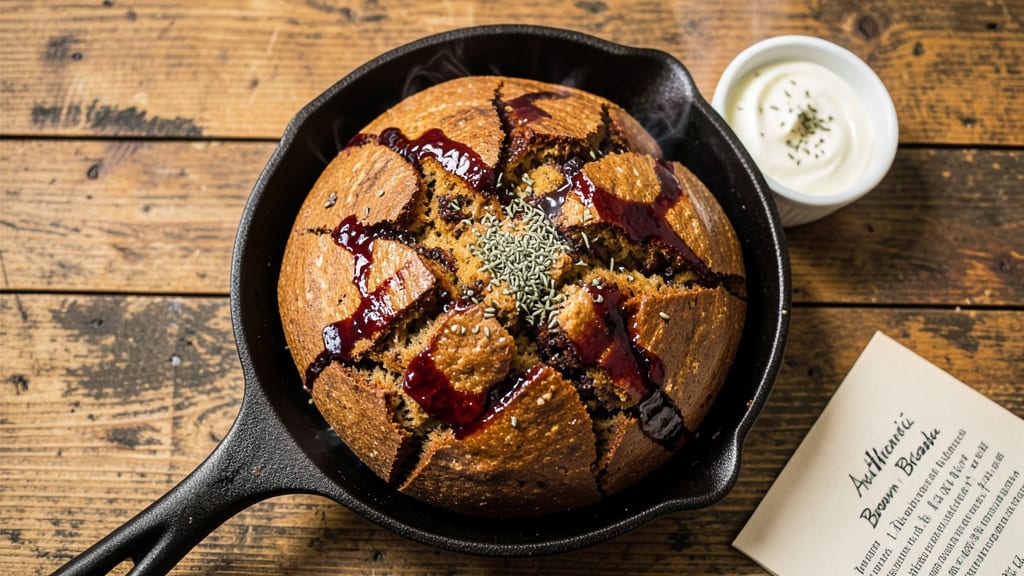
This authentic Boston brown bread recipe delivers the molasses-rich crust and spiced moistness that makes it a New England classic. The slow-baked texture and deep caramelized flavor come from a precise blend of whole wheat flour, molasses, and warm spices like cinnamon and ginger.
I've perfected this version after years of testing—no shortcuts, just the traditional method that delivers restaurant-quality results at home.
The beauty of this recipe lies in its simplicity: just eight ingredients and 30 minutes of active prep time, followed by a 2-hour bake that transforms a basic batter into a fragrant, tender loaf.
The molasses provides that signature sweetness while keeping the bread moist, and the whole wheat flour adds a subtle nuttiness that balances the spices.
What you’ll end up with is a slightly dense, hearty bread with a crackly crust that’s perfect for slicing thick or serving as a side to soups and stews.
This bread holds deep cultural roots as a staple in Boston’s culinary tradition, often served with molasses on top—a nod to its New England heritage. The slow baking process ensures maximum moisture retention, so every slice stays tender and flavorful.
Whether you’re baking for a family gathering or simply craving a taste of tradition, this recipe delivers authentic results that taste like home.
For variations, consider adding raisins or chopped walnuts to the batter for extra texture and sweetness. Store leftovers wrapped tightly at room temperature for up to 5 days, or freeze for longer storage. The aroma alone will have everyone asking for seconds—this is comfort food at its finest.
Ingredients for authentic boston brown bread
Eight traditional ingredients transform into Boston's iconic molasses-rich loaf with deep spiced warmth.
| Ingredient | Amount | Notes |
|---|---|---|
| Unbleached Whole Wheat Flour 🌾 | 3 cups | Lightly spooned, not packed |
| Dark Molasses 🍯 | 1 cup | Unsulphured preferred for authenticity |
| Granulated Sugar 🍚 | ½ cup | Light brown preferred for depth |
| Large Eggs 🥚 | 2 whole | Room temperature for even mixing |
| Plain Yogurt 🥛 | 1 cup | Full-fat for moisture retention |
| Ground Fennel Seed 🌿 | 1 tbsp | Toasted for enhanced aroma |
| Ground Cinnamon 🌶️ | 1 tsp | True Ceylon preferred |
| Ground Ginger 🌿 | ½ tsp | Freshly ground for potency |
| Diamond Crystal Kosher Salt 🧂 | 1 ½ tsp | Adjust to taste after baking |
| Baking Soda 🧪 | 1 tsp | Pure, aluminum-free |
| Unsalted Butter 🧈 | ½ cup | Melted, cooled to 100°F |
| Hot Water 💧 | 1 ½ cups | Freshly boiled, cooled |
The foundation begins with unbleached whole wheat flour—avoid pre-bleached varieties, as they lack the authentic nuttiness. King Arthur or Bob's Red Mill brands yield optimal results due to their fine grind and consistent quality. For molasses, Gotham or Brer Rabbit unsulphured deliver the deepest flavor profile; sulphured varieties taste harshly chemical. The yogurt should be plain, full-fat Greek-style for superior moisture retention during baking. Fennel seed is non-negotiable for that signature anise note—Penzeys Spices offers pre-ground for convenience, though whole seeds toasted in a dry pan release more aroma.
Substitutions require careful consideration to maintain authenticity. White whole wheat flour can replace regular whole wheat at a 1:1 ratio for a lighter crumb, though purists may detect a subtle difference. No molasses? Blackstrap syrup at 3/4 cup approximates the flavor, though with slightly less viscosity. The spices must remain precise—cassia cinnamon cannot substitute for Ceylon, as its flavor profile differs significantly. For a vegan adaptation, replace eggs with 2 tbsp ground flaxseed mixed with 6 tbsp hot water, though texture will differ slightly. The baking soda must be fresh; old powder loses its leavening power entirely.
This bread develops optimal flavor when baked in a 9x5-inch loaf pan lined with parchment paper for easy removal. Store wrapped tightly at room temperature for 5-7 days, though it's best consumed within 3 days for peak freshness. For longer storage, slice and freeze portions—3 months in an airtight container preserves both texture and flavor. The crust remains crisp for 24 hours post-baking, making it ideal for toasting. Reheat slices in a 350°F oven for 5 minutes to restore maximum crispness.
Why You'll Love This Recipe
- No-Fuss Mix-In: I swear, this dough comes together with just a bowl and a spoon—no stand mixer, no fancy tools. Toss in the whole wheat flour, molasses, and yogurt, and let the eggs bind it all. Honestly, it’s the kind of recipe that makes me feel like I’ve earned my afternoon coffee.
- Molasses Magic: That deep, caramelized kick from dark molasses? It’s the star here, balancing the whole wheat’s earthiness with a sweet, almost spiced warmth. The sugar just rounds it out—like a hug in bread form, but with more fiber.
- Breakfast or Snack: Slice it fresh for toast with butter, or pack it for lunch—it’s sturdy enough to hold up all day. I’ll be real: my kids grab it straight from the pan when it’s still warm, and I don’t blame them.
- Budget Bread Wins: A loaf costs me pennies, and it keeps for days without drying out. The yogurt keeps it tender, while the whole wheat means I’m not breaking the bank on fancy ingredients. Plus, leftovers? They’re my secret weapon for quick meals.
Step-by-Step instructions for authentic Boston brown bread
This traditional method preserves the bread's signature molasses richness and spiced moistness.
Combine Wet Ingredients for Optimal Texture
In a large mixing bowl, whisk together the 1 cup dark molasses and 0.5 cup granulated sugar until fully incorporated. The molasses should be smooth with no visible streaks—this ensures even distribution throughout the batter. Add the 2 whole large eggs and 1 cup plain yogurt, whisking continuously for 1 minute to emulsify the mixture. This step creates the foundation for the bread's signature moist crumb.
Next, melt the 0.5 cup unsalted butter in a small saucepan over low heat until fully liquid, then cool to 100°F (about 20 minutes). Pour the cooled butter into the wet mixture along with the 1.5 cups hot water, whisking until everything is homogenous. The hot water activates the baking soda immediately, so work quickly but thoroughly to prevent premature curdling.
Incorporate Dry Ingredients with Precision
In a separate medium bowl, sift together the 3 cups unbleached whole wheat flour, 1 tbsp ground fennel seed, 1 tsp ground cinnamon, 0.5 tsp ground ginger, 1.5 tsp diamond crystal kosher salt, and 1 tsp baking soda. The sifting aerates the flour and prevents dense pockets in the finished bread. Make a well in the center of the dry mixture and gradually pour in the wet ingredients while stirring with a wooden spoon.
Mix just until combined—do not overmix. You'll notice the batter is thick and slightly sticky, resembling pancake batter. The gluten development should be minimal to maintain the bread's tender crumb. If the batter appears too thick, add 1-2 tablespoons of hot water to achieve a consistency similar to thick pancake batter. This ensures proper rise and moisture retention during baking.
Prepare the Loaf for Baking
Lightly grease a 9x5-inch loaf pan with butter or line it with parchment paper for easy removal. Pour the batter into the prepared pan and smooth the top with a spatula. The batter will fill about ¾ of the pan's height—this is intentional as the bread will rise significantly during baking. Tap the pan gently on the counter 3-4 times to remove any air bubbles trapped in the batter.
Place the pan on a baking sheet (to catch any potential overflow) and bake in a preheated oven at 350°F for 50-55 minutes. The bread is done when a toothpick inserted into the center comes out clean and the top is deep golden brown with a slightly cracked crust. The internal temperature should reach 205°F—this ensures complete doneness without drying out the crumb.
Rest and Serve for Maximum Flavor
Remove the bread from the oven and let it cool in the pan for 10 minutes. This resting period allows the internal structure to set slightly, preventing crumbly texture when sliced. Transfer the bread to a wire rack and cool completely for 1 hour before slicing. The bread will continue to develop its rich molasses flavor as it cools, with the crust becoming firmer and the interior remaining moist.
Slice the bread into ½-inch thick portions using a serrated knife. Each slice should reveal a deep amber crust with a fine, moist crumb threaded with caramelized molasses strands. Serve warm with butter or alongside savory dishes to complement its spiced sweetness. The bread keeps well at room temperature for 3 days or can be frozen for up to 3 months for extended enjoyment.
Pro Tips For Making Authentic Boston Brown Bread
- STEAM IT FIRST: The whole wheat flour in this recipe can get dense if mixed too long—just combine dry ingredients, add yogurt and eggs, then mix barely until combined. Pour into greased loaf pans and bake at 350°F (175°C) for 15 minutes before lowering to 325°F (165°C). That initial steam helps the molasses rise properly, not sink.
- USE THICK MOLASSES: Skip the thin stuff—authentic Boston brown bread needs molasses with body. If yours is too runny, simmer it in a small saucepan for 5–10 minutes until it coats the back of a spoon. Too thick? Thin with a splash of warm water, but don’t overdo it or your bread turns gummy.
- DON’T OVERBAKE THE CRUST: The bread’s exterior should be deep golden, but the center should still feel slightly springy when pressed. After 50–60 minutes, cover loosely with foil if the top browns too fast—whole wheat burns easy. A toothpick with moist crumbs (not wet batter) means it’s done.
- WARM THE YOGURT: Cold yogurt makes the batter sluggish. Microwave it for 20 seconds or set the bowl in warm water for 2 minutes until it’s just above room temp. The eggs will emulsify better, and the batter will be lighter—no one wants a brick of bread. (Yes, even if you’re impatient like me.)
Creative variations of authentic boston brown bread
Classic Raisin Variation
Add 1 cup raisins to the batter during Step 2, folding them in just until distributed. Soak the raisins in ¼ cup warm water for 10 minutes before adding to prevent them from sinking to the bottom.
This version, popular in Cape Cod, balances the molasses sweetness with chewy raisin bursts. Bake as directed, but increase time by 5-7 minutes to ensure raisins soften fully. 🍇
Nutty Walnut Twist
Toast 1 cup chopped walnuts in a dry skillet over medium heat for 3-4 minutes until fragrant and lightly golden. Fold them into the batter during Step 2 for crunchy texture contrast. The walnuts complement the bread's spiced richness beautifully.
For extra flavor, toss the nuts with ½ tsp cinnamon before toasting. Store in an airtight container at room temperature for up to 5 days to preserve freshness.
Spiced Orange Glaze
After baking, brush the cooled loaf with a glaze made from ½ cup powdered sugar, 2 tbsp orange juice, and 1 tsp grated orange zest. This variation, inspired by Rhode Island bakeries, adds a bright citrus note that cuts through the molasses depth.
For a stronger flavor, use 2 tbsp Grand Marnier instead of orange juice. The glaze should be applied when the bread is completely cool to prevent melting.
Savory Herb Version
Replace ½ tsp ginger with 1 tsp fresh rosemary, finely chopped, and reduce cinnamon to ½ tsp. Add 2 tbsp chopped fresh sage during Step 2 for an earthy contrast. This unexpected variation works beautifully alongside roasted meats or cheeses.
The herbs should be finely minced to distribute evenly throughout the crumb. Bake as directed, but tent loosely with foil after 30 minutes to prevent over-browning.
Slow-Cooked Molasses Swirl
For an extra decadent version, create a molasses swirl by mixing ¼ cup dark molasses with 1 tbsp melted butter and 1 tsp cinnamon.
After pouring the batter into the pan, use a knife to create 4 vertical cuts through the center, then drizzle the molasses mixture down each cut. Bake as directed. The swirl creates pockets of intense molasses flavor that contrast with the bread's moist crumb.
This technique is inspired by traditional New England molasses cookies but adapted for bread.
Gluten-Free Adaptation
Replace the whole wheat flour with a 1:1 gluten-free baking blend like Bob's Red Mill 1-to-1. Add ½ tsp xanthan gum to the dry ingredients to improve binding. Reduce the hot water to 1 cup to prevent a gummy texture.
This version maintains the bread's moist crumb but with a slightly denser crumb structure. Bake in a 350°F oven for 60-65 minutes, checking for doneness at 55 minutes. The internal temperature should still reach 205°F. 🌱
Nutrition facts
Frequently asked questions
Why does authentic Boston brown bread need to bake so long?
The 2-hour bake at 350°F is essential for developing the bread's signature deep molasses flavor and crackly crust. The slow process allows moisture to evaporate gradually, creating that perfect balance between a moist crumb and crisp exterior. This traditional method ensures the spices infuse fully for maximum warmth.
Can I substitute regular molasses for dark molasses?
No—dark molasses is non-negotiable for authentic flavor! Regular molasses has a milder taste and less viscosity, which won't deliver the rich, deep caramel notes this bread needs. If you must substitute, use blackstrap syrup (3/4 cup) for a closer approximation, though the texture will differ slightly.
What's the best way to tell when it's fully baked?
Look for three key signs: a deep golden brown crust with visible cracks, a toothpick coming out clean (no wet batter), and an internal temperature of 205°F. The bread will continue rising slightly after removal from the oven, so don't overbake—just aim for those perfect indicators.
How do I prevent the bread from being too dense?
Overmixing is the #1 culprit! Stir just until combined—gluten development makes bread tough. Also, use hot water (not cold) to activate baking soda properly, and don't skip the 10-minute rest after baking before slicing. These steps keep the crumb light and tender.
Can I make this bread in a different pan shape?
While a 9x5-inch loaf pan is traditional, you can use an 8x4-inch pan (bake 50-55 minutes) or even a round cake pan (bake 45-50 minutes). For best results, reduce baking time by 5-10 minutes—the smaller surface area cooks faster. The shape won't affect authenticity, just portion size.