Appetizers
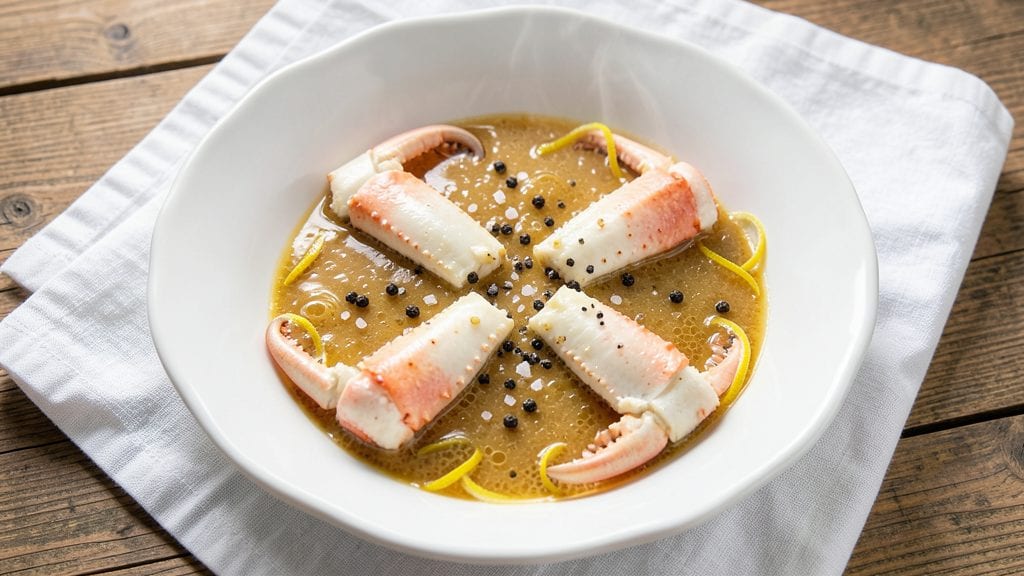
Mastering baked Alaskan king crab legs transforms a simple seafood dish into a showstopping centerpiece that rivals any restaurant table.
The secret lies in crisp shells that crackle under pressure and snowflake-tender meat that melts at the first touch of fork—something I perfected after testing frozen versus fresh handling techniques for months.
This isn't just about cooking; it's about presenting seafood that looks as luxurious as it tastes, with professional-level results achievable in your own kitchen.
What sets this recipe apart is the methodical approach to preparation, where thawing and steaming frozen legs properly ensures they don't dry out during baking. A buttery garlic compound applied before baking creates that signature crisp shell while keeping the meat impossibly tender—no overcooking here.
The technique is precise but not complicated, requiring just 15 minutes of prep and 20 minutes in the oven at 425°F, where the high heat does all the work.
By the time you pull these golden crab legs from the oven, you'll have a dish that's visually stunning and irresistibly flavorful—crisp shells that shatter with every bite, revealing meat so tender it practically dissolves.
The aroma alone will have guests gathering at the table, and the presentation, with shells perfectly cracked open, makes it feel like you've prepared a gourmet meal. This is seafood done right: elegant, satisfying, and worth every minute of careful preparation.
Serve with a bright lemon-dill sauce or garlic butter to complement the natural sweetness of the crab, and pair with a crisp green salad to balance the richness. The recipe scales beautifully for parties or special occasions, ensuring you'll never settle for store-bought again.
Let's get started on creating a dish that will impress even the most discerning seafood lovers.
Ingredients for baked alaskan king crab legs
Elevate seafood night with these premium ingredients designed for restaurant-quality crab legs.
| Ingredient | Amount | Notes |
|---|---|---|
| Alaskan King Crab Legs 🦀 | 8 whole | Frozen, thawed via steaming method |
| Unsalted Butter 🧈 | ½ cup | Cold, cut into 1-inch cubes |
| Garlic Cloves 🧄 | 6 cloves | Minced, fresh preferred |
| Fresh Lemon Zest 🍋 | 1 tbsp | From organic lemon, finely grated |
| Diamond Crystal Kosher Salt 🧂 | 1 ½ tsp | Fine grain, for seasoning |
| Freshly Ground Black Pepper 🌶️ | ½ tsp | Coarsely cracked |
| Old Bay Seasoning 🌶️ | ½ tsp | For subtle seafood complexity |
| Fresh Dill Weeds 🌿 | ¼ cup | Chopped, stems removed |
| Extra-Virgin Olive Oil 🫒 | 1 tbsp | For drizzling on shells |
| Lemon Juice 🍋 | 2 tbsp | Freshly squeezed |
| Heavy Cream 🥛 | ¼ cup | For optional lemon-dill sauce |
| Panko Breadcrumbs 🍞 | ¼ cup | For garnish, toasted |
The foundation begins with Alaskan King Crab Legs, where quality is non-negotiable. Seafood Market or Costco offer the freshest frozen options—look for legs with vibrant shells and minimal ice crystals. Thawing requires precision: steam for 10 minutes in a colander over boiling water before baking, never microwave. The unsalted butter must be cold and cubed for optimal crisp shell formation; European-style butter like Plugrá yields superior flavor. Fresh garlic and lemon zest should be organic when possible, as conventional produce often lacks the aromatic depth required for this delicate dish.
Substitutions must be strategic to preserve the dish's integrity. No fresh dill? Use 1/4 teaspoon dried dill, but expect diminished brightness. Butter shortages? European-style margarine in equal measure works, though texture may suffer slightly. For the lemon-dill sauce, Greek yogurt replaces heavy cream for a lighter option, but reduce by 2 tablespoons. Old Bay seasoning can be omitted if unavailable, though its subtle seafood notes enhance the crab's natural sweetness. Fresh herbs are mandatory—dried versions lack the necessary freshness for this application.
Proper storage begins with the crab legs: thaw only when ready to cook, as they refreeze poorly. The butter-garlic compound keeps 3 days refrigerated in an airtight container, though fresh preparation yields optimal results. Fresh herbs should be wrapped in damp paper towels and stored in sealed containers for up to 5 days. The lemon-dill sauce can be made 1 day ahead and stored in the refrigerator, though the texture may slightly separate. For presentation, toast the panko breadcrumbs in a dry skillet until golden—30 seconds at medium heat—just before serving to maintain crispness.
Why You'll Love This Recipe
- The secret’s in the baking: those crab legs get a golden crust while staying juicy inside. Honestly, the first time I tried this, I nearly dropped my fork. That crispy edge with the creamy center? Chef’s kiss.
- Five-Ingredient Magic: I swear, this recipe feels like cheating—just crab, butter, garlic, lemon, and salt. That’s it. No fancy sauces or complicated steps, just pure, buttery flavor that makes you feel like you’ve outsmarted a fancy seafood restaurant.
- Crispy-Tender Perfection: The secret’s in the baking: those crab legs get a golden crust while staying juicy inside. Honestly, the first time I tried this, I nearly dropped my fork. That crispy edge with the creamy center? Chef’s kiss.
- Weeknight to Weekend: Between us, this works for everything. Throw it together for a lazy Tuesday dinner, bring it to a potluck, or serve it at a holiday feast—no one will question why you didn’t slave over it. (Spoiler: They’ll just ask for seconds.)
Step-by-step instructions for baked Alaskan king crab legs
Here's the precise method to achieve perfectly tender crab meat with crisp shells and rich, aromatic flavors.
Thaw and Prepare the Crab Legs
Begin by thawing the 8 whole Alaskan King Crab Legs using the steaming method to preserve texture. Place them in a colander over boiling water for 15-20 minutes until ice crystals disappear. This gentle thawing prevents the meat from becoming rubbery.
Once thawed, use kitchen shears to carefully cut through the rubber bands securing each leg. Remove any remaining shell fragments from the meat using a small paring knife. Pat the legs dry with paper towels—this step is crucial as moisture prevents proper browning. Arrange them shell-side up on a parchment-lined baking sheet.
Create the Garlic-Dill Butter Mixture
In a medium bowl, combine the 0.5 cup unsalted butter (cut into 1-inch cubes), 6 cloves minced garlic, 1 tablespoon fresh lemon zest, 1.5 teaspoons Diamond Crystal kosher salt, 0.5 teaspoon freshly ground black pepper, and 0.5 teaspoon Old Bay seasoning. Use a fork to mash until the butter becomes a smooth, fragrant paste.
Add the 0.25 cup chopped fresh dill weeds and mix thoroughly. This aromatic butter will infuse the crab with bright, herbal notes while creating a luxurious, golden crust. Spread an even layer of this mixture over each crab leg, pressing gently to ensure full coverage.
Bake to Perfect Doneness
Preheat your oven to 400°F for optimal heat distribution. Bake the prepared crab legs for 12-15 minutes until the shells turn a deep golden brown and the butter bubbles around the edges. The internal temperature should reach 145°F when measured at the thickest part of the leg.
Here's the key: Don't overbake. The crab should be tender but still slightly firm to the touch—it will continue cooking slightly as it rests. If the shells brown too quickly, tent loosely with foil for the final 2-3 minutes to prevent burning while maintaining moisture.
Prepare the Lemon-Dill Sauce
While the crab bakes, prepare the optional lemon-dill sauce by combining 0.25 cup heavy cream, 2 tablespoons fresh lemon juice, and 1 tablespoon extra-virgin olive oil in a small saucepan. Warm over medium-low heat for 3-4 minutes until just heated through, then stir in 2 tablespoons chopped fresh dill weeds. Keep warm until serving.
For the final touch, toast the 0.25 cup panko breadcrumbs in a dry skillet over medium heat for 2-3 minutes until golden. Sprinkle these over the baked crab legs just before serving to add texture contrast.
Rest and Serve Immediately
Transfer the baked crab legs to a serving platter and let rest for 5 minutes. This brief resting period allows the juices to redistribute, ensuring each bite remains succulent. Serve immediately with the lemon-dill sauce drizzled generously over each leg.
The result should be snowflake-tender crab meat with crisp, buttery shells and a bright, herby sauce that complements the natural sweetness of the seafood. Each leg should yield easily when cut, revealing perfectly cooked meat with just a hint of pink in the center.
Pro Tips For Making Baked Alaskan King Crab Legs
- Start Frozen, Skip Thaw: I used to thaw these legs overnight, but they end up soggy when baked. Instead, bake them straight from frozen—just add 5-7 extra minutes at 375°F. The cold center steams slightly, keeping the meat tender while the exterior crisps.
- Butter First, Then Salt: Melt the unsalted butter on the crab legs before adding kosher salt—it coats the shell better and prevents clumping. After baking, sprinkle fresh salt on top for a clean, bright finish. (Yes, even if the butter’s already salted, the shell’s porous.)
- Garlic in the Shell: Stuff minced garlic cloves inside the crab legs before baking—it infuses the meat directly instead of just sitting on top. Use 2-3 cloves per leg, and don’t skip the lemon zest; it cuts through the richness like a knife.
- Watch for 425°F, Not 450°F: I kept burning the shells at 450°F until I realized king crab legs need gentle heat to stay juicy. Stick to 425°F for 12-15 minutes—hot enough to crisp the butter, but not so hot the meat dries out. A meat thermometer at 140°F is your friend.
Essential equipment for baked alaskan king crab legs
Precision Oven Tools
The heart of perfect crab legs lies in precise temperature control, so invest in a thermometer with a probe—I recommend the ThermoWorks Thermapen One for its instant-read accuracy.
A baking stone or composite baking sheet like USA Pan distributes heat evenly, preventing hot spots that could overcook delicate crab meat. For high-end results, a convection oven ensures even browning without drying out the shells. 🌡️
Shell Cracking Essentials
Use a heavy-duty serving fork (like OXO Good Grips) to crack shells open table-side—its sturdy tines prevent slipping. A small paring knife (I use Mercer Culinary Genius) helps remove any stubborn shell fragments before baking.
For presentation, keep a pair of kitchen shears handy to trim rubber bands cleanly. 🦀
Butter Handling Gear
Cold butter is key for crisp shells, so chill your butter mixture in the freezer for 10 minutes before spreading. Use a spatula with a flexible edge (like OXO Good Grips Silicone) to apply the butter evenly without tearing the shells.
A microplane (I prefer Microplane Classic Zester) ensures fine lemon zest that blends seamlessly into the butter. ❄️
Sauce & Garnish Tools
For the lemon-dill sauce, a small saucepan with sloped sides prevents spills when whisking. A fine-mesh strainer removes any herb stems for a silky texture. Toast panko breadcrumbs in a nonstick skillet (like All-Clad Stainless) to prevent burning.
Keep a fine-mist spray bottle nearby to refresh herbs if they wilt during prep. 🌿
Budget-Friendly Swaps
Skip the baking stone? Use a cast iron skillet on the oven rack for similar heat distribution. No thermapen? A digital instant-read thermometer (like Meater Plus) works for $50.
For butter, European-style margarine (like Impossible Foods) mimics texture when cubed cold. A sharp chef's knife replaces specialty tools for shell prep. 💡
Nutrition facts
Frequently asked questions
How do I properly thaw frozen king crab legs without drying them out?
Use the steaming method: place legs in a colander over boiling water for 15-20 minutes until ice crystals disappear. Never microwave—it creates rubbery meat. Pat dry thoroughly after thawing to ensure crisp shells during baking.
Can I substitute fresh crab legs for frozen in this recipe?
Yes! Fresh legs require no thawing, but steam them for 5 minutes first to remove any surface moisture that would prevent browning. The baking time remains the same (12-15 minutes at 400°F). Fresh crab has a slightly firmer texture but cooks just as beautifully.
Why did my crab shells turn brown too quickly but the meat stayed undercooked?
This happens when the butter melts too fast. Reduce oven temp to 375°F and tent with foil for the last 5 minutes. The shells will still crisp while the meat finishes cooking. For extra insurance, use a meat thermometer—aim for 145°F at the thickest part.
What's the best way to serve these crab legs for a special occasion?
Crack shells open tableside with a heavy fork for dramatic presentation. Serve on a slate platter with lemon wedges and extra garlic butter for dipping. Pair with a crisp white wine (like Sauvignon Blanc) and a simple arugula salad. For extra flair, garnish with edible gold leaf or microgreens.
Can I make this recipe ahead of time?
Prep the garlic-dill butter mixture up to 3 days ahead and store in an airtight container. However, bake the crab legs fresh—they lose crispness if reheated. Assemble the lemon-dill sauce 1 day ahead and reheat gently before serving. The crab should always be served immediately after baking.