
Sauces & Condiments
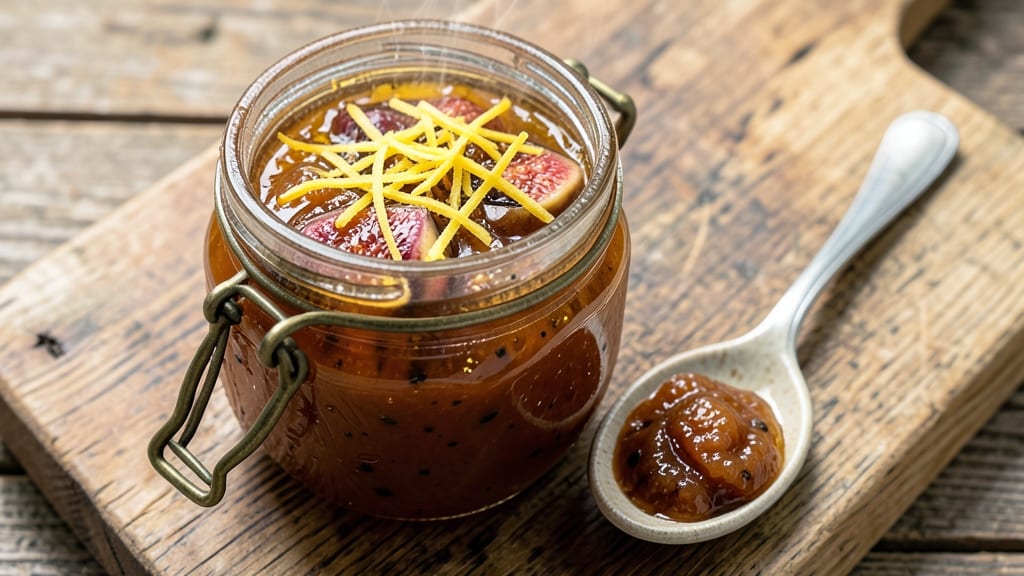
This fig jam recipe for canning delivers the perfect balance of sweet-tart flavor that transforms fresh figs into a velvety, spreadable treasure you'll reach for year-round.
Standing on a step stool in my grandmother’s Sicilian kitchen, I learned how to preserve summer’s bounty using just fruit, sugar, and time—no artificial thickeners needed. The secret lies in achieving 220°F consistency for safe canning while maintaining that delicate fig flavor.
With just 5 simple ingredients and 30 minutes of active time, you’ll create 4 half-pint jars of jam that rivals store-bought—except this version tastes like summer.
The slow cook-down method develops deep caramel notes while preserving the figs’ natural texture, and proper sterilization ensures your jars stay safe for up to 12 months. This isn’t just jam; it’s a restaurant-quality condiment that elevates toast, cheese boards, and even savory dishes.
What makes this recipe truly foolproof is the altitude-adjusted processing times and step-by-step sterilization guide—no guesswork, just reliable results every time. Whether you’re a first-time canner or a seasoned preserver, this method delivers professional-quality jam without shortcuts.
The first time you spread this jam on warm sourdough, you’ll understand why it’s worth the effort.
Perfect for gifting, meal prep, or satisfying that late-winter craving for something bright and sweet. Here’s everything you need to preserve your harvest with confidence.
Ingredients for best fig jam recipe for canning
Five ingredients transform summer figs into velvety jam that rivals gourmet preserves.
| Ingredient | Amount | Notes |
|---|---|---|
| Fresh Figs 🍇 | 2 lbs | Ripe with vibrant purple skin |
| Granulated Sugar 🍚 | 2 cups | White cane sugar preferred |
| Lemon Juice 🍋 | ¼ cup | Freshly squeezed from 1 lemon |
| Water 💧 | ¼ cup | Filtered preferred for clarity |
| Pectin (Powdered) 🍯 | ½ oz | Ball RealFruit or equivalent |
Figs are the heart of this jam, so pick them at peak ripeness—they should yield slightly to gentle pressure. Local farmers markets often have the sweetest varieties, but grocery store figs work too if they're plump and fragrant. The sugar isn't just for sweetness—it helps preserve the figs' natural texture while developing those deep caramel notes during the slow cook-down. I always use white cane sugar for its clean sweetness, but organic raw sugar works too if you prefer that honey-like depth. For lemon juice, Meyer lemons add a floral brightness that's perfect, but regular lemons work fine—just use the zest too if you're feeling fancy.
No pectin on hand? Extra lemon juice (another 1 tbsp) plus 1 tsp cornstarch can mimic its thickening power. Running short on sugar? Honey or maple syrup at a 1:1 ratio works, but the jam will set differently. The water is crucial—it helps dissolve the sugar completely and prevents graininess. If you're canning at high altitudes (above 1,000 feet), you'll need to add 1 extra tablespoon of sugar per half-pint jar to compensate. For a more rustic texture, some canners skip the pectin entirely and rely on the natural fruit pectin, but the jam may set more slowly.
This jam keeps beautifully—12 months unopened in a cool, dark pantry, and up to 3 months once opened if refrigerated. I always label my jars with the date and contents (because, let's be honest, we all have that one mystery jar). For gifting, use amber glass jars to protect from light. The flavor actually improves over time, developing richer caramel notes as it ages. Portion into small jars for easy serving—perfect for cheese boards or breakfast toast.
Why You'll Love This Recipe
- No-Cook Prep: I swear, the hardest part is washing the figs—then it’s just chop, simmer, and stir. That powdered pectin does all the work while you sip coffee.
- Sweet-Tart Magic: The lemon juice cuts through the jam’s richness just enough to make it dangerously addictive. One taste and you’ll understand why I can through jars like it’s my job.
- Year-Round Gift: Slather it on toast, drizzle it over ricotta, or stuff it in a croissant—this jam’s versatility is only beaten by how easy it is to share. (Pro tip: The holidays will thank you.)
- Pantry Goldmine: A single batch stretches for months, and the sugar-to-fruit ratio keeps costs low. Plus, canning it means I always have a backup when fig season fades. Smart, right?
Step-by-step instructions for perfectly balanced fig jam
Here's how to create jam that's rich, vibrant, and perfectly set every single time.
Prepare the Figs for Cooking
Start by washing the 2 lbs of fresh figs thoroughly under cool water to remove any dirt or debris. I like to trim the stems off completely and cut each fig in half lengthwise, exposing the soft flesh inside. This makes it easier for the sugar and lemon juice to penetrate deeply during cooking.
The fresher the figs, the better the flavor, so don't skip this step. As you cut, you'll notice the vibrant purple skin and the sweet, jammy flesh inside. This is where the magic happens—those natural fig enzymes will help break down the fruit as it cooks, creating that perfect texture we're after.
Combine Ingredients in a Heavy Pot
Place the halved figs in a large, heavy-bottomed saucepan—this prevents scorching and ensures even cooking. Add the 2 cups of granulated sugar, 0.25 cup of lemon juice, and 0.25 cup of water. Stir everything together gently but thoroughly to distribute the sugar evenly throughout the figs.
Here's where the science comes in: the sugar will begin dissolving immediately, and the lemon juice will help balance the sweetness while adding brightness. Don't worry if it looks like too much sugar at first—trust me, the figs will absorb it perfectly as they cook. Bring the mixture to a boil over medium-high heat, then reduce to a gentle simmer.
Simmer Until Figs Break Down
Let the fig mixture simmer uncovered for 20-25 minutes, stirring occasionally to prevent sticking. You'll know it's ready when the figs have softened completely and the mixture has thickened noticeably. The jam should coat the back of a spoon smoothly.
This is the moment that matters: you want the figs to break down into a smooth, velvety texture without becoming mushy. If you see any liquid separating or the mixture looking too thin, that's your cue to add the 0.5 oz of powdered pectin now. Stir it in thoroughly and let it cook for another 2-3 minutes to activate.
Test for Gel Setting
To test if your jam has reached the perfect set, perform the plate test: spoon a small amount onto a chilled plate and refrigerate for 5 minutes. If it wrinkles slightly when you push it with your finger, it's ready. If it's still too runny, return the pot to heat and simmer for another 5-10 minutes, testing again until it reaches the right consistency.
I can't stress enough how important this step is—proper gel setting means your jam will keep its beautiful texture for months, not turn into a syrup. The pectin is what transforms this from a delicious compote into a professional-quality jam that holds its shape.
Can and Store for Long-Term Preservation
Once your jam has reached the perfect set, carefully ladle it into sterilized canning jars, leaving about ¼-inch headspace at the top. Wipe the rims clean with a damp cloth to ensure good seals. Place lids on the jars and screw on the bands until they're fingertip-tight.
Process the jars in a water bath canner for 10 minutes (adjust for altitude if needed). This heat treatment creates a vacuum seal that will keep your jam safe and delicious for up to 12 months when stored in a cool, dark place. The beautiful deep purple color and rich fig flavor will make these jars a centerpiece on your pantry shelf.
Pro Tips For Making Best Fig Jam Recipe For Canning
- Prep Figs Fast: Halve them stem-side down, then slice vertically into quarters—no need to peel. I used to waste time peeling, but fig skins add texture and flavor, plus it cuts prep by half.
- Boil Hard First: Bring the figs, sugar, and water to a full rolling boil before adding pectin. The initial high heat breaks down the figs’ pectin naturally, so you’ll need less powdered pectin later—usually 1-2 teaspoons less than the box says.
- Skip Undercooked Lemon: Simmer the lemon juice with the figs for at least 10 minutes—don’t just toss it in at the end. Undercooked juice makes the jam taste sharp and unfinished, like someone forgot the last act of a play.
- Test Jelly First: Do the plate test before canning—chill a spoonful on a cold plate for 2 minutes. If it wrinkles, it’s ready; if it’s still runny, boil it another 3-5 minutes. I learned this the hard way when I canned a batch that turned into syrup.
Creative variations of this recipe
Spiced Vanilla-Fig Twist
Inspired by my grandmother’s Sicilian kitchen, this variation adds 1 cinnamon stick and ½ vanilla bean split lengthwise to the simmering figs. The vanilla infuses the jam with floral notes while the cinnamon adds warm depth—perfect for pairing with ricotta or yogurt.
I like to add these spices during the initial simmer and remove them before canning. For extra richness, scrape the seeds from the vanilla bean into the finished jam. 🌿
Rosemary-Infused Jam
Fresh rosemary transforms this jam into a savory-sweet masterpiece that’s perfect on roasted meats or aged cheeses. Add 2 sprigs of fresh rosemary (plus 1 tbsp chopped leaves) during the simmering phase, then remove before canning.
The piney aroma pairs beautifully with the figs’ natural sweetness. I often use this variation for holiday gifting—it’s a crowd-pleaser that feels gourmet. 🌿
Honey-Sweetened Version
For a lower-sugar option, replace the granulated sugar with 2 cups of raw honey (preferably local clover or wildflower). The jam will have a deeper, more complex flavor with a slight floral undertone.
Since honey is thicker, you may need to add 1 extra tablespoon of water to help dissolve it completely. The texture will be slightly softer but still beautifully set. This version is ideal for those watching their sugar intake. 🍯
Port Wine Reduction
Add ½ cup of dry port wine during the simmering phase to create a jam with sophisticated depth. The alcohol cooks off, leaving behind rich, fruity notes that elevate the fig flavor. I recommend using a Tawny Port for its nutty complexity.
This variation is perfect for serving with blue cheese or dark chocolate desserts. The jam will have a deeper purple hue and a more intense flavor profile. 🍷
Chili-Lime Jam
For a spicy-sweet kick, stir in 1 tsp of chili powder and 1 tbsp of lime zest during the final 5 minutes of cooking. The lime brightens the figs while the chili adds a subtle heat that’s addictive.
This jam is fantastic on grilled chicken or as a glaze for pork tenderloin. The acidity from the lime also helps preserve the vibrant color. Trust me, the contrast is amazing. 🌶️
Nutrition facts
Frequently asked questions
Can I use dried figs instead of fresh?
Fresh figs are ideal for this recipe, but you can substitute 1½ cups dried figs (soaked in ½ cup warm water for 30 minutes) plus 2 tbsp extra water to maintain moisture. The texture will be slightly denser, but the flavor remains rich. Dried figs work best when rehydrated thoroughly before cooking.
How do I adjust the recipe for high altitudes?
For elevations above 1,000 feet, add 1 extra tablespoon of sugar per half-pint jar and increase processing time by 5 minutes. At 3,000+ feet, add 2 tbsp extra sugar and process for 15 minutes. Always check your altitude guide—proper adjustments prevent seal failures.
What if my jam doesn't set properly?
If the jam stays too runny, it likely needs more pectin. Stir in ½ tsp extra powdered pectin and simmer for 5 more minutes, testing again with the plate method. Overcooking can cause graininess, so avoid boiling vigorously. For a smoother texture, blend briefly after cooking (but before canning).
Can I make this jam without pectin?
Yes, but the texture may be softer. Use 1 extra lemon juice (total ½ cup) and simmer for 30-40 minutes until thickened. The natural pectin in figs will work, but results vary by fruit ripeness. For best canning safety, add ½ tsp powdered pectin if possible.
How long does homemade fig jam last?
Unopened jars last 12 months in a cool, dark pantry. Once opened, refrigerate and consume within 3 months. The flavor actually improves over time, developing deeper caramel notes. Freeze for up to 6 months if you won’t use it within storage life.