
Sauces & Condiments
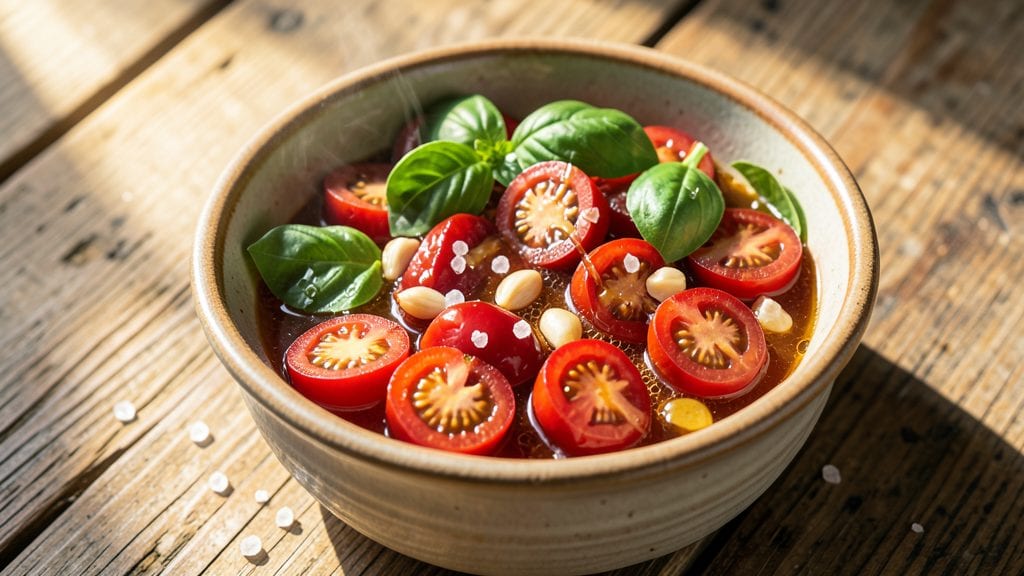
Creating cherry tomato preserves with no added sugar transforms summer's brightest produce into a versatile condiment that shines on toast, cheese boards, or pizza. 💛 After years of experimenting with sugar-free reductions, I perfected this method that balances natural sweetness with tangy depth—no refined sugar needed.
The secret lies in cooking down the tomatoes until their inherent sugars concentrate while vinegar and herbs add complexity.
This recipe delivers a thick, spreadable jam with a vibrant ruby color and rich tomato flavor, achieved through precise simmering times and proper pectin development. Unlike store-bought versions, these preserves maintain their fresh-tomato brightness while offering a foolproof method that works with any ripe cherry tomatoes.
The process is straightforward but requires patience—letting the mixture reduce slowly creates that perfect jam-like consistency without gelling agents.
What you'll end up with is a versatile condiment that elevates simple meals: spread it on crusty bread with ricotta, drizzle it over grilled cheese, or use it as a pizza sauce base. The natural sweetness develops as it sits, making it even more flavorful after a few days.
This preserve keeps beautifully in the refrigerator for up to two weeks or can be canned for long-term storage.
Perfect for summer's abundance or as a year-round pantry staple, these cherry tomato preserves prove that sugar-free doesn't mean flavor-free. Let's get started with a method that transforms humble tomatoes into something extraordinary.
Ingredients for cherry tomato preserves
Nine simple ingredients transform summer's cherry tomatoes into vibrant, sugar-free preserves with restaurant-quality depth.
| Ingredient | Amount | Notes |
|---|---|---|
| Fresh Cherry Tomatoes 🍅 | 2 ½ lbs | Ripe, vibrant red, halved |
| White Wine Vinegar 🍷 | ½ cup | Balsamic alternative if preferred |
| Granulated Honey 🍯 | ¼ cup | Light amber preferred for balance |
| Fresh Basil Leaves 🌿 | ½ cup | Packed, stems removed |
| Garlic Cloves 🧄 | 4 cloves | Minced for subtle depth |
| Diamond Crystal Kosher Salt 🧂 | 1 ½ tsp | Fine grain for precise seasoning |
| Fresh Lemon Juice 🍋 | ¼ cup | Freshly squeezed, no pulp |
| Extra-Virgin Olive Oil 🫒 | 2 tbsp | High-quality, fruity variety |
| Ground Black Pepper 🌶️ | ½ tsp | Freshly ground for warmth |
| Dried Thyme Leaves 🌿 | ½ tsp | French preferred for aroma |
The tomatoes are the foundation—select heirloom or vine-ripened varieties for maximum sweetness and acidity balance. Local farmers markets often carry perfect specimens in late summer, but grocery store cherry tomatoes work too if they're uniformly red and firm. Avoid overripe or green tomatoes—they'll yield a bland preserve. For optimal flavor, Wegmans or Whole Foods typically stock higher-quality cherry tomatoes, but any ripe variety will work when properly reduced. The key is patience during cooking: slow simmering develops the natural sugars and deepens the color.
No honey? Maple syrup or agave nectar can substitute at the same quantity, though honey's floral notes are ideal. Fresh basil is non-negotiable for that bright, summery aroma, but dried basil at half the amount works in a pinch. Vinegar selection matters—apple cider vinegar adds subtle sweetness, while white wine vinegar provides crisp acidity. For storage, divide the finished preserves into sterilized glass jars with tight-sealing lids; this preserves texture and prevents spoilage. The olive oil isn't just for flavor—it creates a protective layer that keeps the preserves fresh longer.
These preserves develop complexity over time—flavor peaks after 3-5 days of refrigeration. Store in the fridge for up to 2 weeks or can for 12 months using standard water-bath canning techniques. For canning, ensure jars are properly sealed to prevent mold growth. The preserves thicken as they cool, so don't be alarmed if they appear too thin immediately after cooking. For best results, use within 3 months of canning, as color may fade slightly over time.
Why You'll Love This Recipe
- No Chopping Needed: I’ll admit, I’m not the best at dicing tomatoes—but this recipe doesn’t require it. Halve those cherry tomatoes, toss them in a pot with vinegar and honey, and let the heat do the work. Ten minutes later, you’ve got jam-like perfection without the fuss.
- Sweet-Savory Magic: Here’s what sold me—the way the honey’s warmth and vinegar’s tang cut through the tomatoes’ natural brightness, then the basil and garlic sneak in for a herbal punch. It’s like a grown-up tomato jam, but way more interesting.
- Pantry Stash Ready: Between us, I keep a jar of this in my fridge for everything—swirled into yogurt, drizzled over grilled cheese, or spooned straight onto crusty bread. It’s my go-to for when I’m too tired to think but still want flavor. (Yes, even on a Tuesday night.)
- Lasts For Weeks: I made a big batch last summer and still have jars tucked away. The vinegar and honey act like natural preservatives, so it stays fresh for months without weird aftertastes. Plus, it’s cheap—just tomatoes, vinegar, and honey. Budget-friendly and foolproof.
Step-by-step instructions for sunshine-infused cherry tomato preserves
Here's the method—simple yet precise—for creating vibrant, naturally sweetened preserves with bold herbal notes.
🍳 Step 1: Prep and Cook the Tomato Base
In a large, heavy-bottomed saucepan, combine the 2.5 lbs fresh cherry tomatoes (halved), 0.5 cup white wine vinegar, 0.25 cup granulated honey, and 1.5 tsp diamond crystal kosher salt. Bring to a gentle boil over medium-high heat, then immediately reduce to medium-low heat and let it simmer uncovered.
Cook for 20-25 minutes until the tomatoes break down into a thick, jam-like consistency. Stir occasionally to prevent sticking, and watch for the mixture to darken slightly—that's your signal the natural sugars are caramelizing. The texture should coat the back of a spoon smoothly.
👨🍳 Step 2: Build the Herbal Flavor Profile
While the tomato mixture simmers, prepare the aromatic components by combining 4 minced garlic cloves, 0.5 cup fresh basil leaves (chopped), 0.5 tsp dried thyme leaves, and 0.5 tsp ground black pepper in a small bowl. Once the tomato mixture reaches 20 minutes of simmering, add this herb mixture and stir well to incorporate.
Simmer for an additional 10 minutes to allow the flavors to meld. You'll notice the basil wilting into the mixture and the garlic releasing its subtle sweetness. The preserves should now have a complex aroma—bright from the vinegar, sweet from the honey, and herbal from the basil and thyme.
🍳 Step 3: Finish with Acid and Oil
Remove the saucepan from heat and stir in the 0.25 cup fresh lemon juice and 2 tbsp extra-virgin olive oil. The lemon juice brightens the flavors while the olive oil adds a silky texture. Let the mixture sit off heat for 5 minutes to allow the olive oil to fully incorporate and the flavors to settle.
Here's the thing—this resting period is crucial. It lets the preserves thicken slightly and the acidity balance out. Taste and adjust seasoning if needed, adding a touch more honey if you prefer it sweeter or a splash more vinegar for tang.
⏰ Step 4: Process and Store for Freshness
Transfer the preserves to a clean, sterile 4-cup glass jar or airtight container, pressing down gently to remove any air bubbles. The preserves should have a glossy sheen and a thick, spreadable consistency. Seal tightly and let cool to room temperature before refrigerating.
These preserves will keep in the refrigerator for up to 3 months, maintaining their vibrant color and complex flavors. The natural pectin from the tomatoes and acidity from the vinegar and lemon juice create a stable preserve without added sugar or thickeners. Use them on toast, drizzled over grilled meats, or spooned directly from the jar.
Pro Tips For Making Cherry Tomato Preserves
- CRUSH TOMATOES FIRST: I learned this the hard way—whole cherry tomatoes just sit there like stubborn guests. Smash them with a wooden spoon or your palm before simmering so the juices and flavors meld faster. You want a thick, jammy texture, not a sad tomato soup.
- SIMMER LOW AND SLOW: High heat turns these preserves into a sad, watery glaze. Once the tomatoes hit a rolling boil, drop the heat to a gentle simmer and let it bubble away for at least 20-25 minutes. This evaporates the excess liquid and concentrates the flavor—no one wants mushy preserves.
- STRAIN THE BASIL: Fresh basil leaves add amazing aroma, but they turn to mush and make the preserves look like swamp water. After adding them, let the mixture sit for 10 minutes, then strain out the leaves. Keep the liquid—it’s packed with flavor—just toss the leaves.
- BALANCE THE VINEGAR: Too much vinegar and your preserves taste like a salad dressing gone rogue. Start with 2 tablespoons per pound of tomatoes, then taste as you go. You can always add more vinegar later, but you can’t take it out. Trust your palate—it’s the only tool that matters.
Troubleshooting this recipe
Tomatoes Too Watery
If your preserves end up too thin and watery, you likely didn’t simmer them long enough. I’ve found that cherry tomatoes release more liquid than you’d expect, so patience is key. After the initial 20-25 minutes of simmering, check the consistency—it should coat the back of a spoon.
If it’s still runny, return the pan to low heat and simmer uncovered for another 10-15 minutes, stirring occasionally. For extra thickness, add 1 tsp lemon juice or ½ tsp arrowroot powder mixed with water to create a slurry. 💧
Preserves Not Setting
The natural pectin in tomatoes should give your preserves structure, but if they’re too loose, it’s likely due to insufficient acidity or sugar. Since we’re skipping refined sugar, the honey and vinegar must work harder.
If your batch isn’t thickening, try adding 1 tbsp more lemon juice or simmering for another 10 minutes to concentrate the flavors. For a quick fix, stir in ½ tsp powdered pectin (like Ball RealFruit) and simmer for 5 more minutes.
Just don’t overdo it—too much pectin can make the texture grainy.
Flavor Too Mild
Muted flavors often mean the herbs or vinegar weren’t infused long enough. I’ve learned the hard way that basil and thyme need time to release their oils. If your preserves taste bland, extend the simmering time by 5-10 minutes after adding the herbs.
For an extra boost, infuse the vinegar first: heat ¼ cup vinegar with 2 basil leaves and 1 garlic clove for 10 minutes before adding it to the tomatoes. This pre-infusion adds depth without overpowering the natural tomato sweetness.
Mold or Fermentation
If your preserves develop mold or ferment too quickly, it’s usually a sign of improper storage. Always use sterilized jars and ensure the seals are tight to prevent contamination.
For fridge storage, keep the preserves submerged in their own juices—transfer any excess liquid into the jar to create a protective barrier. If you notice fermentation (fizzing or sour smells), the vinegar content may have been insufficient. Next time, add 1 extra tbsp vinegar during cooking to extend shelf life.
When in doubt, refrigerate immediately after cooling. ❄️
Burnt or Bitter Taste
Burnt flavors happen when the preserves scorch on the bottom of the pan. To avoid this, always use a heavy-bottomed saucepan (like All-Clad) and keep the heat at medium-low once simmering begins. Stir frequently and avoid walking away—cherry tomato preserves can turn bitter in just 5 minutes if left unattended.
If it does happen, reduce the heat immediately and add 1 tsp honey or a splash of vinegar to rebalance the flavors. A pinch of salt can also help round out the bitterness.
Skin or Seeds Visible
If your preserves have visible tomato skins or seeds, you likely didn’t cook them long enough to break down completely. For a smoother texture, blend the cooked tomatoes briefly with an immersion blender before adding the other ingredients.
If you prefer some texture, simmer the mixture for an extra 5-10 minutes to soften the skins naturally. Just be patient—rushing this step can leave your preserves looking uneven. A fine-mesh sieve can also help strain out any remaining seeds if needed.
Nutrition facts
Frequently asked questions
Can I use regular tomatoes instead of cherry tomatoes?
Regular tomatoes will work, but cherry tomatoes give the best texture and sweetness. If you must use them, select small, meaty varieties like Roma tomatoes and reduce the quantity to 2 lbs for a similar yield. Cherry tomatoes concentrate flavor beautifully due to their high sugar content, which is why they're ideal for preserves.
How do I know when the preserves are done cooking?
The preserves are ready when they coat the back of a spoon smoothly and have thickened to a jam-like consistency. This typically takes 25-30 minutes of simmering. Look for a slight darkening of color and reduced volume—about half of the original liquid. Taste for sweetness and acidity balance before removing from heat.
Can I make this recipe without honey?
Yes! Substitute honey with ¼ cup maple syrup or agave nectar for a similar sweetness level. For a sugar-free option, omit the honey entirely and add 1 extra tablespoon of lemon juice to compensate for the missing sweetness. The preserves will be more tart but still delicious when paired with rich cheeses or crusty bread.
What are the best ways to use these preserves?
These versatile preserves shine on toasted sourdough, drizzled over grilled cheese, or spooned onto charcuterie boards with goat cheese. They also make an excellent pizza sauce base, or try them as a glaze for roasted vegetables. The natural sweetness pairs beautifully with salty flavors, making them perfect for bruschetta or as a dip for fresh mozzarella.
Can I can these preserves for long-term storage?
For canning, follow standard water-bath canning procedures using pint-sized jars. Process the filled jars in boiling water for 15 minutes to ensure safety. The preserves will keep for up to 12 months when stored properly. Remember to sterilize jars and lids first, and check seals after cooling to ensure a proper vacuum.