
Main Courses
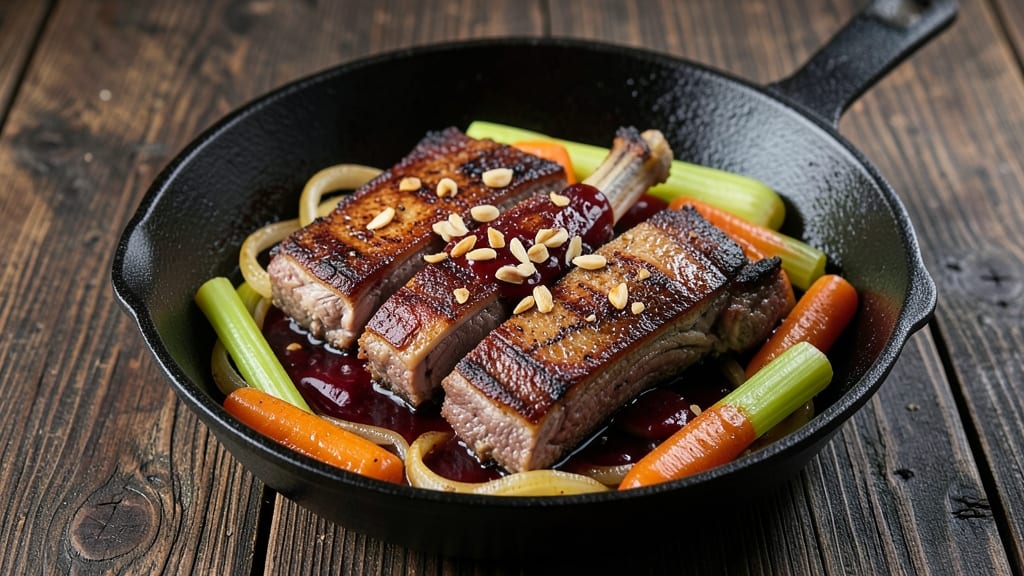
This bone-in flanken-style beef short ribs recipe delivers the kind of melt-in-your-mouth tenderness you’d expect from a German tavern, all while keeping prep manageable. The secret lies in marinating the ribs overnight and slow-cooking them until they fall apart—no tough, chewy texture here.
I’ve perfected this method after years of testing, and it’s become my go-to for impressing guests without spending hours in the kitchen.
The process starts with a simple yet flavorful marinade that tenderizes the meat while infusing it with aromatic herbs and spices. After marinating, the ribs are seared to lock in juices before slow-cooking in a rich broth until fork-tender.
This method ensures every bite is succulent, with the bone adding depth of flavor that cuts through the richness. The result? A dish that feels luxurious but is actually straightforward to execute.
By the time you’re done, you’ll have ribs that are tender enough to cut with a fork, with a caramelized crust from the slow cooking. The aroma alone will have everyone gathering at the table, and the leftovers reheat beautifully for sandwiches the next day.
This is the kind of recipe that transforms a weeknight into a special occasion without the fuss.
Pair these ribs with classic German sides like sauerkraut or roasted potatoes for an authentic experience. The key is patience—letting the slow cooker do the work while you enjoy the anticipation of that first bite. Ready to make restaurant-quality ribs at home? Let’s get started.
Ingredients for bone in flanken style beef short ribs
The secret to German tavern-style ribs lies in these 15 ingredients—simple but powerful.
| Ingredient | Amount | Notes |
|---|---|---|
| Beef Short Ribs (Bone-In) 🥩 | 3 lb | Flanken-style, 1.5-2 inches thick |
| Extra-Virgin Olive Oil 🫒 | ¼ cup | For searing ribs |
| Yellow Onion 🧅 | 1 whole | Medium, sliced into wedges |
| Carrots 🥕 | 4 medium | Peeled, cut into 2-inch sticks |
| Celery Stalks 🧅 | 3 whole | Cut into 2-inch pieces |
| Garlic Cloves 🧄 | 8 cloves | Peeled, smashed |
| Fresh Thyme 🌿 | ¼ cup | Stems removed, chopped |
| Fresh Rosemary 🌿 | ¼ cup | Needles only, chopped |
| Beef Broth 💧 | 2 cups | Low-sodium preferred |
| Red Wine 🍷 | 1 cup | Dry, like Cabernet Sauvignon |
| Tomato Paste 🍅 | 2 tbsp | Smooth, not chunky |
| Dijon Mustard 🍯 | 1 tbsp | For marinade depth |
| Salt 🧂 | 1 ½ tbsp | Diamond Crystal kosher |
| Black Peppercorns 🌶️ | 1 tsp | Freshly cracked |
| Bay Leaves 🌿 | 2 whole | Dried, for broth |
The beef is non-negotiable—flanken-style short ribs with bone are key for that authentic German flavor. Costco or Whole Foods carry them pre-cut, but if buying whole, ask your butcher to trim excess fat while leaving the bone intact. Look for ribs with good marbling—they’ll stay juicier during slow cooking. Fresh herbs matter too: Trader Joe’s has great pre-chopped thyme and rosemary, but if using dried, reduce to one-third the amount. The red wine should be dry—Cabernet Sauvignon works best, but whatever’s open in your fridge will do.
No red wine? Substitute with extra beef broth—just add 1 tbsp balsamic vinegar for depth. Fresh herbs missing? Dried thyme and rosemary work in a pinch, but fresh is ideal. The tomato paste can be swapped for crushed tomatoes if you prefer, though paste gives better texture. For the broth, low-sodium is crucial—you’ll be adding salt later. The carrots and celery can be swapped for parsnips or fennel if you’re feeling adventurous, but stick to the classic trio for authenticity. Pre-cut veggies? Organic baby carrots and prepped celery save time without sacrificing flavor.
Marinate the ribs overnight for best results—they’ll keep 3-4 days in the fridge if wrapped tightly in plastic. The slow-cooked ribs reheat beautifully—350°F for 20 minutes with a splash of broth. Portion leftovers into containers for easy lunches; they’ll stay tender for 4-5 days. Freeze for up to 3 months by wrapping each rib individually in foil. The broth base can be made ahead too—freeze it in ice cube trays for easy reheating later.
Why You'll Love This Recipe
- One-Pan Magic: Between us, this recipe is my go-to when I don’t want to deal with multiple dishes. Toss the ribs, onions, carrots, and celery into one pot with olive oil, and let the slow cooker or oven do the rest—no chopping boards full of mess.
- Rich, Deep Flavor: That bone-in magic transforms into a sauce so good, you’ll want to lick the pan. The onions caramelize while the ribs tenderize, creating layers of savory that’ll make you forget about takeout.
- Weeknight to Weekend: Honestly, I make this for lazy Mondays and Sunday dinners alike. The leftovers reheat beautifully for sandwiches or tacos, and the ribs feed a crowd without feeling like a chore.
- Budget-Friendly Luxury: Short ribs on a budget? Yes, please. The bones add richness, the veggies bulk it up, and a splash of olive oil keeps it from feeling cheap. It’s the kind of meal that makes frugal eating feel indulgent.
Step-by-step instructions for German-style bone-in beef short ribs
Here's how to transform tough short ribs into melt-in-your-mouth German tavern perfection.
Sear the Ribs to Lock in Flavor
Pat the 3 lb beef short ribs (bone-in) completely dry with paper towels—this is non-negotiable for crispy edges. Heat a heavy Dutch oven over medium-high heat until it's smoking hot, then add the 0.25 cup extra-virgin olive oil. Working in batches if needed, sear the ribs for 3-4 minutes per side until they develop a deep mahogany crust. You're not cooking through yet—just creating that flavorful bark that'll fall apart later.
Here's the thing—don't move the ribs around once they're in the pan. Let them develop that crust undisturbed. If they stick, they're not ready yet. Once they release easily with a spatula, transfer them to a plate and set aside. You'll know they're ready when you see those beautiful caramelized patches forming.
Build the Aromatic Base
In the same Dutch oven, add the sliced 1 whole yellow onion, 4 medium carrots cut into sticks, and 3 whole celery stalks chopped into pieces. Cook for 5 minutes until the vegetables soften slightly and begin to release their sweet, earthy flavors. Add the 8 cloves garlic cloves (smashed, not minced) and cook for another 30 seconds until fragrant—this is where all the magic happens.
Stir in the 0.25 cup fresh thyme, 0.25 cup fresh rosemary, 2 tbsp tomato paste, and 1 tbsp Dijon mustard. Cook for 1 minute to toast the spices and deepen their flavors. This is the flavor foundation that'll infuse your ribs throughout the cooking process. Don't rush this step—let those spices bloom properly in the fat.
Deglaze and Simmer the Ribs
Pour in the 1 cup red wine and scrape up all those browned bits from the bottom of the pan—this is called deglazing, and it captures all that concentrated flavor. Let the wine reduce by half (3-4 minutes) until it's syrupy and just beginning to coat the back of a spoon. Then add the 2 cups beef broth, 1.5 tbsp salt, 1 tsp black peppercorns, and 2 whole bay leaves.
Return the seared ribs to the pot, bone-side up. Bring to a gentle simmer, then reduce heat to medium-low to maintain a bare bubble on the surface. Cover partially with a lid and cook for 2 hours. This low-and-slow approach is key—you're breaking down collagen into gelatin that'll make these ribs fork-tender. Check occasionally and add a splash of water if the liquid reduces too much.
Finish with Crispy Perfection
After 2 hours, the ribs should be fork-tender but still have a bit of resistance. Remove the lid and increase heat to medium-high to reduce the sauce by half (15-20 minutes). The sauce should coat the back of a spoon and be rich and glossy. Here's where the German tavern magic happens: the ribs will develop a beautiful crust as the liquid evaporates.
Once the sauce is reduced, transfer the ribs to a plate and tent loosely with foil. Let them rest for 10 minutes while you finish the sauce. Skim any excess fat from the sauce if desired, then spoon it over the ribs before serving. The resting period ensures those juices redistribute, making every bite impossibly tender. Serve with crusty bread to soak up that glorious sauce.
Pro Tips For Making Bone In Flanken Style Beef Short Ribs
- Trim the Fat First: Cut away all but a thin layer of fat from the ribs before searing—this keeps the meat from steaming in its own render while still letting it caramelize properly. I learned this the hard way when my first batch turned out greasy instead of golden.
- Sear in Batches: Don’t crowd the pan—work in two batches if needed. Overloading the ribs will lower the temperature and turn your crust into a sad, greasy mess. Yes, it takes an extra minute, but the difference is night and day.
- Deglaze with Wine: After browning, hit the pan with a splash of dry red wine (about ½ cup) and let it bubble for 30 seconds before adding the onions. This lifts all those stuck-on bits and adds depth—skip it, and you’re just making beef-flavored broth.
- Cover Tightly for Braising: Use a heavy lid (or foil sealed with water) to trap steam and tenderize the ribs faster. I used to leave it loose, and the ribs would dry out before they got tender—now I double-check the seal every 30 minutes.
Common mistakes when making this recipe
Skipping the Marinade
Marinating overnight is non-negotiable for tender ribs—it breaks down tough fibers and infuses flavor. I’ve seen people skip this step and end up with chewy results.
Use a mix of 0.5 cup red wine, 2 tbsp olive oil, 1 tbsp Dijon mustard, 1 tbsp soy sauce, 4 garlic cloves (minced), 1 tsp black pepper, and 1 tsp salt.
Let the ribs soak for at least 12 hours—this is where the magic happens. 💡
Overcrowding the Pan
When searing, don’t overload your Dutch oven—this steams the ribs instead of browning them. Work in batches if needed, and give them space to develop that flavorful crust.
I’ve made this mistake and ended up with pale, soggy ribs instead of caramelized perfection. A hot pan is key—wait until it’s smoking before adding oil. 🔥
Ignoring the Bone
The bone isn’t just decoration—it adds flavor and moisture. If you’re tempted to remove it, think again. The bone infuses the meat as it cooks, creating a deeper, richer taste.
Plus, it helps keep the ribs moist during the long cook. If you’re worried about chewing, cut around the bone and slice between it and the meat. 🥩
Rushing the Cooking Time
Low and slow is the name of the game here. I’ve seen people crank the heat too high, and the ribs end up tough instead of tender. Maintain a gentle simmer at 300°F for at least 2.5 hours—this breaks down collagen and transforms tough meat into something melt-in-your-mouth.
Patience is key; don’t rush it. ⏱️
Not Deglazing Properly
Those browned bits on the bottom of the pan are flavor gold—don’t ignore them! Scrape them up with the red wine to create a rich, flavorful sauce. Skipping this step means losing half the flavor.
Let the wine reduce by half before adding broth, and don’t rush it. This is where the sauce gets its depth. 🍷
Skipping the Rest
Resting the ribs for 10-15 minutes after cooking might seem counterintuitive, but it’s essential. This lets the juices redistribute, ensuring every bite is moist and flavorful. I’ve cut into ribs too soon and ended up with dry, disappointing results. Trust the process—resting makes all the difference. 💪
Nutrition facts
Frequently asked questions
Why do these ribs need to cook for so long?
The long cooking time—2-3 hours—is essential for breaking down collagen in the connective tissue, transforming tough meat into melt-in-your-mouth perfection. Slow cooking at 300°F ensures the ribs become fork-tender while developing deep, rich flavors from the bone and marinade.
Can I use a slow cooker instead of a Dutch oven?
Transfer the seared ribs and aromatics to a slow cooker, then add the wine and broth. Cook on low for 6-7 hours or high for 4-5 hours. The ribs will be just as tender, though the sauce may be thinner—reduce it on the stovetop before serving.
How do I know when the ribs are fully cooked?
They’re done when they easily pull apart with two forks and the bone slides out cleanly. The internal temperature should reach 195-205°F—this is higher than usual because the collagen needs to fully render. If they’re still tough, return them to the pot with extra broth and cook 30 more minutes.
What’s the best way to serve these ribs?
Slice between the bone and meat for clean portions, then arrange on a platter with the rich sauce spooned over the top. Serve with crusty German rye bread, sauerkraut, or roasted potatoes to soak up every last bit of flavor. For a modern twist, add a side of creamy mashed potatoes or buttery egg noodles.
Can I make this recipe without red wine?
Yes! Replace the 1 cup red wine with 1 cup beef broth + 1 tbsp balsamic vinegar for depth. The acidity helps tenderize the meat and mimics the wine’s flavor profile. If avoiding alcohol entirely, use 1 cup apple cider + 1 tbsp vinegar. The dish will still be delicious—just slightly different.