Main Courses
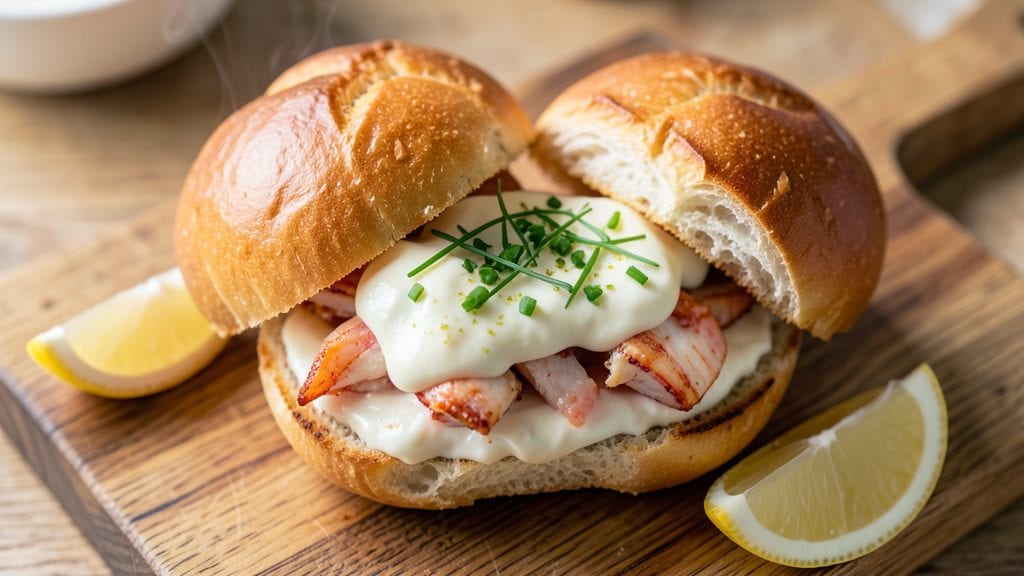
This classic lobster roll recipe delivers the quintessential New England summer dish—tender, buttery lobster meat nestled in a perfectly toasted bun, drizzled with just the right amount of mayo and butter.
The secret lies in poaching the lobster just until it turns a delicate pink, preserving its natural sweetness while keeping it juicy. I’ve perfected this method over countless beachside picnics, where the aroma alone draws crowds before the first bite is taken.
The foundation of a great lobster roll starts with fresh, high-quality lobster meat—never canned—and a soft, slightly sweet brioche bun that toasts to golden perfection.
In Connecticut, the roll is typically served open-faced with a generous drizzle of melted butter and mayo, while Maine-style rolls are often sandwich-style with a crisp lettuce wrap. The difference? Texture and tradition, both equally delicious when executed properly.
What you’ll end up with is a dish that’s equal parts elegant and comforting—juicy lobster that melts in your mouth, a bun that’s crisp on the edges yet still soft inside, and a sauce that’s rich without overpowering.
The first bite should feel like a taste of coastal New England, even if you’re miles from the shore. This recipe is designed to impress, whether you’re serving it at a backyard barbecue or a seaside feast.
Pair it with classic sides like tangy coleslaw or crisp potato salad, and don’t forget the lemon wedges for a bright finish. The key to success?
Fresh ingredients and patience—no shortcuts here. Let’s get started on creating a lobster roll that tastes like it came straight from a Maine seafood shack.
Ingredients for classic lobster roll
Fresh lobster, buttery buns, and just a few simple elements—this is what makes a classic lobster roll unforgettable.
| Ingredient | Amount | Notes |
|---|---|---|
| Live Lobster Tail 🦞 | 1 ½ lb | Fresh, shell-on preferred |
| Brioche Buns 🥖 | 4 whole | Slightly sweet, crusty top |
| Unsalted Butter 🧈 | ½ cup | Cold, cut into cubes |
| Mayonnaise 🥛 | ¼ cup | Duck or high-quality brand |
| Fresh Lemon Juice 🍋 | 2 tbsp | From 1 small lemon |
| Chives 🌿 | 2 tbsp | Finely chopped, fresh |
| Salt 🧂 | 1 tsp | Coarse sea salt |
| Black Pepper 🌶️ | ½ tsp | Freshly cracked |
| Ice ❄️ | 4 cups | For poaching water |
| Butter Lettuce 🥬 | 4 leaves | For Maine-style rolls |
| Lemon Wedges 🍋 | 4 whole | For serving |
The lobster is everything here. Live lobster tails from a trusted seafood market (like Whole Foods or your local fishmonger) are non-negotiable—freshness is key. Look for tails that feel heavy for their size, with a vibrant blue-green shell. If you can't find live, pre-cooked frozen lobster meat works in a pinch, but it won't have that same melt-in-your-mouth texture. The brioche buns? Local bakeries or Trader Joe's have the best ones—soft, slightly sweet, and sturdy enough to hold up to toasting. If you can't find brioche, a soft hamburger bun in a pinch, but it won't be the same. Trust me on this one.
No mayo? Greek yogurt thinned with lemon juice works surprisingly well. Short on chives? Green onions or parsley add brightness too. The butter-to-mayo ratio is flexible—add more butter for richness or more mayo for tang. For the poaching water, ice-cold water is crucial—it keeps the lobster tender and pink. If you're making Connecticut-style (open-faced), skip the lettuce. Maine-style? Butter lettuce or romaine adds that crisp contrast. And always have extra lemon wedges on hand—it's the secret weapon for cutting through the richness.
Lobster meat keeps best in the fridge for 1 day if pre-cooked, but fresh is always better. The brioche buns? 3 days max in a sealed bag. This dish reheats poorly, so make it fresh. The leftovers? Lobster salad the next day—toss the meat with a bit of mayo, lemon, and herbs. Store everything airtight, and the lobster meat will stay juicy for up to 2 days in the fridge. Freezing isn't recommended—it turns the meat rubbery.
Why You'll Love This Recipe
- Ready in 20 Minutes: I swear, the lobster tail just needs a quick boil—no fancy prep. Butter, lemon, and mayo come together in minutes, and the brioche stays warm while you slice the tail. Honestly, it’s the kind of dish that feels fancy but takes less time than ordering takeout.
- Buttery Lemon Magic: That first bite? The buttery brioche soaks up the rich lobster, while the lemon brightens every forkful. Between us, the secret’s in the ratio—just enough mayo to bind, not drown, the sweetness of the tail. My husband still steals the last bite when I’m not looking.
- Weekend Picnic Hero: Pack it in a cooler with a chilled drink, and you’ve got a beachside feast. The brioche stays soft, the lobster stays tender, and no one will guess it took less than 30 minutes to assemble. (Yes, even on a Tuesday night, if you’re feeling fancy.)
- Leftovers? Still a Star: Lobster rolls taste better the next day—if there are any left. Wrap them in foil and reheat gently, or toss them in a salad for a protein-packed lunch. I’ve fed a crowd with just two tails and still had seconds. Solid move for feeding guests without breaking the bank.
Step-by-step instructions for classic lobster roll
Here's the straightforward method for that iconic buttery, toasted brioche with melt-in-your-mouth lobster meat.
Poach the Lobster Tail Until Perfectly Pink
Fill a large pot with 4 cups ice and enough cold water to submerge the 1.5 lb live lobster tail. Bring to a gentle simmer over medium-low heat—you're looking for tiny bubbles breaking the surface, not a rolling boil. This keeps the meat tender and juicy.
Add 1 tsp salt and 0.5 tsp black pepper to the water. Gently lower the lobster tail in with the shell-side down. Poach for 4-5 minutes until the meat turns a beautiful pink color and feels just firm to the touch. Overcooking turns lobster rubbery, so watch closely.
Remove the lobster tail with tongs and transfer to an ice bath for 5 minutes to stop the cooking process. While it chills, use a sharp knife to carefully split the tail lengthwise down the center, leaving the shell intact. This creates a fan of lobster meat that stays connected at the base.
Prepare the Lobster Mixture
In a medium bowl, combine the 0.25 cup mayonnaise, 2 tbsp fresh lemon juice, and 2 tbsp finely chopped chives. Mix gently with a fork until smooth. This bright, tangy base enhances the sweetness of the lobster without overpowering it.
Add the poached lobster meat to the mayonnaise mixture and fold it in with a rubber spatula. Be gentle—you want to coat the meat evenly without breaking it apart. The mixture should look like a pale pink, chunky sauce with visible pieces of lobster. Taste and adjust seasoning if needed.
Toast the Brioche Buns
Cut each of the 4 whole brioche buns in half horizontally, creating two pieces per bun. Brush the cut sides generously with melted 0.5 cup unsalted butter—this is what creates that signature golden crust. Place the cut-side down on a baking sheet.
Toast the buns in a preheated 375°F oven for 5-7 minutes until they're golden brown and crispy. Keep an eye on them—the brioche burns easily. While they toast, prepare your serving plates by arranging 4 leaves butter lettuce on each.
Assemble the Classic Lobster Rolls
Remove the toasted buns from the oven and let them cool for 1 minute. Spoon the lobster mixture into each bottom half of the bun, mounding it slightly in the center. The lobster should peek out a little—this is classic Maine-style, not Connecticut-style where it's fully contained.
Place the top half of the bun on immediately and press down gently. The heat from the bun will help the lobster mixture warm through. Serve each roll on a plate lined with butter lettuce, garnished with a whole lemon wedge on the side.
Serve Immediately for Maximum Freshness
Bring the lobster rolls to the table right away—they're best eaten while the buns are still warm and the lobster is fresh from the poach. The butter lettuce adds a crisp contrast to each bite, while the lemon wedge lets everyone add a squeeze of brightness if they like.
Cut each roll in half and serve with a side of classic coleslaw or crisp potato chips. The secret to a great lobster roll? Fresh ingredients, proper technique, and serving it immediately. Don't let it sit—every minute waiting makes the bun soften and the lobster cool.
Pro Tips For Making Classic Lobster Roll
- Boil Lobster Just Until Done: Overcooking turns lobster tail rubbery—no one wants that. Drop the tail into boiling water (no salt yet) and cook for exactly 2-3 minutes after the shell turns bright red. Pull it out when the flesh flakes easily with a fork, then plunge into ice water to stop cooking. (Yes, even if you’re impatient like me.)
- Toast Brioche with Butter: Dry toast the buns in a skillet over medium heat until golden, then slather the inside with softened unsalted butter while it’s still warm. This adds structure and prevents the mayo from making them soggy. Skip this, and you’ll regret it when the first bite falls apart.
- Mix Mayo-Lemon Early: Combine mayo and lemon juice at least 30 minutes before assembling—this lets the flavors meld. If you’re short on time, whisk them together right before serving, but add a pinch of salt to the mix to cut through the acidity faster. (Your taste buds will notice the difference.)
- Split Tails Before Serving: Cut the cooked lobster tail lengthwise down the belly before flaking it into the bun. This keeps the meat intact, looks more professional, and makes it easier to eat without a fork. I used to flake it directly into the roll, and it always ended up scattered like confetti.
Essential equipment for great classic lobster roll
Must-Have Tools
A sharp chef's knife (like Wüsthof Classic) is essential for splitting lobster tails cleanly without tearing the meat. I also recommend a lobster cracker (or heavy-duty kitchen shears) to crack open the shell safely—these tools make the process much easier and safer than brute force. 🦞
Poaching Equipment
Your poaching setup needs a large stockpot (I use a All-Clad Stainless Steel for even heat distribution) and a thermometer to monitor water temperature—keep it between 160-170°F for perfect doneness.
A slotted spoon or tongs helps remove the lobster without piercing it. Never use metal utensils that could damage the shell.
Bun Prep Essentials
For toasting, a baking sheet with a wire rack (to prevent soggy bottoms) and a pastry brush are non-negotiable. I prefer a Nordic Ware Half-Sheet Pan for even heat circulation. A digital kitchen scale ensures precise butter measurements—1 tbsp per bun—for consistent flavor and texture every time.
Serving Setup
Serve on wooden cutting boards or slate plates for that classic seafood shack vibe. A small offset spatula helps transfer the lobster mixture neatly into buns. For Connecticut-style rolls, use a small squeeze bottle to drizzle melted butter over the lobster before serving—it creates that signature "wet" look. 🌟
Optional Upgrades
Invest in a lobster pick (about $15 on Amazon) to easily separate meat from the shell after poaching. A mandoline slicer (set to ¼-inch thickness) makes uniform lettuce wraps for Maine-style rolls. For presentation, mini lobster claws (plastic or ceramic) add a fun, authentic touch to the serving platter.
Nutrition facts
Frequently asked questions
Can I use pre-cooked lobster meat for this recipe?
Fresh, live lobster is ideal for that signature melt-in-your-mouth texture, but you can use high-quality pre-cooked frozen lobster meat in a pinch. Thaw it overnight in the fridge, then pat dry completely before mixing with the mayo. The texture won't be exactly the same, but it still delivers delicious results—just avoid using canned lobster, which has a completely different consistency.
What's the difference between Maine-style and Connecticut-style lobster rolls?
The key difference is presentation: Maine-style rolls are sandwich-style with lobster peeking out, served on a crisp butter lettuce leaf, while Connecticut-style are open-faced with a generous drizzle of melted butter and mayo. Both use the same buttery brioche bun, but Connecticut rolls often include a side of coleslaw or chips. For this recipe, we're making the classic Maine version.
How do I keep the lobster meat from getting rubbery?
Never overcook the lobster—it should turn pink in 4-5 minutes of poaching, not opaque. Use an ice bath immediately after cooking to stop the cooking process, and handle the meat gently when mixing. Also, avoid reheating—always serve fresh from the poach. If using frozen meat, thaw it properly in the fridge, not at room temperature.
Can I make this recipe ahead of time?
This lobster roll is best served immediately, but you can prep components ahead: Poach the lobster and store it in the fridge for up to 1 day, toast the buns and keep them warm in a 200°F oven for 10 minutes, and mix the mayo-chive sauce in advance. Assemble just before serving to maintain perfect texture. For leftovers, turn the lobster meat into a salad with extra lemon and herbs.
What's the best way to toast the brioche buns?
Generously butter the cut sides of the buns and toast them in a 375°F oven for 5-7 minutes until golden and crisp. Watch closely—they burn easily! For extra crispiness, place them on a wire rack over a baking sheet. If your oven runs hot, reduce the temperature to 350°F and check at 4 minutes.