
Soups & Stews
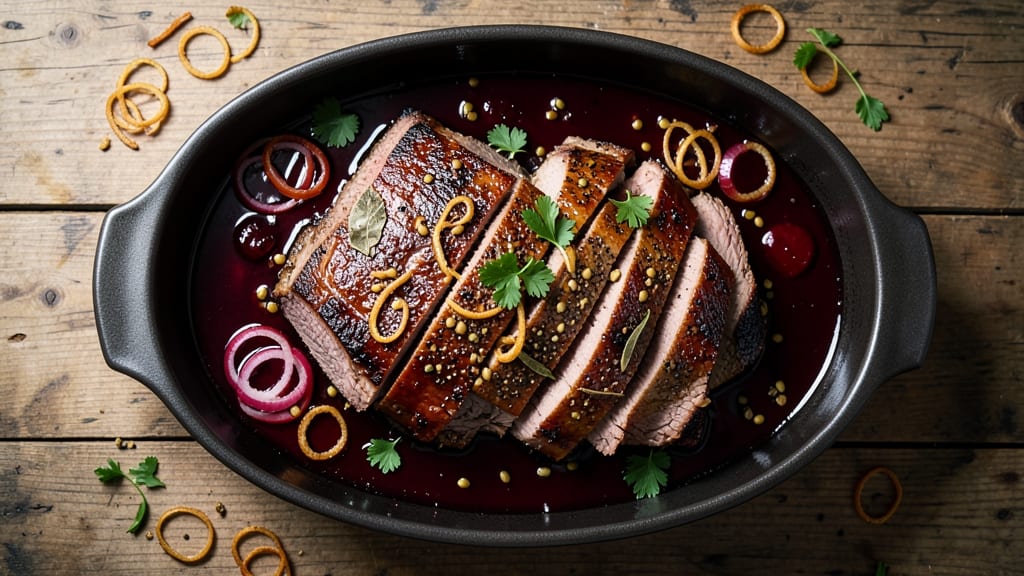
Gordon Ramsay's corned beef recipe delivers restaurant-quality slow-braised perfection with bold flavors and tender meat that practically melts in your mouth. This isn't just another corned beef recipe—it's a method refined to balance spice intensity, precise temperature control, and textural mastery that Ramsay himself would approve of.
The secret lies in the slow braising process at 300°F, where the beef becomes fork-tender while absorbing deep, aromatic flavors from the spice blend.
What sets this recipe apart is Ramsay's attention to detail in every step—from the initial brining to the final resting period before serving. The corned beef develops a rich, caramelized crust on the outside while remaining juicy and fall-apart tender inside, all thanks to low-and-slow cooking.
Pairing it with classic sides like braised cabbage and carrots elevates the dish into a complete, hearty meal that feels like a celebration on a plate.
By the time you're done, you'll have a showstopping centerpiece that's packed with flavor and impressive enough for dinner guests. The spice bomb of cloves, mustard, and bay leaves infuses the meat with layers of complexity, while the slow braising ensures every bite is moist and flavorful.
This is the kind of corned beef that makes you want to slow down and savor each forkful—just like Ramsay would.
Serve it with horseradish cream for a tangy contrast or keep it traditional with buttery mashed potatoes and roasted vegetables. The method is foolproof once you understand the key steps, and the results are worth every minute of the slow cooking process.
Let's get started on this restaurant-worthy recipe that brings professional-quality corned beef to your kitchen.
Ingredients for gordon ramsay corned beef
Sixteen ingredients transform into restaurant-quality corned beef with Ramsay's signature slow-braising technique.
| Ingredient | Amount | Notes |
|---|---|---|
| Beef Brisket 🥩 | 4 lb | Whole packer cut, trimmed of excess fat |
| Yellow Mustard Seeds 🌶️ | ½ cup | Whole seeds, toasted for depth |
| Bay Leaves 🌿 | 4 whole | Fresh, high-quality preferred |
| Garlic Cloves 🧄 | 8 cloves | Peeled, lightly crushed |
| Onion Powder 🧅 | 2 tbsp | Diamond Crystal preferred |
| Ground Black Peppercorns 🌶️ | 1 tbsp | Freshly cracked preferred |
| Ground Coriander 🌿 | 1 tbsp | Toasted for aromatic depth |
| Whole Cloves 🌶️ | 10 whole | For intense spice infusion |
| Granulated Sugar 🍚 | ½ cup | For caramelization |
| Diamond Crystal Kosher Salt 🧂 | 1 ½ cups | For precise brining |
| Apple Cider Vinegar 🍎 | ½ cup | For acid balance |
| Beef Stock 🥫 | 4 cups | Homemade or high-quality store-bought |
| Yellow Onion 🧅 | 1 whole | Chopped for braising liquid |
| Carrot 🥕 | 2 whole | Chopped for braising base |
| Fresh Parsley 🌿 | ¼ cup | Chopped for garnish |
The beef brisket is the cornerstone—select a packer cut with good marbling for optimal tenderness. Costco or high-end butchers carry the best quality, but any reputable grocery store will have suitable options. Trim excess fat to prevent greasiness during braising. For the mustard seeds, toast them lightly in a dry pan until fragrant—this enhances their flavor dramatically. Penzeys carry premium spice blends if you prefer convenience, but whole seeds deliver superior texture. The bay leaves should be vibrant and pliable; discard any that are brittle or discolored. Garlic cloves should be firm and free of sprouts, as soft cloves indicate age and diminished flavor.
Substitutions must respect the spice intensity Ramsay emphasizes. For mustard seeds, ground mustard at half the quantity works in a pinch, though texture will differ. Dried thyme can replace fresh parsley in a 1:3 ratio, but fresh is preferred for its bright aroma. The beef stock can be substituted with chicken stock if unavailable, though flavor depth will be slightly compromised. Apple cider vinegar can be replaced with white wine vinegar, though the fruity notes will alter the balance. For onion powder, fresh minced onion at double the quantity provides a fresher profile, while onion salt should be avoided due to its added sodium content. The carrots and onion in the braising liquid can be swapped for celery and leeks for a different aromatic base.
Store beef stock in the freezer for up to 6 months and fresh herbs in airtight containers wrapped in damp paper towels for 5 days. The corned beef reheats beautifully—simmer gently in its juices for 10-15 minutes to maintain moisture. For long-term storage, portion into vacuum-sealed bags and freeze for up to 3 months. The braising liquid can be reduced into a glaze and stored separately for 1 month in the refrigerator. Ramsay’s method yields a showstopping centerpiece that reheats just as impressively as it serves fresh, making it ideal for meal prep or entertaining.
Why You'll Love This Recipe
- One-Pot Magic: I swear by this recipe because it’s all in one pot—no chopping onions into tears, no messy spice blends to measure. Just toss the brisket in with the mustard seeds and garlic, let the slow cooker or oven do the work, and you’re left with tender perfection. Honestly, the only prep is peeling garlic, and that’s basically a warm-up.
- Deep, Rich Layers: That brisket? So tender it falls apart at the touch, but with a crust that’s almost crispy—thanks to the bay leaves and onion powder working their magic. The mustard seeds add this subtle, bright kick that cuts through the richness, like a little flavor hug. Between us, it’s the kind of taste that makes you slow down mid-bite.
- Leftovers That Don’t Suck: I make this on Sundays because the leftovers are actually better the next day. Cold slices on rye with a smear of mustard? Heaven. Or reheated with a splash of broth for shredded beef sandwiches—no one will guess it’s yesterday’s dinner. (Yes, even on a Tuesday night.)
- Budget-Friendly Feast: A single brisket feeds my whole family for days, and the spices cost pennies. The mustard seeds and bay leaves might sound fancy, but they stretch the flavor so you don’t need much. Plus, brisket’s cheaper than steak but tastes like you splurged. My secret weapon for stretching paychecks and impressing guests.
Step-by-step instructions for slow-braised spice bomb corned beef
This method delivers restaurant-quality corned beef with deep, complex flavors and perfect tenderness.
Prepare the Spice Rub and Cure
In a small bowl, combine the 0.5 cup yellow mustard seeds, 1.5 cups diamond crystal kosher salt, 0.5 cup granulated sugar, 2 tbsp onion powder, 1 tbsp ground black peppercorns, 1 tbsp ground coriander, 10 whole cloves, and 4 whole bay leaves. Mix thoroughly until the salt and sugar dissolve completely, creating a coarse paste. This blend forms the foundation of the corned beef's signature flavor profile.
Pat the 4 lb beef brisket dry with paper towels, removing any remaining surface moisture. Generously coat every inch of the meat with the spice mixture, pressing it into the crevices and fat cap. Place the brisket in a non-reactive container, cover tightly, and refrigerate for 24 hours. This curing process ensures even penetration of flavors and proper seasoning throughout the meat.
Sear the Brisket for Depth of Flavor
Remove the brisket from the refrigerator and let it sit at room temperature for 1 hour. Heat a heavy-bottomed Dutch oven over medium-high heat until a drop of water sizzles immediately upon contact. Add the brisket fat-side down and sear for 8-10 minutes until the fat renders and the meat develops a deep golden-brown crust. Flip and sear the other side for another 6-8 minutes. This step creates the Maillard reaction that forms the rich, caramelized foundation for the braise.
Transfer the seared brisket to a plate and set aside. In the same Dutch oven, add 1 whole chopped yellow onion and 2 whole chopped carrots, cooking for 5 minutes until softened. Deglaze the pan with 0.5 cup apple cider vinegar, scraping up all the browned bits from the bottom. This step captures all the concentrated flavors that would otherwise be lost.
Braise the Corned Beef Low and Slow
Return the brisket to the Dutch oven along with the 8 peeled garlic cloves and the remaining vegetables. Pour in 4 cups beef stock until the brisket is completely submerged. Bring to a simmer over medium-low heat, then reduce to a bare simmer. Cover tightly with a lid and transfer to a 325°F preheated oven. Braise for 3-4 hours until the meat is fork-tender and easily pulls apart with minimal resistance.
The key to success here is maintaining a gentle simmer throughout the cooking process. If the liquid reduces too much, add a splash of hot water or beef stock to keep the brisket submerged. This slow cooking method allows the connective tissues to break down, resulting in melt-in-your-mouth tenderness while infusing the meat with the rich, aromatic braising liquid.
Rest and Serve with Garnish
Remove the brisket from the braising liquid and transfer it to a cutting board. Tent loosely with aluminum foil and let it rest for 15-20 minutes. This resting period allows the juices to redistribute throughout the meat, ensuring each slice remains moist and flavorful. Skim any solidified fat from the surface of the braising liquid, then strain it through a fine-mesh sieve to remove any solids.
Slice the brisket against the grain into ¼-inch thick portions. Ladle the reduced braising liquid over the top and garnish with 0.25 cup chopped fresh parsley. Serve immediately with traditional accompaniments like mustard sauce, coleslaw, and crusty bread. The result should be a perfectly balanced dish with rich, complex flavors that showcase the transformation from raw brisket to tender, aromatic corned beef.
Pro Tips For Making Gordon Ramsay Corned Beef
- CRACK THE BRISKET FIRST: I learned this the hard way—skipping the overnight soak in the mustard seed brine means tough, flavorless meat. Even if you’re in a hurry, at least let it sit for 4 hours with the mustard seeds, bay leaves, and garlic mashed into the brine. The seeds need time to soften and infuse.
- SALT THE MEAT LIKE A BOSS: Don’t just sprinkle—rub that onion powder and mustard seed mix into the deep cuts of the brisket. Press it in with your fingers, especially around the fat cap. I used to skip this, and the flavor stayed stuck on the surface.
- LOW AND SLOW IS NON-NEGOTIABLE: Start with a screaming-hot pan to render the fat, then drop the heat to 275°F (135°C) and resist the urge to check it. I’ve ruined briskets by peeking too often—just tent it with foil and let it do its thing for 3 hours before checking internal temp. Patience here makes all the difference.
- UPGRADE THE MUSTARD: Store-bought mustard seeds? Toss them. Toast whole yellow mustard seeds in a dry pan for 2 minutes until they smell nutty—then grind them fresh in a spice grinder. The aroma alone changes the game, and it takes 30 seconds. (Yes, even if you’re impatient like me.)
Dietary considerations for gordon ramsay corned beef
Gluten-Free Adaptations
Traditional corned beef recipes often rely on beef stock and apple cider vinegar that may contain gluten traces, so I always check labels for hidden gluten. Swap regular beef stock with certified gluten-free options like Imagine Foods or Pacific Foods brands.
For vinegar, use gluten-free apple cider vinegar—most brands are naturally gluten-free, but verify labels. The spice rub itself is naturally gluten-free, but always double-check spice blends for anti-caking agents like wheat flour. 🌾
Low-Sodium Options
Ramsay’s recipe uses 1.5 cups kosher salt for curing, which is high in sodium. For a lower-sodium version, reduce salt to 1 cup and extend the curing time to 48 hours to allow flavors to penetrate.
Use a low-sodium beef stock like Kirkland Signature or homemade stock to cut sodium further. Taste the braising liquid before serving and adjust with black pepper or smoked paprika to compensate for reduced salt. 🧂
Vegetarian Substitutes
For a vegetarian twist, replace the beef brisket with a mushroom and lentil blend—I recommend cremini mushrooms and brown lentils for texture. Simmer the mixture in the same spiced braising liquid for 2-3 hours until tender.
Use vegetable stock instead of beef stock and add 1 tbsp soy sauce (or tamari for gluten-free) to mimic the umami depth of beef. Garnish with fresh parsley and serve with the same sides for a hearty alternative. 🍄
Dairy-Free Considerations
This recipe is naturally dairy-free, but traditional sides like mashed potatoes or horseradish cream may contain dairy. For dairy-free mashed potatoes, use olive oil or vegan butter (like Miyoko's) and add unsweetened almond milk for creaminess.
For horseradish sauce, substitute sour cream with coconut yogurt or cashew cream. The corned beef itself remains dairy-free, making it adaptable to lactose-intolerant diets. 🥛
Allergen-Friendly Swaps
For nut allergies, avoid garnishes like chopped nuts and opt for toasted pumpkin seeds instead. If mustard is a concern (common allergen), replace mustard seeds with ground cumin and smoked paprika for warmth.
For egg allergies, this recipe is naturally safe, but always verify spice blends for egg-based anti-caking agents. I recommend Spicewalla or Burlap & Barrel for allergen-tested spices. 🚫
Nutrition facts
Frequently asked questions
Why does Gordon Ramsay's corned beef need a 24-hour cure?
The 24-hour curing period is crucial for even flavor penetration and proper seasoning. The salt and spices break down the meat's surface proteins, allowing the cure to infuse deeply. This step creates the signature tender texture and complex spice profile Ramsay achieves. Skipping it results in uneven seasoning and less tender meat.
Can I use a slow cooker instead of an oven for this recipe?
Yes, but with adjustments! Transfer the seared brisket and braising liquid to a slow cooker and cook on low for 8-10 hours instead of the oven's 3-4 hours. The liquid may reduce faster, so add a splash of beef stock if needed. The slow cooker works well but requires more time to achieve the same tenderness.
What's the best way to reheat leftover corned beef?
Reheat gently in the same braising liquid over low heat for 10-15 minutes to maintain moisture. Never microwave directly—it dries out the meat. For crispy edges, finish under a broiler for 2-3 minutes while basting with the reduced braising liquid. This preserves the restaurant-quality texture.
How do I know when the corned beef is fully cooked?
The meat should be fork-tender and pull apart easily with minimal resistance. Internal temperature should reach 203°F (95°C) for perfect tenderness. If using a meat thermometer, insert it into the thickest part without touching bone. The juices should run clear, not pink, when pierced.
What's the secret to Ramsay's rich, caramelized crust?
The crust comes from two key steps: high-heat searing before braising and the sugar in the cure. The sear creates the Maillard reaction, while the sugar caramelizes during slow cooking. For extra depth, deglaze the pan with apple cider vinegar after searing to capture all the browned bits.