
Soups & Stews
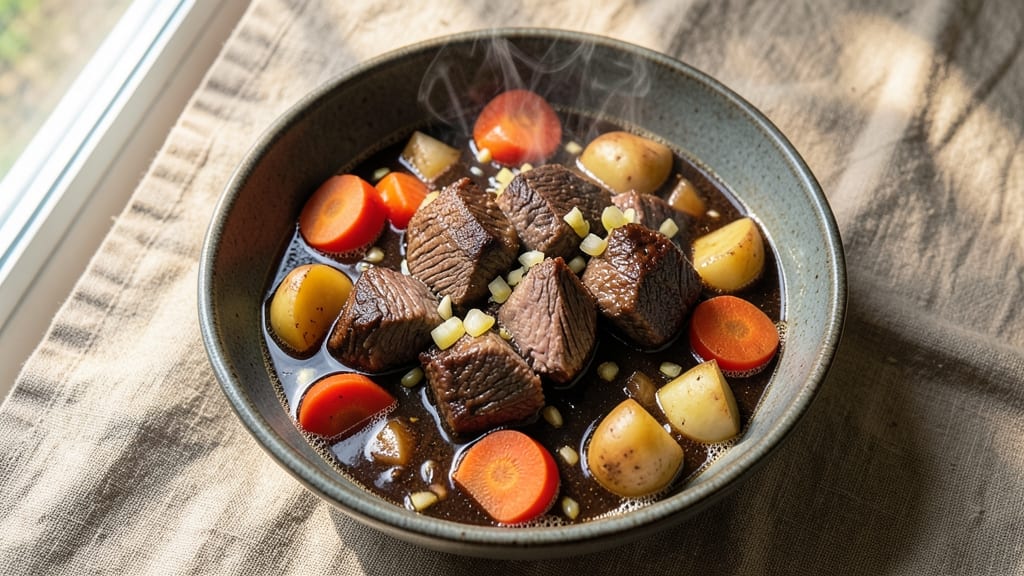
This Irish beef stew with Guinness stout transforms tough cuts into melt-in-your-mouth tenderness through slow simmering and rich, malty depth. The dark stout isn't just an ingredient—it's the secret weapon that tenderizes the beef while infusing the broth with layers of caramelized flavor.
I've perfected this recipe over years of testing, and the result is a hearty stew that tastes like a cozy Irish pub dinner.
The beauty of this method lies in its simplicity: 30 minutes of prep followed by 3 hours of hands-off simmering, where the flavors meld into something truly special. The Guinness stout reduces into a velvety sauce that coats every bite, while aromatic vegetables and herbs build complexity.
This isn't just comfort food—it's a restaurant-quality dish you can make at home with basic pantry staples.
By the time you're done, you'll have a pot of deeply flavorful stew with tender beef that nearly falls apart at the touch, all swimming in a rich, Guinness-infused broth.
The aroma alone will have everyone gathering around the table, and the first bite delivers that perfect balance of savory, smoky, and slightly sweet notes. Serve it with crusty bread or mashed potatoes to soak up every last drop.
What makes this recipe truly foolproof is the technique: browning the beef first creates a flavorful crust, while the slow simmer ensures maximum tenderness. The Guinness stout works its magic by breaking down collagen in the meat, resulting in a stew that tastes even better the next day.
Let's get cooking—your kitchen will smell like Ireland in minutes.
Ingredients for irish beef stew with guinness stout
Pantry staples plus one essential ingredient—Guinness stout—that turns tough beef into melt-in-your-mouth perfection.
| Ingredient | Amount | Notes |
|---|---|---|
| Beef Chuck Roast 🥩 | 3 lb | Cut into 1.5-inch cubes |
| Guinness Stout 🍺 | 1 bottle | 12 oz bottle preferred |
| Yellow Onions 🧅 | 2 whole | Cut into wedges |
| Carrots 🥕 | 4 whole | Cut into 1-inch chunks |
| Russet Potatoes 🥔 | 2 lb | Cut into 1.5-inch chunks |
| Garlic Cloves 🧄 | 6 cloves | Smashed, not minced |
| Fresh Thyme 🌿 | 2 sprigs | Or 1 tsp dried thyme |
| Fresh Parsley 🌿 | ¼ cup | Chopped, for garnish |
| Beef Broth 💧 | 4 cups | Low-sodium preferred |
| Tomato Paste 🍅 | 2 tbsp | Squeeze tube works |
| Worcestershire Sauce 🍯 | 1 tbsp | For depth of flavor |
| Bay Leaves 🍃 | 2 whole | Remove before serving |
| All-Purpose Flour 🌾 | 1 tbsp | For browning beef |
| Olive Oil 🫒 | 2 tbsp | For searing beef |
| Salt 🧂 | 1 ½ tsp | Kosher or sea salt |
| Black Pepper 🌶️ | 1 tsp | Freshly ground preferred |
The beef is everything here. Chuck roast is the gold standard—it's tough enough to benefit from the long simmer, but not so lean it dries out. Costco or local butchers usually have it pre-cut, but if you're buying a whole roast, ask for it to be trimmed of fat and cut into 1.5-inch cubes. The Guinness? Don't skimp on quality—the stout's malty depth is what makes this stew sing. I grab mine from Trader Joe's or my local liquor store, but any dark, dry stout will work. Look for bottles that haven't been sitting in the back of the store for months—freshness matters even for alcohol.
No Guinness? Substitute with beef broth plus 2 tbsp soy sauce—it won't be identical, but it'll get you close. Fresh thyme is ideal, but dried works at one-third the amount. The tomato paste can be the squeeze tube kind—no need for fancy cans. For the Worcestershire, Lea & Perrins is the classic choice, but any good brand will do. The potatoes? Russets are perfect—their floury texture holds up to the long cooking. Baby carrots work just as well as whole ones, so use what's in your fridge. And if you're short on time, parboil the potatoes for 5 minutes before adding them to the stew to cut down on cooking time.
This stew tastes even better the next day—make extra. It keeps for 4-5 days in the fridge, and freezes beautifully for up to 3 months. I like to portion it into containers with a little extra broth on top so it reheats perfectly. The bay leaves? Remove before serving—they're tough and not pleasant to chew. Garnish with fresh parsley right before eating—it brightens up the rich flavors. Leftovers reheat well in a pot on the stove over medium heat, or even in the microwave if you're in a hurry.
Why You'll Love This Recipe
- One-Pot Magic: I swear by this—just dump everything in one pot, let it simmer, and walk away. No fancy techniques, no last-minute chopping frenzy. The chuck roast practically melts into tender perfection while you sip your tea or watch the game.
- Guinness Kiss: That dark, malty stout isn’t just an ingredient—it’s the soul of the stew. The bitterness balances the richness of the beef, and the caramelized onions? They turn the whole thing into something dangerously addictive. (Yes, even on a Tuesday night.)
- Leftovers That Shine: Between us, this stew tastes better the next day. The flavors meld overnight, and reheating it is just a matter of stirring. I make a double batch on Sundays because it’s my secret weapon for lazy weeknights—no sad, dry reheats here.
- Budget Hero: A chuck roast stretches farther than you’d think, and potatoes, carrots, and onions won’t break the bank. Plus, Guinness adds depth without costing a fortune. It’s the kind of meal that makes you feel fancy without emptying your wallet.
Step-by-step instructions for Irish beef stew with Guinness stout
Here's how to build a hearty stew with deep, malty Guinness flavor that gets better overnight.
Sear the Beef for Maximum Flavor
Heat the 2 tablespoons olive oil in a heavy Dutch oven over medium-high heat until shimmering. Pat the 3 lb beef chuck roast dry with paper towels and cut it into 1.5-inch cubes. Working in batches, sear the beef for 2-3 minutes per side until deeply browned—this creates the rich foundation for your stew.
As each batch browns, remove the beef and set it aside. You'll see the meat release easily from the pan when it's ready to flip. Don't overcrowd the pan or the temperature will drop, preventing that crucial browning. I like to leave the browned bits in the pot—they'll dissolve into the stew later, adding depth of flavor.
Build the Flavor Base with Aromatics
Once all the beef is browned, reduce the heat to medium and add the 2 whole yellow onions cut into wedges and 4 whole carrots cut into 1-inch chunks. Cook for 5 minutes, stirring occasionally, until the vegetables begin to soften. Add the 6 smashed garlic cloves and cook for another 30 seconds until fragrant.
Stir in the 2 tablespoons tomato paste and cook for 1 minute to develop its flavor. This step is where all the base aromatics meld together—don't rush it. The tomato paste will deepen the stew's color and add a subtle sweetness that balances the richness of the Guinness.
Deglaze and Combine All Ingredients
Pour in the 1 bottle Guinness stout, scraping up any browned bits from the bottom of the pot with a wooden spoon. Let it simmer for 3-4 minutes until reduced by about half. This step is crucial for concentrating the beer's flavors before adding the rest of the ingredients.
Add the 4 cups beef broth, 1 tablespoon Worcestershire sauce, 2 whole bay leaves, 2 sprigs fresh thyme, 1.5 teaspoons salt, and 1 teaspoon black pepper. Stir everything together, then return the browned beef to the pot. Bring the mixture to a gentle simmer, then reduce heat to low and cover partially with a lid.
Simmer Low and Slow for Tender Beef
Let the stew simmer uncovered for 1 hour 30 minutes, stirring occasionally, until the beef is fork-tender. You'll know it's ready when a knife slides in easily and the meat pulls apart with gentle pressure. This long cooking time is essential—it breaks down the tough beef chuck into tender, flavorful pieces.
About 30 minutes before the stew is done, add the 2 lb russet potatoes cut into 1.5-inch chunks. They'll absorb all that rich stew liquid and become perfectly tender. If the stew gets too thick, add a splash of water or more beef broth to maintain the proper consistency.
Finish and Serve with Fresh Herbs
Once the beef is tender, remove the bay leaves and discard them. Taste the stew and adjust the seasoning if needed—you might need a bit more salt or pepper to balance all the flavors. The stew should be rich but not overly salty, with a perfect balance of Guinness bitterness and savory meatiness.
Stir in the 0.25 cup chopped fresh parsley just before serving. This bright herb cuts through the richness and adds a fresh finish. Ladle the stew into bowls and serve immediately with crusty bread or over buttered egg noodles. The flavors will continue to develop as it sits, making it even more delicious the next day.
Pro Tips For Making Irish Beef Stew With Guinness Stout
- SEAR THE ROAST FIRST: I learned this the hard way—skipping the sear means your stew will taste like it’s missing something. Get that chuck roast screaming hot in a dry pan for 4-5 minutes per side until it’s deep brown. The crust locks in flavor and keeps the meat tender, not rubbery, as it braises in the Guinness.
- SWEAT THE ONIONS LOW: High heat turns onions bitter, and bitter onions ruin a good stew. Cook them on medium-low with a pinch of salt for 10 minutes until they’re translucent and just starting to caramelize. This builds the base flavor without burning—trust me, your future self will notice the difference.
- DON’T SKIP THE GUINESS REDUCTION: Pouring in the full bottle of stout and calling it done? Big mistake. Simmer the Guinness alone for 5 minutes first to let the alcohol burn off—this concentrates the maltiness and deepens the flavor. Yes, it’s an extra step, but it’s the thing that makes this stew taste authentically Irish.
- ADD POTATOES LATE: Tossing in potatoes at the start turns them to mush. Wait until the beef is nearly tender (about 2 hours into cooking), then add them whole and let them soak up the rich broth for the last 30-40 minutes. They’ll stay creamy inside and crisp on the edges—no one wants gluey spuds in their stew.
Best sauces and condiments for this dish
Guinness Stout
The star of this stew is the Guinness stout, which does more than just add flavor—it tenderizes the beef through its natural enzymes while creating a deep, malty richness. Use 12 oz of fresh Guinness (not the light draft variety) for the best results.
The stout's roasted barley notes complement the beef perfectly, while its bitter hops balance the richness. For an extra layer of depth, I sometimes add 1 tablespoon of coffee granules when deglazing—it mimics the roasted flavors found in traditional Irish stews. 🍺
Worcestershire Sauce
This umami bomb is essential for adding complexity to the stew. I recommend Lea & Perrins for its classic tangy-sweet profile, but Annie's or Holland House work too. The sauce contains anchovies and tamarind, which deepen the savory notes without overpowering.
Add it after the beer has reduced to let its flavors integrate fully. For a vegetarian version, substitute with 1 teaspoon soy sauce—just know the flavor will be slightly different. 🍯
Fresh Herbs
Fresh thyme and parsley are non-negotiable for brightening the stew. The thyme adds an earthy, slightly floral note that pairs beautifully with the Guinness, while parsley provides a fresh, crisp finish at the end. If you're using dried herbs, reduce to ⅓ the amount (e.g., ⅔ teaspoon dried thyme).
For extra aroma, I like to bruise the thyme sprigs lightly with the side of a knife before adding them to the pot. 🌿
Tomato Paste
This concentrated flavor booster adds a subtle sweetness and helps thicken the stew slightly. Don’t skip the 1-minute cooking step—this lets the paste develop its flavors fully. For a smoother texture, I blend the paste with a splash of broth before adding it to the pot.
If you're avoiding tomatoes, substitute with 1 tablespoon of red wine reduction (simmer ½ cup red wine until reduced by half). 🍅
Bay Leaves
These aromatic leaves add a subtle piney depth that elevates the stew. Use 2 whole leaves—never crush them, as this can make the stew bitter. Remove them before serving (they’re tough and inedible).
For a modern twist, I’ve experimented with 1 star anise pod alongside the bay leaves—it adds a warm, licorice-like note that pairs surprisingly well with the Guinness. 🍃
Final Touches
Before serving, consider these finishing touches to elevate your stew:
- Crushed black pepper: Add a pinch right before serving for a fresh kick.
- Butter: Stir in 1 tablespoon of cold butter at the end for a silky texture (like a French monté au beurre).
- Stout reduction: Simmer ½ cup Guinness until syrupy and drizzle over the stew for extra richness.
- Soda bread: Serve with warm, crusty soda bread to soak up every last drop. ✨
Nutrition facts
Frequently asked questions
Can I use a different beer instead of Guinness?
A dark, dry stout is ideal, but you can substitute with 12 oz of porter or even black lager. Avoid light beers—they won't provide the same rich, malty depth. For a non-alcoholic version, use 1 cup beef broth + 1 tablespoon soy sauce to mimic the umami and slight sweetness.
Why does the beef need to be seared first?
Searing creates a Maillard reaction that develops deep, caramelized flavors in the beef. These browned bits (fond) dissolve into the stew, adding layers of richness. Skipping this step means missing out on the stew's signature depth and complexity. Work in batches to avoid overcrowding!
How do I know when the beef is tender enough?
The beef should be fork-tender—when a fork slides in easily and the meat pulls apart with gentle pressure. For 3 lb chuck roast, this typically takes 1 hour 30 minutes of simmering. If it's still tough, cook another 30 minutes with the lid slightly ajar to let moisture escape.
Can I make this stew in a slow cooker?
Brown the beef first, then transfer everything to a 6-quart slow cooker. Cook on low for 7-8 hours or high for 4-5 hours. Add potatoes during the last 1 hour of cooking. The slow cooker's gentle heat enhances tenderness, but the flavors may be slightly less concentrated than stovetop.
What's the best way to reheat leftovers?
Reheat gently on the stove over medium-low heat for 10-15 minutes, stirring occasionally, until bubbling. Avoid microwaving—it can make the potatoes mushy. For extra richness, add a splash of beef broth or Guinness while reheating. Leftovers taste even better the next day!