
Beverages
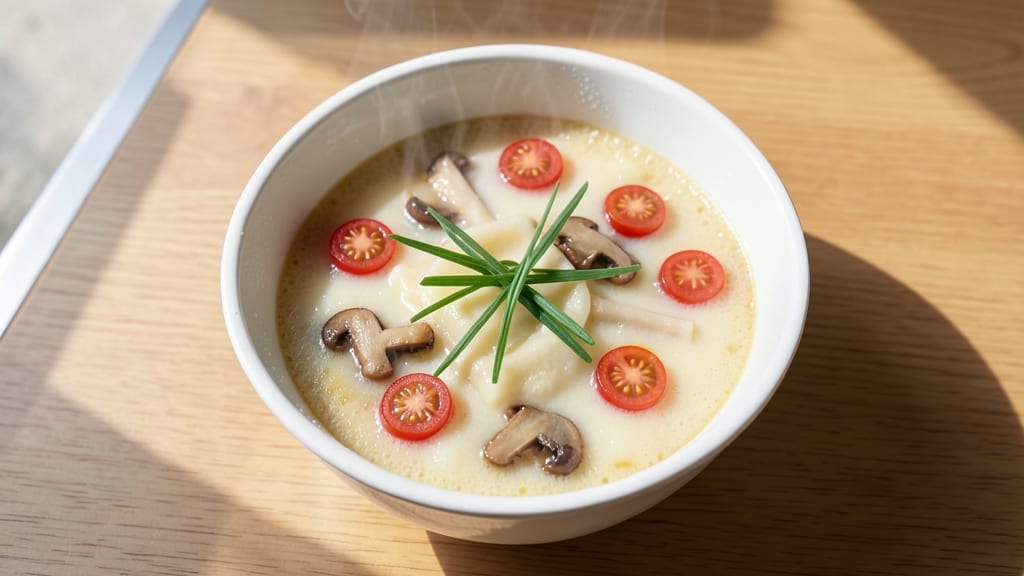
Creating Japanese steamed egg custard transforms simple ingredients into a delicate, jiggly masterpiece that feels like liquid silk. The secret lies in precise technique: whisking eggs until ribbon-like, balancing dashi for umami depth, and steaming at just the right temperature to achieve that signature wobble.
I've perfected this recipe after countless batches where the custard either set too firm or stayed too runny.
This dish is all about restraint—no heavy seasoning, just a whisper of soy sauce and mirin to enhance the eggs' natural sweetness. The traditional method uses a chawan (tea bowl) for steaming, which creates a gentle heat that develops the custard's signature texture.
For beginners, I recommend using a steamer basket lined with cheesecloth to ensure even heat distribution.
What you'll end up with is a silky-smooth custard that jiggles slightly when tapped—proof of its perfect doneness. The exterior remains delicate while the interior stays velvety, with subtle flavors of dashi, soy, and mirin harmonizing beautifully.
Garnish with mushrooms, shrimp, or kamaboko for added texture and color, but the custard itself is already a work of art.
This recipe delivers restaurant-quality results at home with just 15 minutes of active prep and 10 minutes of steaming. The key is patience during the steaming process—rushing will ruin the texture.
Serve warm with a sprinkle of bonito flakes or black sesame seeds for an authentic touch. Let's create this delicate masterpiece together.
Ingredients for japanese steamed egg custard
Eight essential ingredients transform simple eggs into restaurant-quality silken custard magic.
| Ingredient | Amount | Notes |
|---|---|---|
| Large Eggs 🥚 | 8 whole | Room temperature preferred |
| Granulated Sugar 🍚 | ¼ cup | Superfine preferred for smoothness |
| Dashi Stock 🍜 | 1 ½ cups | Homemade or quality instant |
| White Miso Paste 🧈 | 1 tbsp | Sweet variety for balance |
| Mirin 🍶 | 1 tbsp | Adjust for sweetness preference |
| Kosher Salt 🧂 | ¼ tsp | Diamond Crystal preferred |
| Extra-Virgin Olive Oil 🫒 | 1 tsp | Light coating for chawan |
| Black Sesame Seeds 🌾 | 1 tbsp | Toasted for garnish |
| Shiitake Mushrooms 🍄 | 4 whole | Sliced for garnish |
| Cheesecloth 🧵 | 1 sheet | For even steaming |
The eggs are the foundation—use large, fresh eggs at room temperature for optimal ribbon formation. Mitsukoshi or Marukome brands are preferred for their consistent quality in Japanese markets, but any high-quality eggs work. Dashi stock carries the umami essence; Homemade dashi with kombu and bonito delivers superior depth, but instant brands like Hondashi suffice for convenience. The sugar should be superfine—Domino brand is ideal, or pulse granulated sugar in a food processor. Mirin adds brightness without overpowering; Kikkoman is a reliable choice, though adjust to taste if you prefer less sweetness.
Substitutions require finesse. No mirin? Equal parts sugar and water mimics its sweetness, though lacks acidity. Dashi unavailable? Vegetable broth with 1 tsp soy sauce approximates umami, though results will be subtler. For the sugar, maple syrup at half the amount works in a pinch, though texture may slightly alter. The olive oil coating prevents sticking—avocado oil is a neutral alternative. Garnishes can vary: enoki mushrooms or pickled ginger add contrasting textures, while toasted nori flakes enhance visual appeal without altering the custard's purity.
Preparation efficiency is key. Whisk eggs until they form 3-inch ribbons that hold their shape. The custard must steam at 180°F—use a thermometer for precision. Cheesecloth-lined baskets distribute heat evenly; traditional chawan work best but require practice. Store leftovers in airtight containers for up to 3 days—reheat gently to preserve texture. For freezing, portion into ice cube trays and thaw in the fridge overnight for perfect consistency.
Why You'll Love This Recipe
- No Fuss Setup: I swear by this recipe—just whisk eggs, sugar, and a splash of mirin, then steam. No fancy equipment, no waiting for dough to rise, just 20 minutes of hands-off magic while you sip tea.
- Umami Bomb: That miso and dashi combo? It’s the secret weapon. The custard gets this deep, savory-sweet balance that’s ridiculously addictive—like a cross between dessert and comfort food, but make it Japanese.
- Weeknight or Wows: Breakfast, dessert, or a fancy brunch side? This works for all. I’ve served it warm with kinako dusting for a lazy Sunday, or chilled in cubes for a summery appetizer—no judgment either way.
- Budget Bargain: Eggs, sugar, and a little miso go a long way. A single batch stretches into leftovers for days, and the flavors only get better as it sits. Honestly, it’s my go-to when I’m broke but still want to feel fancy.
Step-by-step instructions for Japanese steamed egg custard
Master this delicate balance of technique and timing for flawless, jiggly silken egg custard every time.
Prepare the Egg and Flavor Base
In a heatproof bowl large enough to fit your chawan (or heatproof ramekins), whisk together the 8 whole large eggs until the yolks and whites are fully combined and the mixture is uniform in color. This ensures even cooking and prevents any separation during steaming.
In a separate small bowl, gently warm the 1.5 cups dashi stock in the microwave for 30-45 seconds until it reaches approximately 160°F—just warm enough to dissolve the 1 tbsp white miso paste and 1 tbsp mirin without activating the miso's enzymes. The miso should blend smoothly into the liquid, creating a pale, slightly sweet base. Add the 0.25 cup granulated sugar and whisk until fully dissolved. This warm mixture will help create the custard's signature silky texture.
Combine and Strain for Silken Perfection
Pour the warm dashi-miso mixture into the whisked eggs while whisking continuously on low speed. This gradual incorporation prevents curdling by allowing the eggs to absorb heat slowly. Add the 0.25 tsp kosher salt and 1 tsp extra-virgin olive oil, whisking until the oil is fully emulsified and the mixture is smooth and homogeneous.
Line a fine-mesh strainer with the 1 sheet cheesecloth and place it over a clean bowl. Pour the egg mixture through the cheesecloth into the bowl, pressing gently with a silicone spatula to remove any potential air bubbles. This straining step eliminates any potential lumps and ensures an ultra-smooth texture. The strained mixture should be completely free of any visible particles and have a velvety consistency.
Prepare the Steaming Setup
Fill a wide, deep pot or electric steamer with 2-3 inches of water and bring it to a gentle simmer over medium-low heat. You want to see small bubbles breaking the surface but no vigorous boiling—this creates the perfect humid environment for even steaming. Place a heatproof trivet or folded kitchen towel in the bottom of the pot to elevate your custard dishes above the water line and prevent direct contact.
Lightly coat your chawan (or ramekins) with a thin layer of the extra-virgin olive oil using a pastry brush. This prevents the custard from sticking to the sides and creates a subtle barrier that helps maintain the custard's shape during steaming. Pour the strained egg mixture evenly into the prepared dishes, filling them about ¾ full to allow for expansion.
Steam to Jiggly Perfection
Carefully place your custard dishes onto the trivet in the steamer. Cover with a tight-fitting lid to trap the steam and create a sealed environment. Steam over medium-low heat for 12-15 minutes—the custard is done when it has just set but still has a slight wobble in the center when gently shaken. You'll know it's ready when the edges are completely set but the center remains tender and slightly jiggly.
Remove the custard from the steamer and let it cool to room temperature before refrigerating for at least 2 hours. This resting period allows the custard to fully set and develop its characteristic silken texture. The exterior should be smooth and slightly glossy, while the interior remains tender and quivering when touched.
Garnish and Serve
Before serving, toast the 1 tbsp black sesame seeds in a dry skillet over medium heat for 2-3 minutes until fragrant and golden. Keep them moving constantly to prevent burning. Slice the 4 whole shiitake mushrooms into thin strips and set aside.
To serve, invert the custard onto a chilled plate, gently tapping the bottom to release it if needed. Garnish with the toasted black sesame seeds and shiitake mushroom slices arranged in an artistic pattern. The contrast of the earthy mushrooms and nutty sesame against the pale custard creates a visually stunning presentation. Serve immediately while the custard is still slightly warm for the perfect balance of textures and temperatures.
Pro Tips For Making Japanese Steamed Egg Custard
- Whisk Eggs Until Cold: Stop when the mixture hits room temperature—no warmer. I learned this the hard way after my custard turned rubbery from over-whisking. The eggs should coat the back of a spoon smoothly, not get warm or foamy. Use a thermometer if you're skeptical; aim for 25°C (77°F) max.
- Strain the Dashi: Skip the gritty bits in your dashi stock—even if it’s bottled. Strain it through a fine-mesh sieve or cheesecloth before mixing with the egg custard. I used to ignore this, and the texture always felt off, like tiny sandpaper in my mouth.
- Steam at 80°C, Not Boiling: Your steamer basket should hover just above simmering water—no direct steam blasts. Use a thermometer to confirm the steam stays at 80°C (176°F). Boiling water = waterlogged custard. I burned through three batches before I realized my pot was too hot.
- Miso Paste First, Then Sugar: Dissolve the white miso paste in the warm dashi-mirin mix before adding sugar. This prevents grainy lumps—sugar clings to miso particles like glue. Stir vigorously for 30 seconds, then let it sit 2 minutes. Trust me, your custard will thank you.
Perfect pairings for this recipe
Traditional Tea Pairings
Japanese steamed egg custard pairs beautifully with matcha green tea—its earthy notes complement the custard's delicate sweetness. I recommend ceremonial-grade matcha from Ippodo Tea for its vibrant flavor. For a lighter option, sencha tea with its grassy undertones refreshes the palate between bites.
Serve the tea at 160°F to preserve its delicate aroma and enhance the custard's umami qualities. 🍵
Seasonal Fruit Complements
In summer, add sliced persimmons or mango for a tropical twist—their natural sweetness contrasts the custard's subtle flavors. For autumn, figs or pears provide a rich, jammy texture. I often serve custard with chilled lychee juice drizzled around the plate, adding a floral note that elevates the dish.
Keep portions small to avoid overpowering the custard's delicate profile.
Savory Contrasts
For a savory-sweet balance, serve with pickled vegetables like takuan (yellow pickled daikon) or quick-pickled cucumbers. The tangy crunch cuts through the custard's richness, creating a harmonious bite. I also love pairing it with grilled salmon or smoked trout—the custard's silky texture contrasts the fish's firmness beautifully.
This combination works especially well for brunch or light dinner menus.
Dessert Wine Options
If you prefer wine, sake-lees wine (kasuzake) from Dassai offers a subtle sweetness that mirrors the custard's flavor. For a Western twist, late-harvest Riesling with its honeyed notes pairs surprisingly well.
Avoid heavy reds—they'll overpower the delicate custard. A small 2-ounce pour is ideal to let the custard shine as the star. 🍷
Herbal Infusions
Herbal teas like hōjicha (roasted green tea) or yuzu-infused tea add a warm, citrusy dimension to the custard's umami depth. I steep hōjicha for 3-4 minutes to bring out its toasty notes, which complement the black sesame garnish.
For a caffeine-free option, rooibos tea with a splash of yuzu juice provides a vibrant, earthy contrast. Serve chilled for a refreshing finish.
Nutrition facts
Frequently asked questions
Why does my custard come out too firm instead of silky?
Overcooking is the most common cause—steam for 12-15 minutes max and check for that signature wobble. Use a thermometer to maintain 180°F steam temperature. Also ensure your eggs are at room temperature before whisking, and don't overfill the ramekins (leave ¼ inch headspace).
Can I make this custard without dashi?
Yes, but the umami depth will suffer. Substitute with 1.5 cups vegetable broth + 1 tsp soy sauce for a vegetarian version. For extra richness, add ½ tsp fish sauce if you're not avoiding seafood. The texture remains the same, but flavor complexity decreases.
What's the best way to reheat leftovers?
Never microwave—it creates rubbery texture. Instead, place individual portions in a steamer basket over 1 inch of simmering water for 3-4 minutes. The gentle heat restores that silky consistency. For quick serving, keep custard refrigerated and steam just before eating.
How do I know when the custard is perfectly done?
Look for three signs:
- edges set completely,
- center has slight jiggle, and
- exterior has a glossy sheen. Tap the ramekin gently—it should feel firm but not hard. The custard should release cleanly when inverted, with no sticking to the sides.
Can I use this recipe for a large gathering?
Scale the recipe by 50% for 8 servings—just double all ingredients. Use a large steamer basket with multiple ramekins or a 9-inch round cake pan (greased) for a single large custard. Steam time remains 12-15 minutes, but monitor closely for even doneness.