
Sauces & Condiments
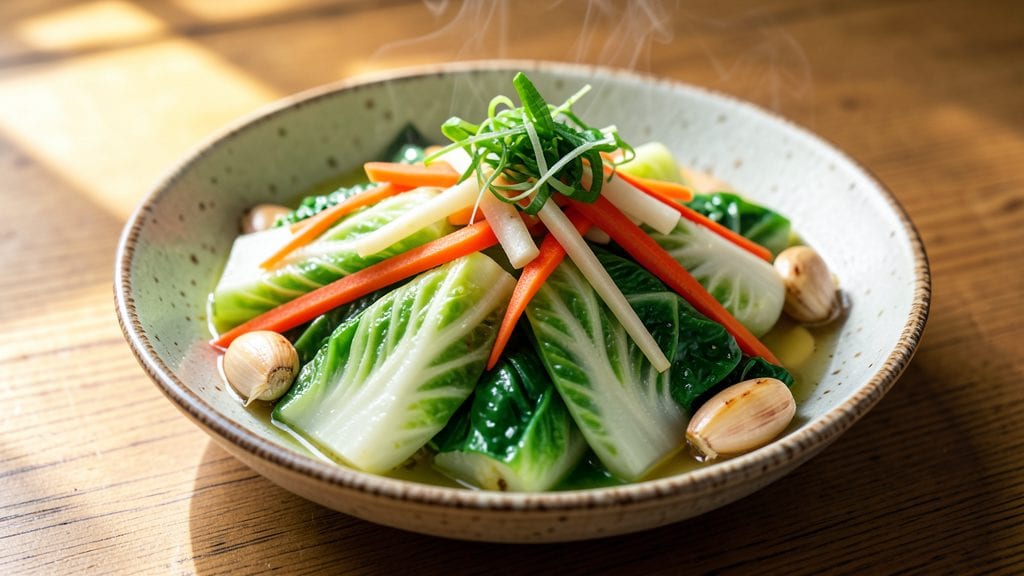
This vegan kimchi recipe delivers all the fermented heat and umami depth you love—without a drop of fish sauce. I developed it after years of testing substitutions, and the soy sauce-mushroom blend creates that signature tang without overpowering the cabbage.
The key lies in proper salting and fermentation time, which transforms simple vegetables into complex, probiotic-rich goodness.
What sets this recipe apart is the balanced seasoning mix that replaces traditional fish sauce while maintaining that signature umami punch.
We'll use a combination of soy sauce, mushroom powder, and a touch of brown sugar to mimic the depth, then ferment the cabbage for 5-7 days to develop those signature tangy flavors. The process is straightforward but requires patience—the longer it ferments, the more complex the flavor becomes.
By the time you're done, you'll have vibrant red kimchi with crisp-tender cabbage, a bright acidic tang, and layers of savory umami that work beautifully as a side dish, in stews, or atop rice bowls.
The texture stays perfect—no mushy cabbage here—and the flavor only improves with time. This is kimchi that even fish sauce purists will reach for.
Store your finished kimchi in the refrigerator for up to 3 months, letting the flavors continue to develop. The first batch will vanish quickly—this recipe makes enough for multiple meals, and the leftovers only get better with age. Let's get fermenting!
Ingredients for kimchi recipe without fish sauce
Simple vegetables and a clever seasoning blend create vibrant, tangy kimchi without fish sauce.
| Ingredient | Amount | Notes |
|---|---|---|
| Napa Cabbage 🥬 | 2 lb | Fresh, crisp, outer leaves removed |
| Kosher Salt 🧂 | ½ cup | Diamond Crystal preferred for texture |
| Carrots 🥕 | 3 medium | Julienned into matchsticks (about 1 cup) |
| Daikon Radish 🥕 | 1 small | Julienned into matchsticks (about 1 cup) |
| Green Onions 🧅 | 1 bunch | White and green parts separated |
| Garlic Cloves 🧄 | 8 cloves | Minced finely (about 2 tbsp) |
| Gochugaru Chili Flakes 🌶️ | ⅓ cup | Korean red pepper flakes |
| Organic Soy Sauce 🍶 | ¼ cup | Low-sodium preferred for balance |
| Mushroom Powder 🍄 | 2 tsp | For umami depth (or 1 tbsp soy sauce) |
| Brown Sugar 🍚 | 2 tbsp | Light or dark preferred |
| Apple Cider Vinegar 🍎 | ⅛ cup | Raw, unfiltered preferred |
| Sesame Seeds 🌰 | 2 tsp | Toasted lightly for nuttiness |
| Sesame Oil 🫒 | 1 tbsp | Toasted sesame oil preferred |
| Fresh Ginger 🌿 | 1 inch | Peeled, julienned (about 1 tbsp) |
| Water 💧 | 1 cup | Filtered preferred for clarity |
The cabbage is your canvas—Napa cabbage gives the best texture, but any firm white cabbage works. Grab the freshest head you can find, with crisp outer leaves still intact. Trader Joe's and Whole Foods usually carry the best quality, but any grocery store will do. The carrots and daikon should be julienned into thin matchsticks—a mandoline makes this job easy. For the gochugaru, Maesil Chogochang from Korean markets is the gold standard, but any Korean red pepper flakes will work. The mushroom powder is non-negotiable for that signature umami—Penzeys sells a great one, or you can make your own by dehydrating and powdering mushrooms.
No gochugaru? Substitute smoked paprika plus cayenne for heat, but you'll lose that signature Korean flavor. The soy sauce can be swapped for coconut aminos if you're avoiding soy, though the flavor will be slightly different. Fresh ginger and garlic are ideal, but powdered versions at half the amount work in a pinch. The sesame oil should be toasted—heat it in a dry pan for 30 seconds to deepen the flavor. For the vinegar, rice vinegar at half the amount is a decent substitute, though it won't be as tangy. The brown sugar can be swapped for maple syrup if you prefer.
This kimchi needs 5-7 days to develop proper tang and texture. Store it in a clean, airtight jar with a fermentation weight or a smaller jar filled with water placed on top of the kimchi to keep it submerged. Keep it at room temperature for the first 3 days, then move to the fridge. It'll keep for 3 months in the fridge, with flavors deepening over time. The first batch will disappear fast—this recipe makes enough for multiple meals, and the leftovers only get better with age. Portion into smaller jars for easy access.
Why You'll Love This Recipe
- No-Fuss Prep: I swear by the salt-and-squeeze method—just slice the cabbage, sprinkle kosher salt, and let it sit while I chop the carrots and radish. No fancy fermentation gear, no waiting hours. Honestly, I’ve made this while scrolling through my phone.
- Crunchy-Creamy Magic: That first bite? The cabbage stays shockingly crisp while the daikon and carrots soften into sweet, melt-in-your-mouth perfection. The green onions add a bright finish—like a fresh little kick without overpowering.
- Meal Prep MVP: This kimchi keeps for weeks in the fridge, so I toss it into rice bowls, stir-fries, or even scrambled eggs. Between us, I’ve had my kids eat it straight from the jar because it’s that good. (Yes, even on a Tuesday night.)
- Budget-Friendly Staple: A single head of cabbage and a bag of radishes stretch into enough kimchi to feed my family for months. I’ll be real: it’s cheaper than takeout, and I’ve never once regretted the leftovers. Zero waste, all flavor.
Step-by-step instructions for fermented vegetable blend without fish sauce
Here's how to create a vibrant, umami-rich ferment with balanced heat and depth.
Prepare the Vegetable Base with Precision
Begin by cutting the 2 lb napa cabbage lengthwise into quarters, removing the tough outer leaves. Rinse each quarter thoroughly under cold water to remove any dirt. Using a sharp knife, slice each quarter into ½-inch thick wedges. You'll end up with about 12-15 wedges total.
Transfer the cabbage wedges to a large mixing bowl. In a separate bowl, dissolve the 0.5 cup kosher salt in the 1 cup water until completely dissolved. Pour this saltwater mixture evenly over the cabbage, ensuring each piece is fully submerged. Let it sit for 1 hour, gently pressing down occasionally to help the salt penetrate evenly. This step is crucial for softening the cabbage and removing excess moisture.
Julienne Supporting Vegetables and Aromatics
While the cabbage soaks, prepare the supporting vegetables. Using a mandoline or sharp knife, julienne the 3 medium carrots and 1 small daikon radish into matchsticks (about 1 cup each). Separate the 1 bunch green onions into white and green parts, finely chopping the whites and leaving the greens in 1-inch sections for garnish.
Peel and julienne the 1 inch fresh ginger into thin matchsticks. Finely mince the 8 cloves garlic cloves until you have about 2 tablespoons of minced garlic. Set all prepared vegetables aside in separate bowls until ready to use. The julienned vegetables should be uniform in size to ensure even fermentation and flavor distribution throughout the kimchi.
Create the Umami-Packed Seasoning Paste
In a medium bowl, combine the 0.33 cup gochugaru chili flakes, 0.25 cup organic soy sauce, 2 tsp mushroom powder, 2 tbsp brown sugar, and 0.125 cup apple cider vinegar. Add the minced garlic, julienned ginger, and white parts of the green onions. Mix thoroughly until you achieve a thick, vibrant paste that coats the back of a spoon.
This paste is the flavor foundation of your kimchi. The gochugaru provides heat, the soy sauce and mushroom powder deliver umami depth, the brown sugar balances acidity, and the vinegar ensures proper preservation. The ginger and garlic add aromatic complexity that will develop beautifully during fermentation.
Combine and Massage for Even Distribution
After the 1-hour salt soak, drain the cabbage thoroughly in a colander, pressing down gently to remove excess liquid. Transfer the drained cabbage to a large mixing bowl. Add the prepared julienned carrots, daikon radish, and the umami paste. Using clean hands, massage the mixture vigorously for 5-7 minutes until the paste coats every surface of the vegetables.
This massage is essential for breaking down plant cells, which helps create the signature crunch and ensures even flavor distribution. Work in batches if needed, but don't rush this step. The cabbage should be pliable and well-coated with the seasoning mixture. The resulting texture should be tender but still hold its shape.
Pack and Ferment for Optimal Development
Transfer the seasoned vegetables to clean, sterilized kimchi jars or airtight containers, pressing down firmly to eliminate air pockets. The mixture should come up to about 1 inch below the jar rim to allow for expansion during fermentation. Sprinkle the 2 tsp toasted sesame seeds and drizzle with the 1 tbsp toasted sesame oil over the top.
Cover the jars loosely (either with lids slightly ajar or using fermentation weights) and let sit at room temperature for 3-5 days. Check daily for bubbles and liquid formation, pressing down gently each time. After 5 days, transfer to the refrigerator where it will continue fermenting slowly. The kimchi will develop its full flavor profile and tangy complexity over 2-4 weeks of refrigerated storage.
Pro Tips For Making Kimchi Recipe Without Fish Sauce
- CUT CABBAGE QUARTERS: Split the Napa cabbage lengthwise into quarters first—this makes salting and draining so much easier. I used to hack at whole leaves and end up with uneven salt distribution; now I just flip each quarter and let the salt work its magic evenly.
- SALT LEAVES LONGER: Don’t rush the 2-hour salt soak—this is where the texture magic happens. I learned this after my first batch turned mushy; now I leave it exactly 2 hours, no more, no less, and the leaves stay crisp.
- JULIENNE VEGETABLES FAST: Use a mandoline for the carrots and daikon—it’s faster and gives you those perfect, even matchsticks. I tried hand-julienning once and spent 20 minutes with uneven strips; now I do it in under 5 minutes.
- PACK TIGHT, FERMENT FASTER: Stuff your jar firmly with salted cabbage and veggies—no air pockets. I used to tap it lightly, but now I press down with my fist until liquid rises; this speeds up fermentation and keeps everything submerged.
Flavor customization for this dish
Sweet Heat Balance
Adjust the sweetness-to-heat ratio by tweaking the brown sugar and gochugaru amounts. For extra heat, add 1-2 extra teaspoons of chili flakes—just be sure to toast them first in a dry pan for 30 seconds to deepen their flavor.
If you prefer a sweeter kimchi, increase the brown sugar to 3 tablespoons and reduce the chili flakes by 1 teaspoon. My go-to is 1:1 ratio of gochugaru to brown sugar, but feel free to experiment based on your spice tolerance. 🌶️
Tangy Twist Variations
Boost the tanginess by adding 1 extra tablespoon of apple cider vinegar or substituting 1 teaspoon of rice vinegar. For a fruity twist, blend 2 tablespoons of finely chopped peach or pear into the seasoning paste—this adds a surprising sweetness that balances the heat.
I once added 1 teaspoon of grated apple to a batch, and it created a lovely floral note that surprised even my skeptical husband. 🍎
Umami Depth Boosters
For even deeper umami, swap the mushroom powder for 1 tablespoon of soy sauce or 1 teaspoon of vegan fish sauce (like Red Boat brand). Alternatively, add 1 tablespoon of tomato paste to the seasoning mix for a richer, meatier flavor.
If you love mushrooms, try adding 2-3 thinly sliced shiitake mushrooms to the fermenting jar—they’ll soften beautifully and add an earthy depth. 🍄
Texture Play
Keep the cabbage extra crisp by reducing the salt soak time to 45 minutes instead of 1 hour. For a softer texture, soak for 1 hour and 15 minutes. If you want crunchy carrots and daikon, add them only after the first 3 days of fermentation.
I often save a few julienned veggies to mix in just before serving—it’s a great way to keep the texture fresh. 🥕
Herbal Infusions
Add 1 teaspoon of dried shiso leaves or fresh mint for a bright, herbal note. For a smoky flavor, sprinkle ½ teaspoon of smoked paprika into the seasoning paste. If you’re feeling adventurous, try 1 teaspoon of grated ginger (instead of julienned) for a more intense zing.
My daughter Lily loves when I add a few drops of lavender extract—it sounds weird, but it pairs surprisingly well with the spice. 🌿
Nutrition facts
Frequently asked questions
Why does this recipe use soy sauce instead of fish sauce?
Soy sauce provides the same salty depth and umami foundation as fish sauce, but without the animal products. The addition of mushroom powder (or vegan fish sauce) boosts that savory profile even further. This combo mimics the complexity of traditional kimchi while keeping it plant-based and vegan-friendly.
Can I make this kimchi without apple cider vinegar?
Yes, but the fermentation process may take slightly longer. Substitute with 1 tablespoon of rice vinegar or ½ teaspoon of citric acid to help balance flavors. Without vinegar, you might need to ferment for an extra 1-2 days to achieve the same tangy punch.
How do I know when my kimchi is properly fermented?
Look for these signs: bubbles forming in the jar, a slightly sour smell (like yogurt), and the cabbage becoming tender but still holding its shape. After 5 days at room temperature, transfer to the fridge where it'll continue developing flavor for 2-4 weeks. The longer it ferments, the more complex the taste becomes!
What's the best way to store homemade kimchi?
Keep your kimchi in a clean, airtight container in the fridge where it'll last for 3 months. The flavors actually improve over time! For long-term storage, you can freeze portions (though texture may soften slightly). Always keep it submerged under its brine to prevent mold.
Can I use regular cabbage instead of napa?
Yes, but napa cabbage gives the best texture—crisp edges with tender centers. If using green cabbage, slice it ¼-inch thick and soak for 1 hour and 15 minutes to soften it properly. The flavor will be similar, but the texture will be slightly firmer.