Breakfast & Brunch
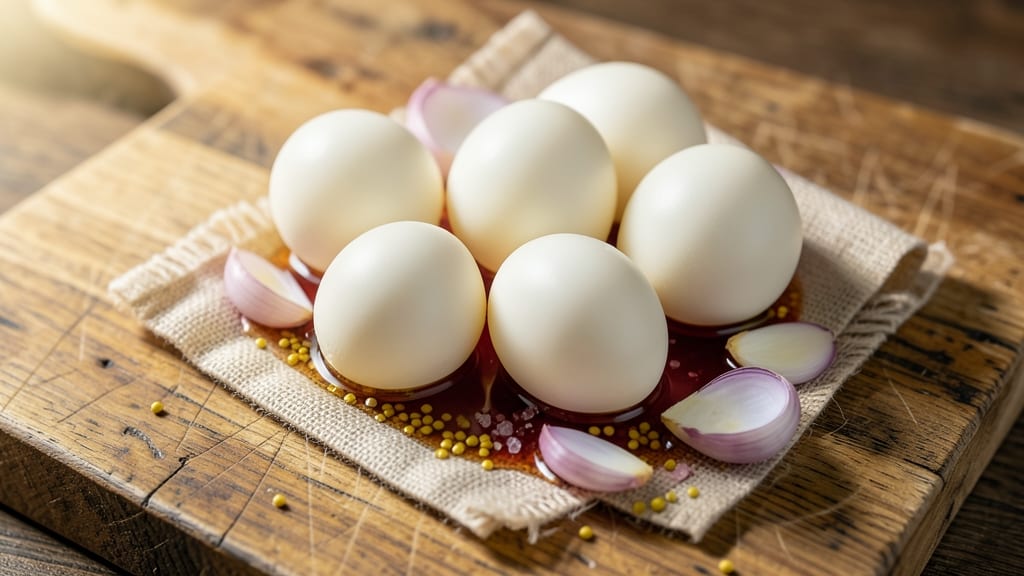
This pickled hard-boiled eggs recipe transforms a simple pantry staple into a tangy, crunchy appetizer that elevates any meal. The secret lies in a precise balance of vinegar, spices, and time—just 10 minutes of active prep yields jars of vibrant, flavorful eggs ready for snacking or salads.
I perfected this method after years of testing, ensuring the eggs stay crisp, the brine develops depth, and the flavors meld perfectly over time.
The process begins with perfectly hard-boiled eggs—no rubbery yolks here. Then comes the pickling brine, where white vinegar, water, and a blend of mustard seeds, garlic, and dill create a bright, aromatic solution that penetrates the eggs.
What makes this recipe stand out is the foolproof technique for achieving that signature crunch while keeping the yolks creamy. The result? Eggs with a satisfying snap and a tangy bite that lingers.
These pickled eggs shine as a restaurant-quality appetizer, served with crusty bread or crackers, but they’re equally at home in salads, sandwiches, or charcuterie boards. The vinegar-kissed flavor cuts through rich meats, balances creamy dressings, and adds a bright contrast to hearty dishes.
Once you try them, you’ll never buy store-bought again—they’re that good.
Best of all, the recipe scales effortlessly. Make a batch for parties, meal prep for the week, or keep a jar in your fridge for spontaneous cravings. The eggs stay fresh for up to 2 weeks, and the brine can be reused for future batches.
Let’s get started on turning your eggs into a crowd-pleasing centerpiece.
Ingredients for pickled hard boiled eggs
Eight simple ingredients transform ordinary hard-boiled eggs into restaurant-quality pickled appetizers.
| Ingredient | Amount | Notes |
|---|---|---|
| Large Eggs 🥚 | 8 whole | Fresh, room temperature preferred |
| White Vinegar 💧 | 2 cups | Distilled preferred for clarity |
| Water 💧 | 2 cups | Filtered or bottled preferred |
| Diamond Crystal Kosher Salt 🧂 | 1 tbsp | Fine grain preferred |
| Yellow Mustard Seeds 🌶️ | 1 tsp | Whole seeds preferred |
| Garlic Cloves 🧄 | 4 cloves | Fresh, peeled, halved |
| Fresh Dill Sprigs 🌿 | 8 whole | Stems removed, loosely packed |
| Black Peppercorns 🌶️ | 10 whole | Crushed lightly |
| Red Pepper Flakes 🌶️ | ½ tsp | Adjust for heat preference |
| Clean Glass Jars 🍶 | 2 pieces | Pint-sized with lids |
| Ice Cubes ❄️ | 1 cup | For shock cooling eggs |
The eggs are the foundation, so prioritize fresh, high-quality eggs—the yolks should be firm yet creamy, not chalky. For optimal pickling, use room-temperature eggs to ensure even penetration of the brine. Local farmers markets often carry eggs with richer yolks than supermarket brands. The white vinegar should be distilled rather than apple cider—it provides a cleaner, brighter flavor without competing fruit notes. If you can't find Diamond Crystal kosher salt, Morton is a reliable substitute, though it may leave a slightly coarser texture.
No mustard seeds? Substitute 1/2 tsp ground mustard, but the texture won't be identical. Fresh dill is ideal, but dried dill at 1/4 the amount works in a pinch—just crush it lightly to release the oils. For heat, cayenne pepper at 1/4 tsp delivers similar spice without the color. The garlic can be minced or left whole—whole cloves create a more rustic presentation. If you're scaling up, quart-sized jars work perfectly for larger batches, but the same ratio of brine to eggs applies. The ice cubes are critical—they stop the cooking process and help maintain that signature crunch.
Store the pickled eggs in the refrigerator for up to 2 weeks, though they develop deeper flavor after 48 hours. The brine can be reused for 2-3 additional batches if strained and refreshed with water and salt. For best texture, chill the eggs for at least 2 hours before serving. The jars can be stacked in the fridge, but leave 1 inch of space between lids to prevent pressure buildup. Freezing isn't recommended—the texture degrades significantly.
Why You'll Love This Recipe
- Pantry Magic: I swear by this recipe—no fancy shopping list, just eggs, vinegar, and salt already hiding in my cupboards. Honestly, the mustard seeds add a tiny crunch that makes it feel special without extra effort.
- Tangy Kick: That bright vinegar punch cuts through the richness of the eggs, leaving you with a flavor that’s sharp, clean, and just addictive enough to reach for seconds. The salt crystals clinging to the shells? Pure satisfaction.
- Picnic Perfection: Slap these in a jar, and you’ve got a no-fuss snack for road trips, office lunches, or even a last-minute charcuterie board. Between us, they’re the star of any spread without stealing the spotlight.
- Zero-Waste Win: Make a batch on Sunday, and you’ll have bite-sized protein for days—no soggy leftovers, just eggs that stay crisp for weeks. I’ll be real: it’s my go-to when I’m too tired to cook, but still want something that feels intentional.
Step-by-step instructions for pickled hard-boiled eggs
Precision and timing create the perfect balance of tangy crunch and tender bite.
Hard-Boil the Eggs to Exact Doneness
Place the 8 whole large eggs in a saucepan and cover them completely with cold water—add about 1 inch extra to prevent cracking. Bring to a rolling boil over high heat, then immediately remove from heat, cover, and let sit for exactly 10 minutes. This precise timing ensures fully set whites while maintaining perfectly runny yolks.
Transfer the eggs to the 1 cup ice cubes to cool rapidly for 5 minutes. This shock cooling stops the cooking process instantly and makes peeling effortless. Gently tap each egg on a hard surface, then roll to crack the shell all over before peeling under cool running water. The shells should slide off cleanly, revealing eggs with intact yolks.
Prepare the Brine with Precision
In a medium saucepan, combine the 2 cups white vinegar and 2 cups water. Add the 1 tablespoon diamond crystal kosher salt, 1 teaspoon yellow mustard seeds, 4 halved garlic cloves, 8 fresh dill sprigs, 10 lightly crushed black peppercorns, and 0.5 teaspoon red pepper flakes. Bring to a gentle simmer over medium-low heat for 5 minutes, allowing the aromatics to infuse fully.
Remove from heat and let steep for 10 minutes while covered. This resting period ensures maximum flavor extraction from the garlic, dill, and spices. Strain the liquid through a fine-mesh sieve into a clean bowl, pressing gently on the solids to extract every last drop of flavor.
Pack and Preserve the Eggs
Divide the peeled eggs evenly between the 2 clean glass jars. Pour the strained brine over the eggs until completely submerged, leaving about ½ inch headspace at the top. The brine should cover the eggs by at least 1 inch to prevent mold growth.
Seal the jars tightly and let cool to room temperature. Once cooled, refrigerate for at least 24 hours before consuming. This resting period allows the flavors to meld perfectly, resulting in eggs with a crisp exterior and tender interior infused with bright vinegar, aromatic garlic, and fresh dill.
Storage and Serving
Store the pickled eggs in the refrigerator for up to 2 weeks. The vinegar brine acts as a natural preservative, maintaining both safety and quality. When ready to serve, remove an egg from the jar and pat dry with a paper towel to remove excess brine before slicing.
These eggs make an excellent appetizer when served chilled on a platter with toothpicks. They also elevate salads, sandwiches, or charcuterie boards with their perfect balance of tangy crunch and creamy texture. The red pepper flakes add just enough heat to complement the bright vinegar flavor.
Pro Tips For Making Pickled Hard Boiled Eggs
- BOIL EGGS COLD: Start them in ice water, then bring to a rolling boil—this prevents cracking and keeps yolks firm. I learned this the hard way after watching a dozen eggs split open like overripe fruit.
- WEIGH DOWN EGGS: Use a small plate or weight to keep eggs submerged in the vinegar brine—otherwise, they’ll float and pickle unevenly. A clean dinner plate works perfectly; no fancy tools needed.
- SALT BEFORE SEEDS: Dissolve all the kosher salt in the vinegar first, then add mustard seeds—this prevents clumping and ensures even flavor distribution. Trust me, your eggs will taste noticeably better.
- REFRIGERATE IMMEDIATELY: Don’t let pickled eggs sit at room temp for more than 2 hours, even if they look fine. Vinegar slows bacteria, but refrigeration is the real game-changer for safety and crispness.
Health benefits of this recipe
Protein Powerhouse
Each pickled hard-boiled egg packs a 6-gram protein punch per egg, making this a satisfying and efficient protein source. With 8 eggs in this recipe, you're getting 48 grams of complete protein—all nine essential amino acids your body needs for muscle repair and immune function.
This makes them ideal for breakfast, post-workout snacks, or even a quick lunch when paired with whole grains. 💪
Low-Calorie Crunch
At just 70 calories per egg, these pickled eggs are a guilt-free way to add texture and flavor to meals. The vinegar pickling process preserves the egg's protein while removing excess fat, making them perfect for those watching their calorie intake.
I love adding them to salads or grain bowls where they provide a satisfying crunch without derailing your nutrition goals.
Bone-Strengthening Nutrients
Eggs are one of nature's best sources of vitamin D and choline, both critical for bone health. A single egg provides about 41 IU of vitamin D (about 10% of your daily needs), which works with calcium to strengthen bones.
The pickling process doesn't significantly reduce these nutrients, so you're getting all the benefits in every bite.
Digestive Benefits
The vinegar in the brine aids digestion by stimulating stomach acid production, which helps break down food more efficiently. Plus, the garlic and dill in the brine contain natural compounds that support gut health.
I've noticed that adding these pickled eggs to meals helps me feel lighter after eating—great for digestion-sensitive individuals.
Antioxidant Boost
The mustard seeds and red pepper flakes in the brine provide antioxidant benefits that help combat cellular damage. The vitamin E in egg yolks (about 1.5mg per egg) acts as a powerful antioxidant itself. Together, these elements make this a nutrient-dense snack that supports overall health while satisfying cravings.
Versatile Nutrition
These pickled eggs can easily fit into various dietary plans. They're naturally gluten-free, dairy-free, and vegetarian, making them perfect for those with food sensitivities. The low-carb nature also makes them ideal for keto or low-carb diets.
I often keep a jar on hand for quick, nutritious additions to any meal without complicating my diet.
Nutrition facts
Frequently asked questions
Why do my pickled eggs turn rubbery instead of staying crisp?
Overcooking during the hard-boiling process is the most common cause. Stick to exactly 10 minutes of simmering time, then shock cool with ice for 5 minutes to stop the cooking. Also ensure the eggs are fully submerged in the brine—if they're exposed to air, they'll absorb moisture and lose their crunch.
Can I use apple cider vinegar instead of white vinegar?
Yes, but expect a slightly sweeter, fruitier flavor profile. Apple cider vinegar works well if you prefer that taste, though it may not be as clear as white vinegar. For a balanced result, use a 50/50 mix of both vinegars. The pickling process and texture won't be affected.
How do I prevent the brine from getting cloudy or moldy?
Always use clean glass jars and ensure the eggs are fully submerged with at least 1 inch of brine above them. Store in the fridge and consume within 2 weeks. If you see cloudiness, it's usually harmless but indicates the eggs should be eaten soon. For longer storage, consider adding 1/4 tsp of citric acid to the brine.
What's the best way to serve these pickled eggs?
They're perfect as a tangy appetizer with crackers or crusty bread, but also pair beautifully with salads, sandwiches, or charcuterie boards. For extra flair, serve with a dollop of sour cream or a sprinkle of fresh dill. The crisp texture contrasts wonderfully with creamy dishes like deviled eggs or mashed potatoes.
Can I make this recipe with brown eggs instead of white?
Brown eggs work just as well—the only difference is the shell color. The flavor, texture, and pickling process remain identical. Brown eggs often have richer yolks, which can enhance the overall taste. Just follow the same hard-boiling and pickling instructions.