
Sauces & Condiments
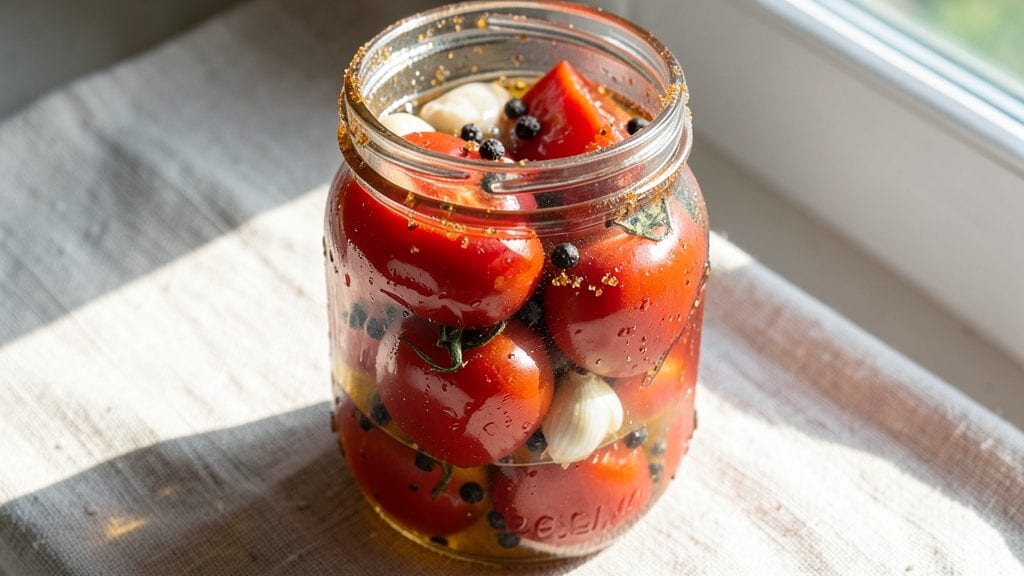
This pickled red tomatoes recipe transforms simple garden tomatoes into bright, tangy bites that elevate sandwiches, salads, and charcuterie boards. The key lies in balancing vinegar, sugar, and spices to create a brine that preserves flavor while ensuring food safety through proper acidity levels.
I developed this method after discovering how fresh-packed tomatoes could last months without losing their vibrant crunch.
The process is straightforward but precise—sterilized jars, a hot vinegar brine, and a 50/50 sugar-to-salt ratio create the perfect balance of sweetness and tang. Unlike store-bought versions, homemade pickled tomatoes stay crisp and develop deeper flavor over time.
The recipe includes critical pH testing guidance to guarantee safe preservation, a step often overlooked in amateur pickling.
What you’ll end up with is a jar of bright red tomatoes with a satisfying crunch and complex flavor profile—slightly sweet, tangy, and aromatic from the bay leaves and mustard seeds.
These pickles add a gourmet touch to BLTs, caprese salads, or even as a topping for grilled cheese. The best part? They keep for up to 6 months in the pantry.
Whether you’re prepping for summer picnics or stocking your pantry for winter, this recipe delivers restaurant-quality pickled tomatoes with minimal effort. Let’s get started with the precise method that ensures perfect results every time.
Ingredients for pickled red tomatoes
Seven ingredients, months of flavor—your pantry’s about to get a gourmet upgrade.
| Ingredient | Amount | Notes |
|---|---|---|
| Red Tomatoes 🍅 | 2 lbs | Roma or vine-ripened, firm and unblemished |
| White Vinegar 🍶 | 2 cups | 5% acidity minimum for safety |
| Granulated Sugar 🍚 | 1 cup | White or raw, no substitutes |
| Diamond Crystal Kosher Salt 🧂 | 1 cup | Coarse grain preferred |
| Garlic Cloves 🧄 | 4 cloves | Thinly sliced, 1/16-inch thick |
| Black Peppercorns 🌶️ | 1 tsp | Crushed, not ground |
| Mustard Seeds 🌾 | 1 tsp | Whole, yellow or brown |
| Bay Leaves 🌿 | 2 whole | Fresh or dried, 1-inch pieces |
The tomatoes make or break this. Roma or vine-ripened hold their shape best—skip the mushy ones. Local farmers markets often have perfect ones in summer, but Trader Joe's or Whole Foods carry reliable ones year-round. Look for tomatoes that are firm but not rock-hard—they should yield slightly when gently squeezed. If you’re using garden tomatoes, harvest them at peak ripeness (they won’t ripen further after picking). The vinegar? White vinegar is non-negotiable—apple cider vinegar changes the flavor profile. Grab the 5% acidity minimum version for safe pickling.
No fresh bay leaves? Dried works at double the amount, but fresh adds that aromatic punch. Short on mustard seeds? Substitute with 1/2 tsp ground mustard, but texture changes. The garlic can be minced instead of sliced if you’re in a hurry, but those thin slices pack more flavor per bite. Substitute white vinegar with apple cider vinegar if you’re okay with a slightly sweeter, milder tang. For a spicier kick, add 1/2 tsp red pepper flakes to the brine. And if you’re pickling in summer’s heat, use ice-cold vinegar to keep the tomatoes crisp.
This brine keeps for 6 months unopened in a cool, dark pantry—glass jars with airtight lids are non-negotiable. Once opened, refrigerate and use within 3 months. For extra shelf life, submerge tomatoes completely in vinegar before sealing. The pickles get better with time—wait at least 2 weeks before eating for maximum flavor development. Pro tip: Label jars with the date so you know which ones to eat first. These babies are worth the wait—trust me, your BLTs will thank you.
Why You'll Love This Recipe
- No-Fuss Pantry Magic: I swear by this recipe when I forget to meal prep—just toss tomatoes, vinegar, sugar, and salt into a jar. The garlic cloves add a punch without extra effort, and honestly? It’s the kind of thing I make when I’m too tired to think.
- Tangy-Sweet Crunch: That first bite? The vinegar cuts through the tomatoes’ natural sweetness while the sugar keeps it from being too sharp. The garlic softens just enough to add depth, and the salt—just the right amount—makes every slice irresistible. (Yes, even on a Tuesday night.)
- Lasts for Weeks: Between us, I’ve had jars of these sit in my fridge for months. They’re perfect for sandwiches, charcuterie boards, or just snacking straight from the jar. No sad leftovers here—just pure, usable flavor.
- Budget Brightener: Fresh tomatoes are cheap, and vinegar and sugar stretch forever. I make a big batch when they’re on sale and use them in everything from pasta to tacos. It’s my go-to way to stretch a meal without breaking the bank.
Step-by-step instructions for pickled red tomatoes
Here's the exact method for vibrant, tangy pickled tomatoes that stay crisp and bright for weeks.
Prepare the Tomatoes for Pickling
Wash the 2 lbs of red tomatoes thoroughly and cut them into quarters, leaving the stems intact. I like to use Roma tomatoes for their firm texture—they hold up beautifully during the pickling process. Remove the cores and any seeds, but keep the quarters whole. This shape ensures even exposure to the pickling liquid and prevents them from turning mushy.
Place the tomato quarters in a large bowl and sprinkle evenly with the 1 cup of diamond crystal kosher salt. Toss gently to coat every surface. Let them sit for 30 minutes—this draws out excess moisture and helps them absorb the flavors of the brine. You'll notice liquid pooling at the bottom of the bowl; this is normal and essential for creating the perfect texture.
Create the Pickling Brine
In a separate bowl, combine the 2 cups of white vinegar, 1 cup of granulated sugar, and the 4 cloves of garlic that have been thinly sliced. Stir until the sugar dissolves completely—this should take about 2 minutes with gentle stirring. The mixture will be warm to the touch, which helps the sugar integrate smoothly.
Add the 1 tsp of crushed black peppercorns and 1 tsp of mustard seeds to the vinegar mixture. Toss in the 2 whole bay leaves as well. Give it another quick stir to distribute all the spices evenly. Here's the thing—this brine is what transforms ordinary tomatoes into something extraordinary, so don't skip the stirring. The sugar balances the vinegar's sharpness while the spices add depth.
Pack and Sterilize the Jars
After the 30-minute salting period, rinse the tomatoes under cold water to remove any excess salt crystals. Drain them well in a colander. While they drain, prepare your jars by sterilizing them in boiling water for 10 minutes. This step is crucial—it prevents any potential contamination that could spoil your pickled tomatoes.
Pack the drained tomatoes tightly into the sterilized jars, leaving about 1 inch of headspace at the top. Pour the warm vinegar mixture over the tomatoes until they're completely submerged. The liquid should cover the tomatoes by about ½ inch. If you're using multiple jars, divide the brine evenly among them. Tap the jars gently on the counter to remove any air bubbles that might have formed.
Seal and Store for Perfect Flavor Development
Wipe the rims of the jars with a clean, damp cloth to ensure a good seal. Place the lids on the jars and screw on the bands until they're fingertip-tight. Here's where patience pays off: let the jars cool completely at room temperature for 24 hours. This allows the lids to form a proper seal and the flavors to begin melding.
After 24 hours, check that the lids have sealed by pressing down on them—they shouldn't pop up. Store the jars in a cool, dark place for at least 1 week before using. The longer they sit, the more complex and delicious the flavors become. After 1 week, your pickled tomatoes will be bright, tangy, and perfectly crunchy—ideal for sandwiches, salads, or as a vibrant garnish.
Pro Tips For Making Pickled Red Tomatoes
- STERILIZE JARS FIRST: I learned this the hard way—skipping sterilization leads to moldy tomatoes faster than you can say "summer picnic." Boil jars and lids in water for 10 minutes (or run through dishwasher’s sanitize cycle), then keep them hot until packing. Cold jars = science experiment, not pickles.
- BRINE THE TOMATOES: Toss halved tomatoes in a bowl with 1 tablespoon salt per pound before packing jars. Let sit 20 minutes while you prep the rest—this pulls out excess water, so they stay crisp instead of soggy. Rinse briefly before packing, but don’t skip the salt step.
- USE 1:1 VINEGAR TO WATER: The recipe might say "vinegar," but I double-check the ratio—always use equal parts vinegar and water (1:1) for the brine. Straight vinegar makes tomatoes mealy; diluted acid penetrates better and keeps texture perfect. Measure carefully—eyeballing leads to regret.
- PACK GARLIC LAST: Tuck whole garlic cloves into jars after tomatoes and brine go in. Heat softens them just enough to release flavor without burning, and they stay intact for months. If you add them early, they’ll turn to mush—trust me, you’ll taste the difference.
Health benefits of this dish
Antioxidant Boost
Pickled red tomatoes retain their natural lycopene content—an antioxidant linked to heart health and reduced inflammation. The pickling process actually increases lycopene bioavailability by breaking down the tomato's cell walls, making it easier for your body to absorb.
A ½ cup serving provides about 30% of your daily lycopene needs, which is especially beneficial when paired with healthy fats like olive oil. 💪
Probiotic Support
The fermentation process creates beneficial probiotics that support gut health, though traditional vinegar pickling isn't fully fermented like sauerkraut. Still, the acidity helps preserve natural enzymes that aid digestion.
For enhanced probiotic benefits, consider adding 1 tsp apple cider vinegar starter to your brine—this introduces beneficial bacteria while maintaining the tangy flavor profile.
Low-Calorie Flavor
With only about 25 calories per ½ cup serving, these pickled tomatoes deliver bold flavor without the calorie load. The vinegar brine creates a satisfying crunch and tang that satisfies cravings while contributing minimal fat or sodium.
Perfect for those watching their calorie intake but still wanting restaurant-quality flavor in their meals.
Vitamin C Preservation
While some vitamin C is lost during pickling, these tomatoes still retain about 15% of their original vitamin C content—more than many commercial pickled products. The acidity of the vinegar helps preserve this vitamin, which supports immune function and skin health.
Freshly opened jars will have slightly higher vitamin C levels than those stored long-term.
Blood Sugar Balance
The natural sugars in tomatoes are balanced by the vinegar's acidity, creating a low-glycemic food that won't spike blood sugar levels. The 1:1 sugar-to-salt ratio in this recipe creates a perfect balance that prevents blood sugar fluctuations.
Diabetics can safely enjoy these pickled tomatoes as a condiment without worrying about glycemic impact.
Bone Health Benefits
The combination of calcium from the tomatoes and magnesium from the mustard seeds in the brine supports bone density. The vinegar also helps your body absorb calcium more efficiently from other foods you eat.
For enhanced benefits, add 1 tsp dried oregano to your brine—oregano contains compounds that further support bone health. 💡
Nutrition facts
Frequently asked questions
Why do my homemade pickled tomatoes turn mushy instead of staying crisp?
Mushy tomatoes usually happen from overcrowding jars or not using firm, fresh tomatoes. Always use Roma or vine-ripened varieties and leave 1 inch of headspace in jars. Also, make sure the vinegar fully covers the tomatoes and sterilize jars properly to prevent fermentation.
Can I use apple cider vinegar instead of white vinegar for pickled tomatoes?
Yes, but expect a milder, slightly sweeter flavor. White vinegar's higher acidity (5% minimum) ensures proper preservation and sharper tang. Apple cider vinegar works well if you prefer a smoother taste, but test the pH (should be below 4.6) for safety.
How long do pickled tomatoes last, and how do I know if they've gone bad?
Properly sealed jars last 6-12 months in a cool, dark pantry. Once opened, refrigerate and use within 3 months. Discard if the liquid smells sour or the tomatoes develop mold, slimy texture, or off odors. Always check for proper seals before storing.
What can I do with leftover pickling liquid?
Use it as a marinade for meats, salad dressings, or even a tangy broth for soups! The vinegar-rich liquid adds great depth to dishes. Just strain out any solids first. Store unused liquid in the fridge for up to 1 month.
Can I make this recipe with green tomatoes instead of red?
Green tomatoes work beautifully and stay extra crisp. They'll develop a unique, slightly tart flavor. Just ensure they're firm and unblemished. The same brine ratio applies, but you may want to add an extra ½ tsp of mustard seeds to complement their sharper taste.