Main Courses
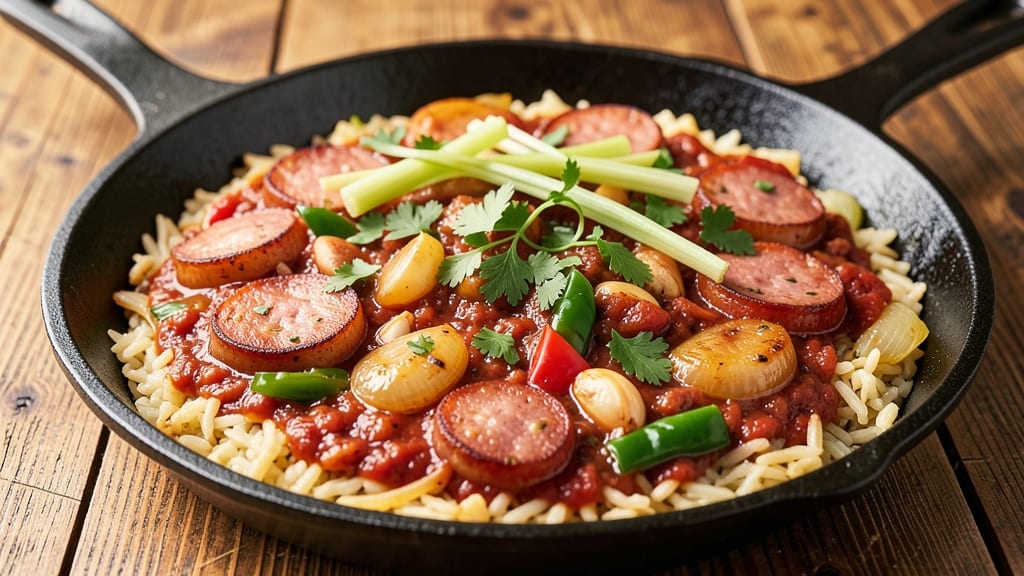
This red jambalaya recipe delivers the bold, smoky flavors of a Louisiana classic without the fuss of multiple pots. The secret lies in building layers of flavor through the holy trinity—onion, bell pepper, and celery—simmered until they melt into the sauce.
I developed this version after years of perfecting the balance between tender sausage, perfectly cooked rice, and a rich tomato base that ties everything together.
What sets this one-pot wonder apart is how the rice absorbs the smoky sausage juices and spiced tomato broth, creating a dish that's both hearty and elegant.
The key is using the right rice-to-liquid ratio (1:1.5) and letting it all simmer gently until the grains are tender but still hold their shape. This isn't just a quick weeknight meal—it's a restaurant-quality dish that comes together in a single pot.
The result is a vibrant, aromatic jambalaya with layers of texture—crisp edges on the sausage, fluffy rice, and a sauce that's rich yet balanced by the acidity of tomatoes and heat of cayenne.
Each bite delivers smoky, spicy, and savory notes that make this a standout for dinner parties or family gatherings. The best part? One pot means minimal cleanup and maximum flavor.
For those who love seafood, swap the sausage for shrimp or add both—this recipe adapts beautifully. Here's how to make it perfectly every time, with tips for adjusting spice levels and ensuring the rice comes out just right.
Ingredients for red jambalaya
Sixteen essential ingredients transform into one-pot jambalaya magic with smoky sausage and vibrant tomato sauce.
| Ingredient | Amount | Notes |
|---|---|---|
| Long-Grain White Rice 🍚 | 2 cups | Uncooked, medium grain preferred |
| Andouille Sausage 🌭 | 1 ½ lb | Smoked, sliced into 1/2-inch rounds |
| Yellow Onion 🧅 | 1 ½ whole | Diced, medium size preferred |
| Green Bell Pepper 🍅 | 1 whole | Diced, seeds removed |
| Celery Stalks 🥬 | 3 whole | Diced, strings removed |
| Garlic Cloves 🧄 | 4 cloves | Minced, fresh preferred |
| Canned Tomato Sauce 🍅 | 2 cups | 28 oz can, crushed tomatoes |
| Chicken Broth 💧 | 2 cups | Low-sodium preferred |
| Cayenne Pepper 🔥 | 1 tsp | Adjust for heat preference |
| Dried Thyme 🍃 | 1 tsp | Or 1 tbsp fresh thyme |
| Smoked Paprika 🌶️ | 1 tbsp | For authentic smoky flavor |
| Bay Leaves 🍃 | 2 whole | Removed before serving |
| Salt 🧂 | 1 ½ tsp | Kosher or sea salt |
| Black Pepper 🌶️ | ½ tsp | Freshly ground preferred |
| Olive Oil 🫒 | 2 tbsp | Extra-virgin for richness |
The holy trinity—onion, bell pepper, and celery—must be finely diced for even cooking. Trader Joe's sells pre-diced fresh veggie mixes that save time, but chopping your own ensures better flavor. For sausage, Johnsonville Andouille is a reliable brand, but any smoked sausage will work. The rice should be long-grain and uncooked—Uncle Ben's Converted Rice is a standard choice, though jasmine works beautifully too. Garlic and thyme are non-negotiable for authentic flavor; Penzeys sells high-quality dried thyme if you prefer bulk purchases. The tomato sauce should be crushed—not diced—so it blends smoothly into the dish.
No andouille? Spicy kielbasa or even chorizo works in a pinch, though the smokiness will differ. Short on bell pepper? Substitute roasted red peppers from a jar at double the amount. The cayenne can be adjusted—start with a pinch and taste as you go. For extra depth, add a dash of Worcestershire sauce to the broth. The smoked paprika is crucial; Goya or McCormick are reliable brands. If you can't find smoked, regular paprika plus a pinch of liquid smoke mimics the effect. The bay leaves should be removed before serving, as they're tough to chew.
This jambalaya reheats beautifully—simmer on low heat with a splash of broth if it dries out. Store leftovers in an airtight container for 4-5 days in the fridge or freeze for 3 months. The rice-to-liquid ratio ensures perfect texture, but if you prefer firmer rice, reduce broth by 1/4 cup. For meal prep, double the recipe and freeze portions—just thaw and reheat gently. The flavors deepen overnight, so making ahead is ideal for dinner parties.
Why You'll Love This Recipe
- One-Pot Magic: I swear by this—no separate pans, no extra bowls. Just brown the andouille, toss in the holy trinity (onion, bell pepper, celery), dump in the rice, and let the roux work its magic. Twenty minutes later, you’ve got a pot that smells like a Cajun dream.
- Smoky-Spicy Kick: That andouille sausage? It’s the star. Crumbled and crisped just right, it melts into the rice with a deep, smoky heat that lingers. Honestly, the first bite makes me forget about grocery shopping for a week.
- Leftovers That Don’t Suck: Between us, most jambalaya recipes turn into sad, dry rice by day two. Not this one. The rice stays fluffy, the spices don’t fade, and the sausage only gets better. I meal prep this like it’s my job—lunch for three days, no complaints.
- Budget Crowd-Pleaser: You’re looking at a $15 dinner for six. Andouille’s cheap in bulk, the veggies are pantry staples, and a single batch feeds my whole family plus leftovers for my picky roommate. Plus, it’s the kind of dish where everyone asks, “Can I have more?”—even my veggie-avoidant brother.
Step-by-step instructions for red jambalaya
This one-pot method delivers rich, smoky flavor with perfectly balanced spices and tender sausage.
Sauté the Sausage and Aromatics
Heat the 2 tablespoons olive oil in a large, heavy-bottomed pot over medium-high heat. Add the 1.5 pounds andouille sausage sliced into ½-inch rounds and cook for 5-6 minutes, stirring occasionally, until the sausage releases its fat and begins to brown. You'll hear it sizzling—this is when the deep, smoky flavor develops.
Remove the sausage with a slotted spoon and set it aside. In the same pot, add the 1.5 whole yellow onion, 1 whole green bell pepper, and 3 whole celery stalks, all diced. Cook for 5-6 minutes until the vegetables soften and the onion becomes translucent. Stir in the 4 cloves garlic and cook for 30 seconds until fragrant—this prevents the garlic from burning, which would make the dish bitter.
Build the Spiced Base
Reduce the heat to medium and sprinkle in the 1 tablespoon smoked paprika, 1 teaspoon dried thyme, 1 teaspoon cayenne pepper, 1.5 teaspoons salt, and ½ teaspoon black pepper. Stir for 30 seconds to toast the spices—this awakens their flavors and deepens the smoky, spicy profile of the jambalaya. The spices should smell aromatic and slightly earthy.
Pour in the 2 cups canned tomato sauce and 2 cups chicken broth, scraping up any browned bits from the bottom of the pot. Add the 2 whole bay leaves and bring the mixture to a gentle simmer. Let it cook for 5 minutes to allow the flavors to meld and the sauce to thicken slightly. You'll notice the sauce becomes glossy and the spices dissolve evenly.
Combine and Simmer the Jambalaya
Return the cooked sausage to the pot and stir to combine. Add the 2 cups long-grain white rice, spreading it evenly over the liquid. The rice should be fully submerged—if not, add a splash of water or broth to cover it completely. Bring the mixture to a boil, then immediately reduce the heat to low and cover the pot with a tight-fitting lid.
Simmer for 20 minutes without lifting the lid. This allows the rice to absorb the liquid gradually and develop a firm, fluffy texture. After 20 minutes, remove the lid and fluff the jambalaya gently with a fork. Check the rice—it should be tender but still slightly firm in the center. If the mixture looks dry, add ¼ cup chicken broth and cook for another 5 minutes covered.
Rest and Serve
Once the rice is fully cooked and the liquid has been absorbed, remove the pot from the heat and let the jambalaya rest for 5 minutes covered. This resting period allows the flavors to settle and the rice to finish steaming. Before serving, remove and discard the bay leaves—they’ve done their job infusing flavor but shouldn’t be eaten.
Taste and adjust the seasoning if needed. If the jambalaya needs more heat, add a pinch of cayenne pepper. If it needs more salt, add it gradually—this dish should be bold but balanced. Serve immediately with warm crusty bread or over a bed of greens to soak up the rich, spicy sauce. The jambalaya should be thick, flavorful, and packed with tender sausage and perfectly cooked rice.
Pro Tips For Making Red Jambalaya
- CRISP THE VEGETABLES FIRST: Slice onions, peppers, and celery into ¼-inch pieces—smaller than you’d use for stew—and sear them in oil until they soften but still hold their shape. I used to let them get mushy, but crisping them first keeps the jambalaya from turning into a soup. (Yes, even if you’re impatient like me.)
- SWEAT THE SAUSAGE: After browning the andouille, remove it and set aside—then cook the veggies in the same pan for 5 minutes. That residual fat renders out more flavor, and you won’t end up with a dry sausage pile at the end. (Your future self will notice the difference.)
- TOAST THE RICE: After adding the rice to the pot, stir it around for 30 seconds so every grain gets coated in the hot oil and spices. This isn’t just about flavor—it’s the thing that keeps your jambalaya from turning out gummy. (I learned this the hard way after a soggy disaster.)
- DON’T SKIP THE STOCK: Use 1½ cups of liquid for every cup of rice, but make sure at least half of it is hot stock or broth. Cold liquid shocks the pot and dilutes the heat—hot stock keeps everything cooking evenly. (Sounds weird, but it works.)
Perfect pairings for these flavors
Crusty Bread Pairing
Nothing complements jambalaya like warm, crusty bread to soak up the rich, spicy sauce. I recommend a fresh baguette or Italian loaf—toast it in the oven at 375°F for 5-7 minutes until golden and crisp.
For extra flair, brush the bread with garlic-infused olive oil before toasting. The crusty exterior contrasts perfectly with the tender sausage and fluffy rice. 🥖
Cool Sides Balance Heat
To cut through the bold spices, serve jambalaya with cooling sides like a cucumber and avocado salad or shredded cabbage slaw. Toss 2 cups shredded green cabbage with 1 tbsp apple cider vinegar, 1 tbsp olive oil, and a pinch of salt.
The acidity refreshes your palate between bites of smoky sausage. A side of buttered corn also adds sweetness that balances the heat.
Beverage Pairings
For drinks, a chilled lager like Heineken or Corona works perfectly—the crisp, clean flavors cleanse your palate. If you prefer wine, a dry Riesling or Sauvignon Blanc with citrus notes complements the tomato base.
For non-alcoholic options, sparkling lemonade or hibiscus iced tea adds a refreshing contrast to the spicy, smoky jambalaya. 🍺
Toppings for Extra Flavor
Elevate your jambalaya with fresh toppings at the table. A sprinkle of chopped green onions adds brightness, while crumbled feta cheese brings a tangy contrast. For heat lovers, serve pickled jalapeños on the side.
I also love a drizzle of hot honey—just mix 2 tbsp honey with ½ tsp cayenne pepper and warm it slightly. 🌶️
Dessert Follow-Up
End your jambalaya feast with something light and sweet to balance the meal. A key lime pie or bananas foster works beautifully—the citrus notes echo the tomatoes in the jambalaya, while the caramelized bananas provide a creamy finish.
For a simpler option, vanilla ice cream with a sprinkle of cinnamon cools the palate. 🍋
Nutrition facts
Frequently asked questions
Can I make this jambalaya with brown rice instead of white?
Brown rice will work, but the cooking time and texture will change. Use a 1:2 rice-to-liquid ratio (instead of 1:1.5) and simmer for 35-40 minutes instead of 20. The result will be nuttier and heartier, but the rice may stay slightly firmer. For best results, rinse the brown rice thoroughly first to remove excess starch.
What's the best way to adjust the heat level?
Start with the 1 teaspoon cayenne pepper and taste as you go. For milder heat, reduce to ½ teaspoon or swap for ½ teaspoon smoked paprika. For extra kick, add ¼ teaspoon red pepper flakes or a dash of hot sauce at the end. Remember, the spices toast during cooking, so the final heat may be slightly milder than expected.
Can I make jambalaya ahead of time?
This dish tastes even better the next day! Cook it as directed, then store in an airtight container in the fridge for 4-5 days. Reheat gently on the stove with a splash of broth or water. For freezing, portion into containers and freeze for up to 3 months. Thaw overnight in the fridge before reheating—never microwave directly from frozen.
What if my jambalaya turns out too dry?
Don't panic! Add ¼ cup chicken broth or water and simmer covered for 5 more minutes. If the rice is still dry, it likely absorbed too much liquid. Next time, reduce the rice by ¼ cup or increase the broth by ¼ cup. The key is maintaining that 1:1.5 rice-to-liquid ratio—never stir the rice while cooking to prevent breaking the grains.
How can I add seafood to this recipe?
For seafood jambalaya, use 12 oz shrimp or 1 lb firm white fish like cod or tilapia. Add the seafood in the last 5 minutes of cooking to prevent overcooking. If using shrimp, toss them with ½ teaspoon Old Bay seasoning before adding. For extra depth, stir in 1 tablespoon lemon juice at the end to brighten the flavors.