
Soups & Stews
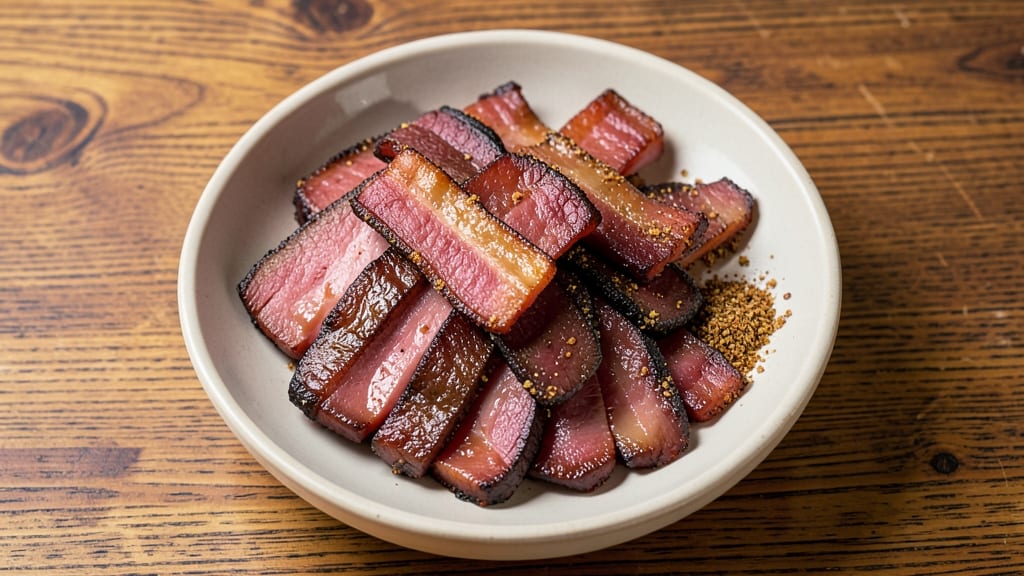
Transforming beef tongue into smoky-spiced pastrami requires patience and precision—this recipe delivers restaurant-quality results with a tender, melt-in-your-mouth texture and deep, aromatic flavors.
The process begins with a foolproof curing method using a blend of kosher salt, sugar, and traditional pastrami spices, ensuring the meat absorbs flavor evenly over 72 hours. This isn’t just a recipe; it’s a method perfected to replicate the rich, savory experience of classic deli-style pastrami.
The key to success lies in controlled smoking at 225°F, where the beef tongue slowly renders fat and develops that signature smoky crust without drying out. Unlike quick-cooking cuts, tongue benefits from this low-and-slow approach, breaking down into velvety layers that practically dissolve on the tongue.
Safety is critical here—proper curing times and refrigeration prevent spoilage while building flavor, making this a professional-grade technique even for home cooks.
Once smoked to an internal temperature of 195°F, the tongue rests for 24 hours in its juices, allowing flavors to meld and the texture to reach peak tenderness. Slicing against the grain yields perfectly shreddable strips, ideal for Reuben sandwiches, charcuterie boards, or served with mustard and pickles.
The result is a dish that rivals deli counters, with a balance of salt, smoke, and sweetness that lingers long after the last bite.
This recipe scales beautifully for gatherings, and the cured tongue keeps in the fridge for up to 5 days or can be frozen for 3 months—making it a versatile centerpiece for any meal.
Whether you're a home cook or a seasoned chef, the method ensures consistent, mouthwatering results every time. Let’s get started on crafting this showstopper.
Ingredients for beef tongue pastrami
Precision-cured and slow-smoked, these ingredients transform humble beef tongue into velvety pastrami with restaurant-quality depth.
| Ingredient | Amount | Notes |
|---|---|---|
| Beef Tongue (whole) 🥩 | 2 lbs | Fresh, trimmed of excess fat |
| Kosher Salt 🧂 | ½ cup | Diamond Crystal preferred |
| Granulated Sugar 🍚 | ¼ cup | White or brown preferred |
| Black Peppercorns 🌶️ | 2 tbsp | Freshly cracked for intensity |
| Ground Coriander 🌿 | 1 tbsp | Freshly ground for aroma |
| Ground Mustard 🍯 | 1 tbsp | Dijon preferred for depth |
| Ground Cloves 🌶️ | 1 tsp | Freshly ground for warmth |
| Ground Allspice 🌶️ | 1 tsp | Freshly ground for complexity |
| Ground Cinnamon 🌿 | ½ tsp | Ceylon preferred for subtlety |
| Wood Smoking Chips (Hickory) 🌳 | 2 lbs | Unsoaked, high-quality |
| Apple Cider Vinegar 🍎 | ¼ cup | For curing solution |
| Yellow Mustard Seeds 🌶️ | 1 tsp | Whole, lightly toasted |
| Bay Leaves 🍃 | 2 whole | Fresh preferred, dried acceptable |
| Water 💧 | 2 cups | Filtered preferred |
The beef tongue is the centerpiece—opt for 2 lb whole tongues from a trusted butcher or specialty meat supplier like D'Artagnan or Snake River Farms. Look for tongues with a vibrant red hue and minimal surface fat; excess fat can interfere with flavor absorption during curing. If sourcing from a local market, verify the meat has been properly refrigerated. The Diamond Crystal kosher salt is essential for even curing—its coarse texture ensures thorough penetration, while the granulated sugar aids in moisture retention and caramelization during smoking. For the spices, Penzeys Spices or bulk bins at Whole Foods offer freshly ground options that elevate the final product significantly.
Substitutions require careful consideration to maintain balance. If hickory chips are unavailable, applewood or cherrywood provide complementary flavors, though hickory's bold smokiness remains ideal. For the curing solution, white vinegar can replace apple cider vinegar, though the latter adds subtle fruitiness. Mustard seeds can be omitted if unavailable, but the ground mustard and coriander provide sufficient depth. For the sugar, honey or maple syrup can substitute at a 1:1 ratio, though they may yield slightly different caramelization. Fresh bay leaves are preferable, but dried leaves work at half the quantity—simply crush them lightly before adding to the curing brine. When grinding spices, use a mortar and pestle for optimal freshness, though a high-quality spice grinder suffices for convenience.
The cured tongue requires meticulous storage to preserve its quality. After curing, vacuum-seal the tongue in its juices and refrigerate for up to 5 days before smoking. For longer storage, freeze the cured tongue for up to 3 months—thaw overnight in the refrigerator before smoking. Once smoked and rested, store the cooked pastrami in an airtight container submerged in its juices, refrigerated for 5 days or frozen for 3 months. To reheat, warm gently in a skillet with a splash of beef broth or apple cider vinegar to maintain moisture. The resulting pastrami should be sliced against the grain for optimal tenderness, yielding shreddable strips perfect for Reuben sandwiches or charcuterie displays.
Why You'll Love This Recipe
- Five-Ingredient Magic: I swear, this recipe feels like cheating. You’re basically curing a whole beef tongue with just kosher salt, sugar, peppercorns, and coriander—no fancy rubs or hours of prep. The tongue does all the work while you sip coffee.
- Sweet-Savory Crunch: That sugar-salt crust? Chef’s kiss. It caramelizes into a sticky, slightly crisp shell while the inside stays tender—like a cross between pastrami and candy. Honestly, the first time I sliced it, my kids fought over the last piece.
- Weeknight Hero: This isn’t just for holidays. Toss it in sandwiches for a lazy Monday, cube it for tacos on a Friday, or serve it cold with pickles when you’re too tired to cook. (Yes, even on a Tuesday night.) The flavor stays bold no matter how you serve it.
- Budget Stretch: A single beef tongue feeds my family for days—sandwiches, salads, even fried rice. I buy them on sale, cure a batch, and suddenly I’ve got a pantry staple that costs pennies per serving. No more takeout when the wallet’s thin.
Step-by-step instructions for beef tongue pastrami
Transforming beef tongue into tender, smoky pastrami requires precision and patience. This method delivers melt-in-your-mouth texture with a deep, aromatic crust.
Prepare the Curing Solution
In a medium bowl, combine the 0.5 cup kosher salt, 0.25 cup granulated sugar, 2 tbsp black peppercorns, 1 tbsp ground coriander, 1 tbsp ground mustard, 1 tsp ground cloves, 1 tsp ground allspice, and 0.5 tsp ground cinnamon. Mix thoroughly until the spices are evenly distributed and the salt-sugar mixture forms a coarse paste.
Add the 2 cups water and 0.25 cup apple cider vinegar to the bowl, stirring until fully dissolved. The solution should be thick but pourable—this ensures proper penetration into the beef tongue. Lightly toast the 1 tsp yellow mustard seeds in a dry skillet over medium heat for 1 minute until fragrant, then add them to the curing mixture along with the 2 whole bay leaves. Let the solution cool to room temperature before proceeding.
Cure the Beef Tongue
Rinse the 2 lbs beef tongue (whole) under cold water and pat it completely dry with paper towels. Place the tongue in a non-reactive container, such as a glass dish or ceramic bowl, and pour the curing solution over it, ensuring the tongue is fully submerged. Cover the container with plastic wrap and refrigerate for 5-7 days, turning the tongue daily to ensure even curing.
During this time, the tongue will develop a deep pink hue and begin to soften. The curing process is critical—it breaks down proteins and infuses the meat with flavor. If the solution evaporates, add a small amount of cold water to maintain submersion, but avoid diluting the mixture significantly.
Smoke the Cured Tongue
Preheat your smoker to 225°F using the 2 lbs wood smoking chips (hickory). Once the smoker reaches temperature and produces a steady stream of thin, blue smoke, remove the tongue from the curing solution and rinse it under cold water to remove excess salt. Pat it dry once more and place it on the smoker grates, fat-side up.
Smoke the tongue for 6-8 hours, maintaining a consistent temperature of 225°F. The goal is to achieve an internal temperature of 160°F, at which point the tongue should be tender but not falling apart. The surface will develop a dark, glossy bark as the smoke penetrates the meat. Avoid opening the smoker frequently—each time you do, you lose heat and extend the cooking time.
Rest and Slice
Once the tongue reaches 160°F internally, remove it from the smoker and let it rest at room temperature for 30 minutes. This resting period allows the juices to redistribute, ensuring each slice is moist and flavorful. Wrap the tongue tightly in aluminum foil and place it in a warm oven set to 170°F for an additional 1 hour to further tenderize the meat.
After resting, slice the tongue against the grain into ¼-inch thick pieces. The texture should be firm yet tender, with a rich, smoky aroma that fills the air. Serve immediately or store in the refrigerator for up to 5 days, reheating gently in a skillet or oven to maintain moisture.
Pro Tips For Making Beef Tongue Pastrami
- Trim the Fat First: Scrape off the thick white fat layer under the tongue before curing—it’s tough and never tenderizes. I learned this the hard way after biting into a chewy surprise. Use a sharp knife and work in one smooth motion; don’t rush or you’ll tear the muscle.
- Cure Overnight, Not Same-Day: Let the tongue sit in the salt-sugar mix for at least 12 hours, ideally 24. I used to skip this, thinking it was a waste of time, but the meat stays moist and absorbs flavor better. Cover it loosely with plastic wrap—no need to submerge it.
- Boil Low and Slow: Start the water at a rolling boil, then immediately drop the heat to a bare simmer. After 3 hours, the water should barely bubble—any faster, and the tongue turns rubbery. I now set the burner to 200°F (93°C) and let the pot do the work.
- Add Spices Late: Toss the coriander and peppercorns into the pot after the first hour of boiling. This keeps their aroma locked inside the meat instead of dissipating into the water. (Yes, even if it means fishing them out later—it’s worth it.)
Wine and beer pairings for beef tongue pastrami
Red Wine Pairings
For this rich, smoky pastrami, a bold Cabernet Sauvignon from Napa Valley is my go-to choice. Its dark fruit notes and firm tannins stand up to the beef’s intensity while complementing the hickory smoke.
Look for a 2018 or newer vintage with at least 14% ABV—the alcohol helps cut through the fat. A glass of Pinot Noir from Oregon also works beautifully, offering red fruit flavors that contrast the saltiness without overpowering the dish. 🍷
Beer Pairings
A hazy IPA with citrus and tropical notes is perfect for balancing pastrami’s smokiness. Try New England-style IPAs like Trillium Brewing’s "Brew Free or Die"—the juicy pineapple and mango flavors refresh your palate.
For a classic option, a dark lager such as Samuel Adams Black Lager provides a malty backbone that enhances the meat’s depth. Avoid overly hoppy beers that could clash with the rich, savory flavors. 🍺
Cocktail Complements
Serve with a whiskey sour to elevate the meal. Mix 2 oz bourbon (I recommend Woodford Reserve) with ¾ oz fresh lemon juice, ½ oz simple syrup, and 1 egg white, then shake with ice.
The whiskey’s caramel notes mirror the pastrami’s smokiness, while the sourness cuts through the richness. For a non-alcoholic option, a ginger beer spritz with lime adds a zesty contrast. ✨
Dessert Wine Balance
If you’re serving a sweet dessert, a Port wine like Taylor’s Late Bottled Vintage pairs surprisingly well. The nutty, dried fruit flavors in the wine mirror the pastrami’s depth without competing.
For a lighter option, a dry Riesling from Germany provides acidity to cleanse your palate after the rich main course. 🍇
Nutrition facts
Frequently asked questions
How long does the curing process take for beef tongue pastrami?
The curing process requires 5-7 days in the refrigerator for optimal flavor penetration. Turn the tongue daily to ensure even curing and prevent surface drying. This extended time allows the spices and salt to fully transform the meat into tender, flavorful pastrami.
Can I use a regular oven instead of a smoker?
Yes, but with adjustments. Place the cured tongue on a wire rack over a baking sheet with a water pan below. Bake at 225°F for 4-5 hours, adding wood chips or soaked hickory chips to the pan for smoke flavor. Monitor closely to avoid drying out. The internal temperature should reach 160°F for perfect tenderness.
What's the best way to slice beef tongue pastrami?
Always slice against the grain for maximum tenderness. Use a sharp knife to cut ¼-inch thick slices. The muscle fibers run lengthwise, so perpendicular cuts create shorter fibers that break apart more easily. For even shreds, warm the pastrami slightly before slicing.
How do I store leftover beef tongue pastrami?
Store cooked pastrami in an airtight container submerged in its juices. It keeps refrigerated for 5 days or frozen for 3 months. To reheat, warm gently in a skillet with a splash of beef broth or apple cider vinegar to maintain moisture. Never microwave directly from frozen.
Why does my pastrami turn out too salty?
Oversalting usually happens from uneven curing or insufficient rinsing before smoking. For the next batch, reduce salt by 10% and rinse thoroughly after curing. Also ensure the tongue is fully submerged during curing. If already made, soak slices in cold water for 10 minutes before serving to reduce saltiness.