Side Dishes
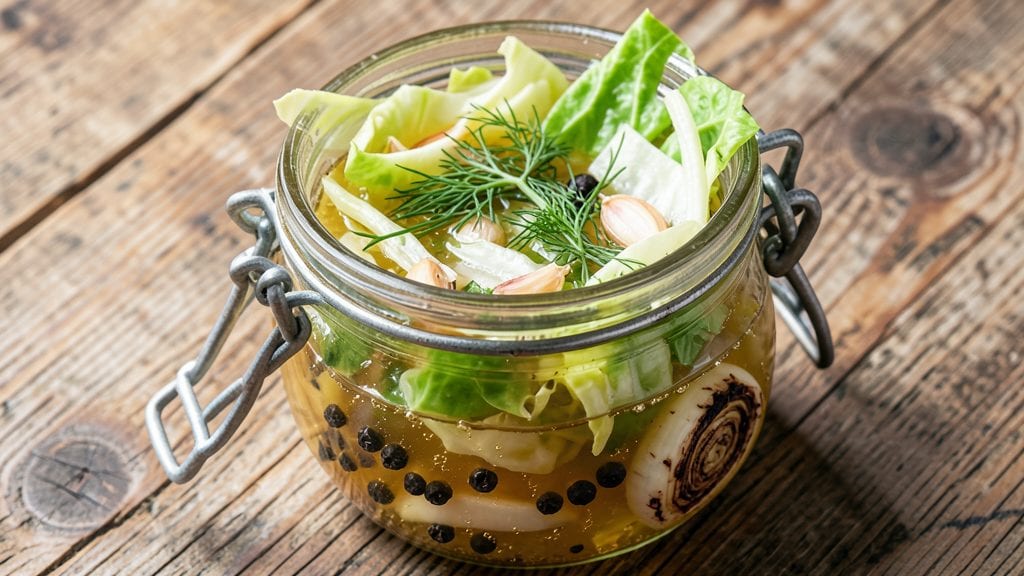
This cabbage pickled recipe transforms simple green cabbage into a crunchy, tangy side dish that adds brightness to any meal in just 24 hours. The process is straightforward but requires patience—letting the natural fermentation work its magic creates a dish packed with probiotics and flavor. I first discovered this method while searching for a healthier alternative to store-bought sauerkraut, and the results exceeded my expectations.
The beauty of making your own pickled cabbage lies in its versatility. Whether you prefer the quick-pickled version for salads or the traditional fermented style for sandwiches, this method delivers consistent results.
The key is using the right salt-to-cabbage ratio and keeping everything submerged in the brine. This ensures crisp texture and proper fermentation without bitterness.
By the time you’re done, you’ll have jars of vibrant, tangy cabbage that stays fresh for months. The crunchy texture and bright acidity make it a perfect pairing for hearty dishes like burgers, tacos, or grilled meats. Plus, it’s a great way to preserve seasonal vegetables and reduce food waste.
For those new to fermentation, don’t be intimidated—the process is foolproof if you follow the steps carefully. This recipe is perfect for beginners and seasoned cooks alike, offering a delicious way to elevate everyday meals. Let’s get started!
Ingredients for cabbage pickled
Simple ingredients transform into vibrant, probiotic-rich pickled cabbage perfect for salads or sandwiches.
| Ingredient | Amount | Notes |
|---|---|---|
| Green Cabbage 🥬 | 2 lb | Fresh head, outer leaves removed |
| Diamond Crystal Kosher Salt 🧂 | ½ cup | Non-iodized preferred for fermentation |
| Filtered Water 💧 | 4 cups | Room temperature for best results |
| Fresh Dill Weeds 🌿 | ¼ cup | Chopped, stems removed |
| Garlic Cloves 🧄 | 4 cloves | Peeled, thinly sliced |
| Black Peppercorns 🌶️ | 1 tsp | Crushed lightly for texture |
| Red Wine Vinegar 🍷 | ½ cup | For quick-pickled version |
| Granulated Sugar 🍚 | 2 tbsp | Balances acidity in quick-pickle |
| Carrots 🥕 | 2 whole | Baby carrots or 1-inch slices |
| Apple Cider Vinegar 🍎 | ¼ cup | For traditional fermented version |
| Juniper Berries 🌲 | 4 whole | Optional, for earthy depth |
| Fresh Juniper Leaves 🌿 | 2 whole | Optional aromatic touch |
The cabbage is the star—look for firm heads with crisp outer leaves at Whole Foods or your local farmers market. A 2-pound head yields enough for four servings with leftovers. If you're using the quick-pickle method with vinegar, you can skip the fermentation time entirely. For traditional fermentation, Diamond Crystal kosher salt is ideal because it dissolves completely without leaving gritty residue. The salt-to-cabbage ratio is critical—too little and it won't ferment properly; too much and the texture suffers. I always weigh my cabbage to ensure accuracy, but eyeballing works in a pinch if you're experienced. Fresh dill and garlic are non-negotiable for flavor—Trader Joe's carries affordable bunches of both, and the frozen sections work too if you're in a hurry.
No fresh dill? Dried dill at one-third the amount gets you close, though the flavor won't be as bright. Running out of red wine vinegar? Apple cider vinegar or white vinegar both work, but the flavor profile shifts slightly. The carrots can be swapped for radishes or jicama for a different crunch. Want to skip the vinegar entirely? Use 4 cups filtered water plus 1/2 cup apple cider vinegar for a lacto-fermented version. The juniper berries and leaves are optional but add a sophisticated depth—Penzeys sells them in small quantities if you're curious. For quick-pickles, add the vinegar and sugar immediately; for fermentation, wait until the cabbage is fully submerged before adding any liquid ingredients.
Quick-pickled cabbage keeps for 1 week in the fridge, while fermented versions last 6-12 months when properly stored. I portion mine into quart-sized jars with a layer of brine on top to prevent mold. The quick-pickle version reheats beautifully for tacos or sandwiches, while fermented cabbage tastes even better after a few weeks as the flavors develop. For leftovers, store in the fridge with the lid slightly ajar to allow gases to escape—this prevents jar explosions. Freezing isn't recommended as it ruins the texture, but the fridge keeps it fresh indefinitely if you maintain proper brine levels.
Why You'll Love This Recipe
- No-Fuss Fermentation: I swear by this method—just salt, cabbage, and time. No fancy equipment, no guesswork. Toss the wedges in salt, let them sit, and the brine does all the work. Honestly, I’ve made it while watching TV.
- Garlicky Dill Magic: That first bite? Crunchy, tangy, with a punch of garlic and fresh dill that lingers. The salt draws out the sweetness, but the herbs keep it bright—like a zesty hug for your palate.
- Party-Ready Side: Serve it with roasted meats, smash burgers, or just eat it straight with a spoon. It’s my go-to for potlucks because it travels well, stays crisp, and impresses without effort.
- Budget Crunch-Saver: A whole cabbage lasts weeks in the fridge, and the ingredients cost pennies. I make a big batch and use it in tacos, salads, or as a snack—no waste, all flavor. (Yes, even on a Tuesday night.)
Step-by-step instructions for crunchy, tangy pickled cabbage
Here's how to transform simple cabbage into vibrant, restaurant-quality quick-pickles in just 24 hours.
Prepare and Salt the Cabbage
Remove the outer leaves from the 2 lb green cabbage and cut it into quarters, keeping the core intact. Thinly slice each quarter lengthwise, creating ribbons about ¼-inch thick. You should end up with roughly 8-10 cups of shredded cabbage.
In a large mixing bowl, combine the sliced cabbage with the 0.5 cup diamond crystal kosher salt. Using your hands, massage the salt into the cabbage for about 5 minutes until it begins to soften and release liquid. This process draws out moisture and starts the fermentation that creates that signature tang. The cabbage should look slightly wilted and glossy when properly salted.
Pack and Press the Cabbage
Transfer the salted cabbage to a clean, quart-sized mason jar, packing it tightly down with your fist or a wooden spoon. This creates space for the brine to fully submerge the cabbage and prevents mold growth. Add the 2 whole carrots, sliced into ½-inch rounds, along with the 4 cloves garlic cloves and 1 tsp crushed black peppercorns to the jar.
Place a small plate or fermentation weight on top of the cabbage to keep everything submerged. If using the optional juniper berries and leaves, add them now. The weight ensures the cabbage stays below the brine line, which is crucial for safe fermentation. Leave about 1 inch of headspace at the top of the jar.
Prepare the Brine Solution
In a separate bowl, whisk together the 4 cups filtered water, 0.5 cup red wine vinegar, 2 tbsp granulated sugar, and 0.25 cup chopped fresh dill weeds. The sugar helps balance the acidity from the vinegar while the dill adds that bright herbal note we all love. Pour this mixture carefully over the cabbage in the jar, ensuring it fully covers all ingredients.
For a traditional fermented version, you can substitute the vinegar mixture with 0.25 cup apple cider vinegar and 4 cups filtered water. This creates a more complex flavor profile with lactic acid fermentation. Either way, the liquid should completely submerge the cabbage - if not, add more filtered water until it does.
Ferment at Room Temperature
Seal the jar tightly and let it ferment at room temperature for 24 hours. This is where the magic happens - the acidity builds and the cabbage develops that perfect crunchy texture. I like to place my jars on a tray to catch any potential spills during fermentation.
After 24 hours, transfer the jar to the refrigerator where it will continue fermenting slowly. The cold temperature preserves the vibrant colors and crisp texture. The pickles will be ready to eat immediately, but they'll develop even more complex flavors if left to ferment for up to 5 days in the fridge.
Serve and Enjoy
Before serving, give the jar a gentle shake to redistribute the flavors. The pickled cabbage should have a bright golden color, crisp texture, and that perfect balance of tangy, sweet, and herbal notes. The carrots will be tender-crisp, adding another delightful texture contrast.
This versatile pickle works beautifully as a side dish, sandwich topping, or even as a snack straight from the jar. The flavors continue to develop over time, so the longer you store them in the fridge, the more complex they become. For best results, consume within 2 weeks.
Pro Tips For Making Cabbage Pickled
- SHRED SMALLER THAN YOU THINK: I used to eyeball it and end up with uneven, tough spots—now I slice the cabbage into 1/4-inch ribbons, not 1/2-inch. The smaller pieces soften faster and soak up the brine evenly, so you don’t end up with a mix of crunchy and mushy cabbage after a week.
- WEIGH YOUR SALT: Diamond Crystal kosher salt is fluffier than table salt—don’t eyeball it. For a standard head of cabbage, use 1.5 tablespoons per quart of water, packed tightly. Too little and it won’t preserve; too much and the cabbage turns rubbery. A kitchen scale saves guesswork here.
- PACK TIGHTLY, THEN WEIGHT IT: After salting the cabbage, shove it into the jar with your fist—no gaps. If it floats, it won’t pickle properly. Top it with a fermentation weight or a ziplock bag filled with water to keep it submerged. I learned this the hard way when my first batch developed mold because the top leaves stayed dry.
- USE COLD WATER, NOT HOT: Fill the jar with cold filtered water—not warm or boiling. Hot water kills the natural lactic acid bacteria that ferment the cabbage, leading to a sour, off-taste instead of the bright, tangy flavor you want. Cold water lets the good bacteria take over naturally.
Best sauces and condiments for this cabbage pickled
Classic Mustard Sauce
Drizzle your pickled cabbage with a homemade Dijon mustard sauce to elevate its tangy profile. Whisk together 2 tbsp Dijon mustard (like Maille), 1 tbsp apple cider vinegar, and 1 tbsp honey with 2 tbsp olive oil.
This sweet-tangy sauce cuts through the cabbage's acidity while adding depth. Serve it warm over grilled meats or cold on sandwiches. 🍯
Creamy Garlic Yogurt Dip
For a creamy contrast, blend ½ cup Greek yogurt with 1 minced garlic clove, 1 tbsp lemon juice, and 1 tsp fresh dill. Thin with 1 tbsp water if needed.
This dip works perfectly with pickled cabbage as a taco topping or veggie platter accompaniment. The cool yogurt balances the cabbage’s sharpness beautifully. 🥄
Spicy Sriracha Mayo
Mix ¼ cup mayonnaise with 1 tbsp sriracha and 1 tsp lime juice for a bold, spicy kick. This sauce pairs exceptionally well with pickled cabbage in Asian-inspired bowls or as a burger condiment.
For extra heat, add ½ tsp gochujang. The spice complements the cabbage’s crunch and tang without overpowering it. 🌶️
Sweet and Smoky Chipotle Aioli
Blend ½ cup mayonnaise with 1 tsp adobo sauce (from canned chipotles), ½ tsp smoked paprika, and 1 tsp honey. This smoky-sweet sauce adds a luxurious touch to pickled cabbage, especially on tacos or loaded nachos.
The chipotle’s heat mellows over time, making it perfect for make-ahead meals. 🔥
Herbed Olive Oil Drizzle
Infuse ¼ cup olive oil with 1 tbsp chopped fresh parsley, 1 tsp lemon zest, and ½ tsp black pepper by heating gently for 5 minutes. Strain and drizzle over pickled cabbage just before serving.
This bright, herby oil enhances the cabbage’s natural flavors without adding extra acidity. Ideal for salads or as a finishing touch. ✨
Nutrition facts
Frequently asked questions
Can I use white cabbage instead of green?
Yes, you can substitute white cabbage for green in this recipe! The process and flavor will be very similar, though green cabbage tends to have a slightly more robust flavor. Just be sure to use the same salt-to-cabbage ratio and follow the same slicing technique for consistent results.
How long does fermented cabbage last in the fridge?
Properly fermented cabbage will keep for 6-12 months in the refrigerator when fully submerged in brine. The flavor actually improves over time! For best quality, check the brine level monthly and top up with filtered water if needed. Quick-pickled versions last about 1 week in the fridge.
What if my cabbage isn't fully submerged?
If your cabbage isn't fully submerged, it can develop mold or spoil. Add more filtered water to cover everything completely, then press down with a fermentation weight or plate. Leave about 1 inch of headspace at the top. If mold appears (fuzzy spots), discard the batch immediately.
Can I make this recipe without vinegar?
For a traditional lacto-fermented version, simply use 4 cups filtered water and 0.25 cup apple cider vinegar (or omit vinegar entirely). The fermentation process will create natural acids over 5-7 days. This method produces a more complex, probiotic-rich flavor.
Why does my pickled cabbage taste bitter?
Bitterness usually means the cabbage was over-fermented or exposed to air. Check your brine level—it should always cover the cabbage. For quick-pickles, reduce fermentation time to 12-24 hours at room temperature. If using vinegar, ensure you balanced the acidity with sugar.