Appetizers
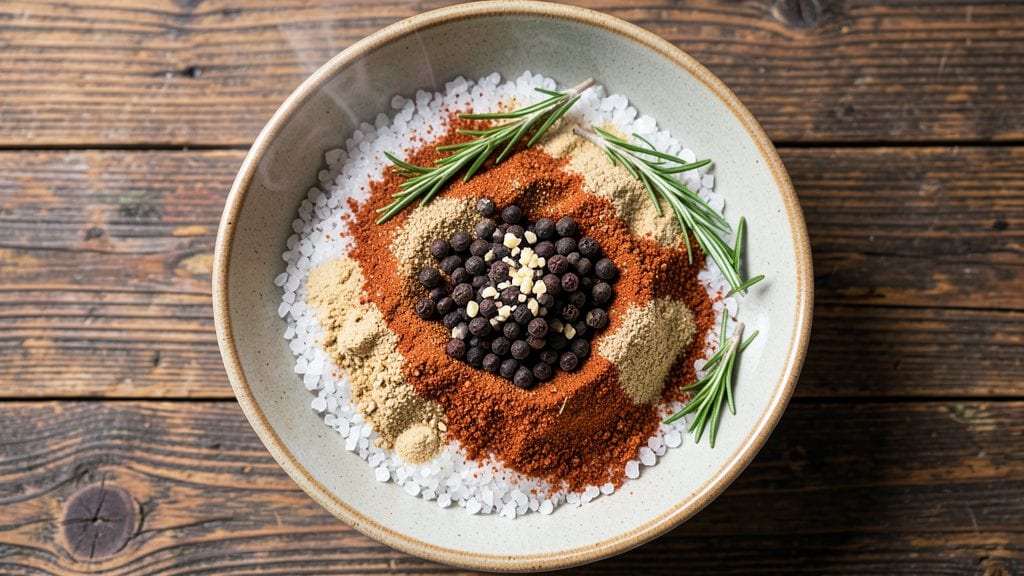
This smoked rib roast rub recipe transforms a simple piece of meat into a showstopping centerpiece with a deep smoky crust and perfectly balanced spices. The key lies in the precise blend of sweet, spicy, and savory elements that create that coveted bark while keeping the interior tender.
I’ve refined this mix over countless smoking sessions to deliver consistent, restaurant-quality results every time.
The foundation of this rub starts with coarse kosher salt and black pepper as the base, then builds layers of flavor using brown sugar for caramelization and smoked paprika for that unmistakable barbecue aroma.
A touch of cayenne adds subtle heat, while garlic powder and onion powder deepen the savory profile. The blend is designed to cling to the meat, creating a bold, aromatic crust that’s as impressive as it is delicious.
What makes this rub truly special is its versatility—whether you’re smoking a prime rib roast for a holiday feast or a smaller cut for weeknight dinners, the balance of spices ensures a perfectly seasoned result.
The coarse texture helps the rub adhere and develop that prized bark, while the sweet and smoky notes complement the natural richness of the beef.
This dry blend is foolproof—just mix, store, and apply as needed. The ingredients are simple, but the flavor impact is undeniable. Once you try this rub, you’ll never settle for store-bought seasoning again. Ready to elevate your smoking game? Let’s get started.
Ingredients for smoked rib roast rub
Nine simple spices that transform rib roast into a smoky masterpiece every time.
| Ingredient | Amount | Notes |
|---|---|---|
| Coarse Kosher Salt 🧂 | ¾ cup | Diamond Crystal preferred for flaky texture |
| Black Peppercorns 🌶️ | ¼ cup | Freshly cracked for bold flavor |
| Light Brown Sugar 🍚 | ½ cup | Packed tightly for caramelization |
| Smoked Paprika 🌶️ | 3 tbsp | High-quality for authentic smokiness |
| Garlic Powder 🧄 | 2 tbsp | Freshly ground preferred |
| Onion Powder 🧅 | 2 tbsp | For deep savory base |
| Cayenne Pepper 🔥 | 1 tbsp | Adjust for preferred heat level |
| Ground Mustard 🌿 | 1 tbsp | Dry powder for tangy depth |
| Ground Cumin 🌿 | 1 tbsp | Toasted for earthy aroma |
| Ground Coriander 🌿 | 1 tbsp | Citrusy brightness to balance smokiness |
The salt and pepper are your foundation—Diamond Crystal kosher salt gives you that perfect flaky texture that clings beautifully to the meat. I always grab mine from Whole Foods or the bulk bins at Penzeys; those pre-packaged containers just don't cut it for this recipe. The brown sugar needs to be packed tightly—no scooping from the bag. Trader Joe's has great organic brown sugar that works perfectly. And for the smoked paprika? Cholula or Penzeys are my go-tos—they've got that authentic, deep smokiness that store-brand versions just can't match. Don't skimp here; this is what creates that prized bark.
No smoked paprika? Substitute with a mix of regular paprika and a pinch of liquid smoke—start with 1/4 tsp liquid smoke per tablespoon of paprika. Cayenne too hot? Cut it in half or swap for red pepper flakes. The mustard adds tang that cuts through the richness—if you're avoiding it, add an extra 1/2 tbsp of garlic powder for depth. Want more sweetness? Increase brown sugar to 2/3 cup. The blend keeps well, so if you're making a big batch, store in an airtight container—glass jars work best to preserve the flavors. This rub works on everything from prime rib to brisket to even chicken thighs—just adjust the amount based on the size of your cut.
Once mixed, this rub stays potent for about 6 months in a cool, dark place. I like to portion it into small jars—one for the fridge and one for the smoker—so I always have it ready. The coarse texture means it won't clump, so you can store it right in the jar you mix it in. For best results, apply the rub 2-4 hours before smoking—this gives it time to develop that beautiful crust. If you're short on time, apply it right before putting the meat on the smoker and plan to baste it with apple juice or cider every 30 minutes to help the rub stick and caramelize.
Why You'll Love This Recipe
- Let’s be real: most leftover roast is sad. Not this. The rub keeps it flavorful for days—shred it for tacos, slice it for sandwiches, or just reheat with a splash of beef broth. And because it’s budget-friendly, I can afford to make a big cut and not stress about wasting meat. Win.
- Five-Ingredient Magic: I swear, this rub lives in my pantry because it’s that simple—just five things, no fancy prep. Toss the coarse salt and peppercorns in my food processor for 10 seconds, mix in the sugar and spices, and boom: ready to go. No measuring cups, no stress, just pure ease.
- Smoky Sweet Crust: That caramelized crust? Chef’s kiss. The brown sugar and smoked paprika create this deep, smoky-sweet bark that cracks like glass when you cut in—juicy, tender rib roast underneath every time. It’s the kind of flavor that makes people ask, “What’d you do to this?”
- Weeknight or Holiday: Between us, this rub works for everything—weeknight dinners when I’m too tired to fuss, holiday feasts where I want to impress, even as a last-minute upgrade for store-bought roast. Honestly, I’ve used it on chicken thighs, pork chops, and even brisket. It’s my secret weapon for “I don’t know what to make” nights.
Step-by-step instructions for smoked rib roast rub
Here's how to create a perfectly balanced rub that delivers deep smoky flavor with just the right heat kick.
Prepare Your Workspace
Start by setting up your workspace with a large mixing bowl and a whisk or sturdy spoon. I like to use a bowl that's at least 3-quart size to accommodate all the ingredients without spills. Place all your ingredients within easy reach—this makes the mixing process smoother and prevents you from losing your place.
I always crack the black peppercorns fresh using a mortar and pestle or a dedicated pepper grinder. Freshly cracked peppercorns release their oils more effectively, giving your rub that bold, aromatic punch right from the start. If you're using pre-ground pepper, make sure it's freshly ground to maintain maximum flavor.
Combine the Dry Ingredients
Add the 0.75 cup coarse kosher salt to the bowl first. This is your base ingredient and helps distribute all the other spices evenly. Next, add the 0.5 cup light brown sugar packed tightly. The sugar will caramelize during smoking, creating that beautiful dark crust we all love on rib roast.
Now it's time for the aromatic base. Add the 2 tablespoons onion powder and 2 tablespoons garlic powder to the bowl. These ingredients form the savory foundation of your rub. Give everything a quick stir with your whisk to start breaking up any clumps of salt and sugar.
Add the Warm and Earthy Spices
Measure out the 3 tablespoons smoked paprika and add it to the bowl. This is what gives your rub that authentic smoky flavor that pairs perfectly with rib roast. I always use high-quality smoked paprika—you can taste the difference between the good stuff and the generic brands.
Next, add the 1 tablespoon ground cumin and 1 tablespoon ground coriander. These spices bring warmth and citrusy brightness that balance the richness of the meat. The cumin adds earthiness while the coriander lifts the flavor profile. Give everything another stir to start blending all the spices together.
Incorporate the Heat and Tang
Add the 1 tablespoon cayenne pepper for heat. This is where you can adjust to your preferred spice level—reduce to ½ tablespoon if you prefer milder heat. The cayenne brings the fire that makes this rub so distinctive.
Finally, add the 1 tablespoon ground mustard. This might seem like an odd ingredient, but it adds a wonderful tangy depth that complements all the other flavors. The mustard helps cut through the richness of the meat and adds complexity to each bite. Stir everything together thoroughly until you have a uniform, crumbly mixture.
Test and Adjust the Rub
Taste a small amount of the rub to check the balance. You should notice a perfect harmony of smokiness, sweetness, heat, and savory notes. The sugar should be noticeable but not overpowering, and the heat from the cayenne should be present but not overwhelming.
If you need to adjust, add more of any ingredient in small amounts. For example, if it needs more heat, add a pinch more cayenne. If it needs more depth, add a little more smoked paprika. The goal is to create a rub that's complex and balanced—one that enhances the natural flavors of your rib roast without overpowering them.
Pro Tips For Making Smoked Rib Roast Rub
- CRUSH THE PEPPERCORNS: Freshly grind your black peppercorns right before mixing—pre-ground loses its sharp bite and sticks like glue to the roast. I used to skip this, and the rub always tasted dull until I realized how much difference a quick pulse in a spice grinder makes.
- SALT THE MEAT FIRST: Pat the rib roast dry, then sprinkle a thin layer of kosher salt all over at least 30 minutes before applying the rub. This kickstarts the seasoning deep into the meat while keeping the surface dry for that perfect crust.
- DON’T SKIP THE SUGAR’S CARAMEL: Light brown sugar burns faster than you think—sauté it in a dry pan for 2-3 minutes until it smells toasty before mixing into the rub. This deepens the smoky flavor and prevents clumping when applied to the meat.
- REST THE RUB ON THE MEAT: After applying the rub, let the roast sit uncovered in the fridge for 4-6 hours (or overnight). This lets the spices cling better and develop flavor—rushing it means half the rub will slide off during smoking. (Yes, even if you’re impatient like me.)
Essential equipment for this dish
Smoker Essentials
Your smoker is the heart of this recipe, and I recommend a Traeger Pellet Grill or Weber Smokey Mountain for consistent 225-250°F temperatures. Pellet smokers like Traeger use wood pellets for clean, even smoke, while offset smokers (like Weber) give you more control over wood type.
For beginners, I suggest the Traeger Pro 575—it’s reliable and user-friendly. 🌡️
If you’re working with a charcoal smoker, invest in a quality meat thermometer like the ThermoWorks Smoke to monitor internal temps accurately. Charcoal smokers require more attention to airflow and temperature swings, so I recommend using lump charcoal for better heat control than briquettes.
Always preheat your smoker for at least 30 minutes before adding the meat.
Heat Management Tools
A heat diffuser plate (like the Meater Heat Diffuser) is a game-changer for even heat distribution, especially on pellet smokers. It prevents hot spots and ensures your rib roast cooks uniformly.
For offset smokers, a water pan helps stabilize temperature and adds moisture to the cooking environment. I place mine near the firebox to create a gentle steam.
Don’t overlook a digital thermometer probe—I use the Meater Stick for real-time monitoring of internal temps. It’s wireless and alerts you when your roast hits the perfect 130-135°F range for medium-rare.
Pair it with a smoker thermometer (like the Traeger GrillPro) to track both internal and ambient temps simultaneously.
Wood Pellets & Chips
For rib roast, hickory or oak pellets deliver that classic smoky flavor, while cherry or apple add a sweeter, fruitier note. I love using Traeger’s competition-grade pellets for consistent results.
If you’re using an offset smoker, soak hickory or pecan wood chips in water for 30 minutes before adding them to the firebox for a steadier smoke output.
Avoid softwoods like pine or cedar—they can impart a bitter taste. For a balanced flavor, I recommend a 50/50 mix of hickory and cherry pellets in pellet smokers. Keep your pellets in an airtight container to preserve freshness, and store them in a cool, dry place away from direct sunlight.
Prep & Storage Gear
Before you start, gather butcher paper (like Pink Butcher Paper) for wrapping your roast during the stall phase—it helps retain moisture and speeds up cooking.
A meat tenderizer mallet comes in handy if your roast has a thick fat cap; I use it to score the fat in a crosshatch pattern for even bark formation.
For storage, transfer leftover rub to an airtight glass jar (like Ball Mason Jars) to keep it fresh for up to 6 months. Label the jar with the date and spice blend to track freshness.
A fine-mesh strainer helps sift the rub evenly onto the meat, ensuring an even coat without clumping.
Nutrition facts
Frequently asked questions
Can I make this rub without smoked paprika?
Yes! For every 3 tablespoons of smoked paprika, substitute 2 tablespoons regular paprika plus 1/4 teaspoon liquid smoke. The liquid smoke adds depth, but use sparingly—too much can make the rub taste artificial. Adjust to taste after mixing.
How much rub should I use for a 5-6 pound rib roast?
For a 5-6 pound roast, use about 1/4 to 1/3 cup of this rub. Pat the meat dry first, then apply generously, pressing the spices into the surface. The coarse texture helps it stick without clumping. For thicker cuts, add a little more to create that signature bark.
Will this rub work for other meats besides rib roast?
This versatile rub works beautifully on brisket, pork shoulder, or even chicken thighs. For poultry, reduce the cayenne to 1/2 teaspoon to avoid overpowering the delicate flavor. The balance of sweet, smoky, and savory notes translates well across different proteins.
Can I store the rub in the refrigerator after opening?
Yes, but it’s not necessary. This dry rub keeps perfectly in an airtight container at room temperature for up to 6 months. If you prefer, store it in the fridge for up to 1 year to preserve maximum freshness. The coarse texture prevents clumping, so no special storage tricks are needed.
What’s the best way to remove excess rub before serving?
Use a fine-mesh strainer or clean kitchen towel to gently wipe off any loose rub before slicing. This keeps the presentation clean while preserving the flavor. For a more rustic look, leave some rub on the meat—it adds texture and visual appeal. Just avoid scraping off the crust, which is packed with flavor!